

How to Prevent Hand Pain Coloring Hair: A 2026 Guide
Table of Contents
- Why Hair Colorists Get Hand Pain (and What It Signals)
- Step-by-Step Ergonomic Setup for Coloring Hair
- How to Hold a Hair Color Brush to Reduce Hand Strain
- Hand-Saving Techniques for Applying Dye and Foils
- Ergonomic Hair Coloring Tools That Make a Difference
- Hand Stretches for Hairdressers (and Recovery Between Clients)
- Carpal Tunnel in Hairdressers: When Hand Pain Needs Medical Care
- A Prevention Plan for At-Home Colorists and New Professionals
- Frequently Asked Questions
Last Updated: October 5, 2026
Why Hair Colorists Get Hand Pain (and What It Signals)
Hand pain coloring hair is not a sign of weakness, and neither is reaching for hand pain coloring guides.
Coloring hair is repetitive work. You grip a brush, squeeze a bottle, fold foils, and section wet strands. The same small muscles in your fingers and thumb fire again and again.
The signals show up in a pattern:
- A dull hand cramp after your third or fourth client
- Sharp pain when you grip the brush first thing in the morning
- Stiffness that lingers after you clock out
- Tingling or numbness in your fingertips
Most colorists push through it. That is the mistake. Early signs are easy to fix. Ignored ones turn into joint pain that follows you home.
The good news: small changes to your setup, grip, and recovery routine make a real difference.
Step-by-Step Ergonomic Setup for Coloring Hair
A proper ergonomic setup is the fastest way to cut hand strain, and it takes about ten minutes to get right. Most colorists skip this step and pay for it by mid-afternoon.
Position the Client and Your Station First
Adjust the chair so the client's head sits near your elbow height. If you are reaching up or bending down, your wrist position suffers.
- Raise or lower the chair, not your shoulders
- Stand with feet hip-width apart
- Keep the client close, within arm's reach
- Angle the head so you are not twisting your wrist
Set Up Your Tools Within Easy Reach
Everything you touch should sit in a zone between your waist and shoulder height.
- Tint bowl directly in front of you, not off to the side
- Foils pre-cut and stacked within reach
- Brush resting in the bowl, not on the counter
- Towels and clips on your dominant-hand side
How to Hold a Hair Color Brush to Reduce Hand Strain
The right grip is loose, not tight. Most hand pain comes from squeezing the brush handle like a pencil all day, which loads the small muscles at the base of the thumb and the tendons running through the wrist.
Here is the grip that does the least damage, broken down by hand position:
- Wide-base grip (default). Wrap your fingers lightly around the wide part of the handle, thumb resting on top near the ferrule for control. The handle should sit in the web between thumb and index finger, not pinched between fingertips.
- Pinch grip (detail work). Use only for precision at the hairline or around the ears. Switch out of it within a minute or two.
- Full-hand grip (long sweeps). Let the handle rest across all four fingers with the palm partly closed. This spreads force across the whole hand instead of two fingertips.
- Pen grip (avoid). Holding the brush like a pen concentrates pressure on three fingertips and is the fastest route to tingling and numbness.
The Pressure Rule
A useful check: if your knuckles are white, you are gripping too hard. You should be able to slide a finger between your palm and the handle. Most colorists grip at roughly double the force they actually need to control the brush.
Change Your Grip Every Few Sections
This is the single most effective habit you can build. Change your grip every few sections, not every client, every few sections.
- Switch between a light pinch grip and a full-hand grip
- Alternate hands for sectioning and folding foils
- Rotate your wrist gently between clients
- Set the brush down instead of holding it mid-service
A simple cadence: every time you finish a foil or a subsection, deliberately release the brush for one second. That micro-release resets the grip and interrupts the sustained squeeze that causes most strain.
Hand-Saving Techniques for Applying Dye and Foils
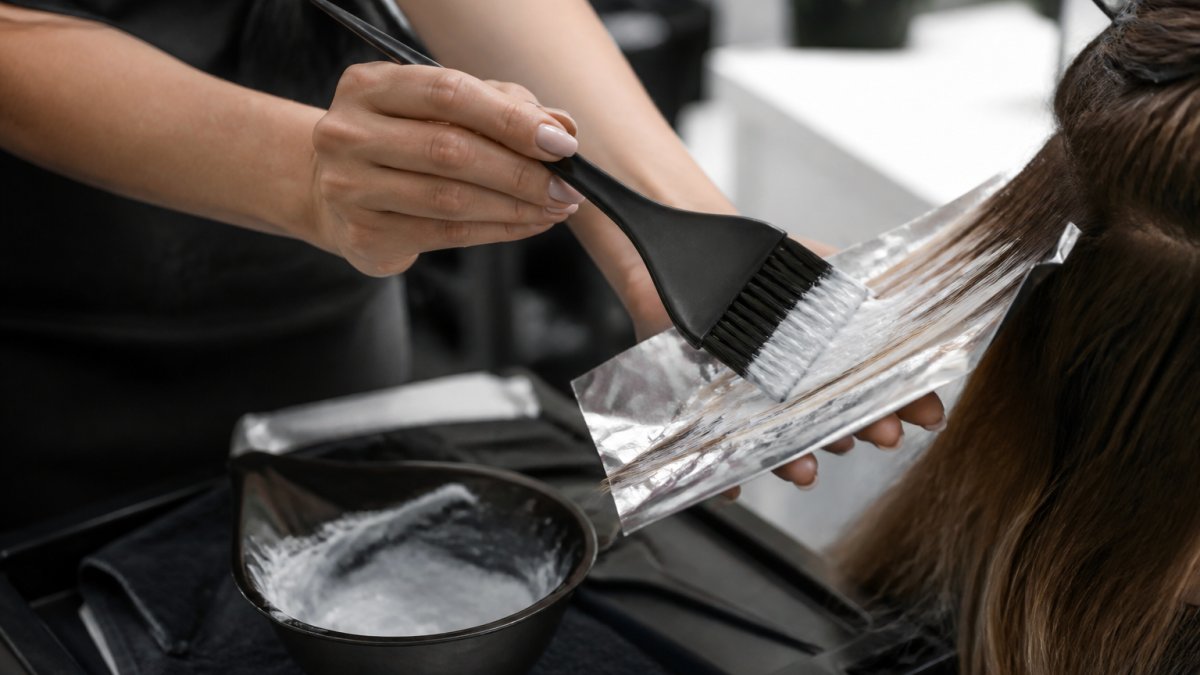
Applying dye and foils is where hands take the worst beating. The fix is to spread the work across broader hand surfaces instead of your fingertips.
For color application, use a wide feathered brush. The feathered bristles cover more hair in a single sweep, so you make fewer strokes. Fewer strokes means less repetitive gripping.
For foils:
- Use open-palmed scrunching instead of pinching the foil corners
- Slide the foil under the section, do not lift and fold with your fingertips
- Alternate hands when folding so one hand gets a break
- Pre-fold foils in batches before the client sits down
For sectioning, use the tapered tip of your brush to part hair cleanly. You will make neater sections and grip the comb less.
Ergonomic Hair Coloring Tools That Make a Difference
Ergonomic hair coloring tools reduce strain by changing the shape of what you hold, not by asking you to work differently.
The two tools that matter most are your brush and your bowl.
Hair Color Brushes from our Elegance Collection have a wide base for an easier grip and a feathered tip that spreads color in fewer strokes.

Hair Color Bowls are shaped to sit in the palm of your hand. The U-shaped cutout holds your brush in place between sweeps, and the tilted edge keeps dye in the bowl instead of on your station.
| Tool | What It Fixes | Best For |
|---|---|---|
| Feathered brush | Repetitive gripping, hand cramp | Color application, sectioning |
| Palm-fit bowl | Fumbling, wrist twisting | High-volume color services |
| Pre-cut foils | Fingertip pinching | Balayage, foil work |
Here is how the two compare on the strain they remove:
| Feature | Feathered Brush | Standard Brush |
|---|---|---|
| Grip width | Wide base, easier hold | Thin handle, tighter grip |
| Strokes per section | Fewer, wider coverage | More, narrower coverage |
| Stain resistance | Yes, all shades | Varies |
| Best for | Long color sessions | Light touch-ups |
Hand Stretches for Hairdressers (and Recovery Between Clients)
Hand stretches for hairdressers take two minutes and belong between every client, not just at the end of the day. The goal is not to stretch hard, it is to move the wrist and fingers through their full range so the tendons and small muscles do not stay locked in a gripping position.
The Between-Client Routine
Hold each stretch for 15 to 30 seconds. Stop short of any sharp pain.
- Finger spread. Open your hand wide, spread all five fingers, hold. Repeat three times per hand.
- Wrist flexor stretch. Extend one arm, palm up, and gently pull the fingers back with the other hand until you feel a stretch along the inside of the forearm.
- Wrist extensor stretch. Extend the arm, palm down, and gently pull the fingers down toward the floor.
- Thumb opposition. Touch your thumb to each fingertip in turn, then reverse. This wakes up the small muscles at the base of the thumb that do most of the gripping.
- Tendon glide. Curl fingers into a hook, then straighten them fully, then make a fist. Cycle through slowly.
Recovery Between Clients
Stretching is not the same as recovery. Recovery is about restoring blood flow and letting the tissue cool down after sustained work.
- Ice for 10 minutes if your hands feel hot, swollen, or throbbing after a heavy foil service. Cold reduces inflammation in the acute phase.
- Warm soak works better for stiffness and that end-of-day ache. Heat increases blood flow to tight tissue.
- Alternate hands during the day so neither one carries the full load. This is the single biggest recovery lever you have.
- Elevate your hands above heart level for a few minutes if they feel puffy after a long day.
How to Tell If It Is Working
A useful marker: if your hands feel looser and warmer after the routine, it is doing its job. If a stretch makes the pain sharper or sends tingling down your arm, stop and treat that as a signal to get checked rather than to push through.
Carpal Tunnel in Hairdressers: When Hand Pain Needs Medical Care
Carpal tunnel in hairdressers is common because the work combines repetitive motion, constant gripping, and awkward wrist position. But not all hand pain is carpal tunnel.
See a doctor if you notice:
- Numbness that wakes you at night
- Weakness when you grip the brush
- Pain that lasts more than two weeks
- Tingling that spreads up your arm
Ordinary fatigue fades with rest. Symptoms that need care do not. If your hands hurt every single day, that is your cue to get checked. The National Institute of Neurological Disorders and Stroke overview of carpal tunnel syndrome explains the warning signs in plain terms.
For general guidance on preventing work-related strain, the Occupational Safety and Health Administration ergonomics resources covers risk factors like repetition and forceful gripping.
A Prevention Plan for At-Home Colorists and New Professionals
A prevention plan works best when it is simple enough to follow every single day. Here is the one we recommend.
Before you start:
- Set the chair and station to elbow height
- Lay out tools within easy reach
- Pre-cut and pre-fold your foils
During the service:
- Change your grip every few sections
- Alternate hands for sectioning and folding
- Set the brush down between sweeps
After each client:
- Run through the two-minute stretch routine
- Ice if your hands feel hot
- Shake out your wrists
Each week:
- Check your brush handle for wear
- Replace tools that force a tighter grip
- Track which services leave your hands sorest
At-home colorists often skip the setup step because they color their own hair at odd hours. Do not skip it.
New professionals should build these habits in the first year. That is when repetitive strain patterns set in, and that is when they are easiest to break.
The tools matter too. Our American Academy of Dermatology hand care guidance reminder applies here: small daily habits protect your hands far better than fixing damage later.
Frequently Asked Questions
Why are my hands burning from hair dye?
Burning or stinging during color application usually points to skin irritation from dye chemicals, not muscle fatigue. If you feel burning, stop and rinse the area with cool water. Repeated exposure can worsen sensitivity, so wear gloves and keep barrier cream on hand. Burning is different from the dull ache of hand strain, which builds gradually from repetitive gripping and usually eases with rest.
Is it common for hairdressers to get carpal tunnel?
Hairdressers do report carpal tunnel symptoms more often than many other professions because of repetitive wrist motion and sustained gripping. Tingling, numbness, or weakness in the thumb and first two fingers that wakes you at night is a warning sign. If those symptoms last more than a week or two, see a doctor. Early evaluation makes conservative treatment, like bracing and activity changes, more likely to work.
What tools can help prevent hand pain when coloring hair?
Ergonomic hair coloring tools reduce the force your fingers need to apply. Wide-base brushes like the ESTL+CO Hair Color Brushes ($16 for a 2-pack) are designed to prevent tension and pinching, and stain-resistant bowls such as the ESTL+CO Hair Color Bowls ($19 for two) fit in the palm to cut wrist twisting. Pair these with a height-adjustable chair and a rolling cart so you are not reaching or hunching.
When should a hair colorist seek medical advice for hand pain?
See a doctor if pain is sharp rather than a dull ache, if it persists after a full day of rest, if you feel numbness or tingling at night, or if you cannot grip a brush without dropping it. Those signs suggest nerve or joint involvement rather than ordinary fatigue. A physician can check for carpal tunnel in hairdressers and rule out arthritis or tendonitis before it limits your work.
Your hands are your livelihood, and they deserve tools built for the work. If you color hair all day, the right brush and bowl cut the strain before it starts. ESTL+CO makes stain-resistant tint bowls and ergonomic feathered brushes designed by pros, for pros, with a wide grip base that eases tension and a feathered tip for fewer, cleaner strokes. Get started with ESTL+CO and give your hands the support they need for every color service.