

Ergonomic Hair Coloring Accessories for Stylists
Table of Contents
- Why Ergonomic Hair Coloring Accessories Matter Behind the Chair
- Professional Hair Colorist Tool Kit Essentials
- 1. Hair Color Brushes: Feathered Tips and Ergonomic Grips
- 2. Hair Color Bowls: Stain-Resistant Design and Palm Fit
- 3. Asymetrie Hair Color Foils: No-Slip Stability for Balayage
- 4. Barrier Cream Stick: Client Protection and Station Efficiency
- Preventing Repetitive Strain Injury in Hair Stylists
- Sanitization and Durability: Making Ergonomic Hair Coloring Accessories Last
- Frequently Asked Questions
Last Updated: October 3, 2026
Why Ergonomic Hair Coloring Accessories Matter Behind the Chair
A stylist performing six color services a day makes thousands of small, repetitive wrist movements. Ergonomic hair coloring accessories for stylists reduce that daily load by changing how a tool sits in the hand, how much force it requires, and how long a colorist can work without discomfort.
At ESTL+CO, we build tint tools around one idea: the tool should disappear in your hand so your attention stays on the hair. That means wide feathered tips, palm-fit bowls, and grips that don't force your fingers into a pinch.
Professional Hair Colorist Tool Kit Essentials
A working colorist's kit comes down to five core items: a tint brush, a color bowl, foils, a mixing whisk, and protective barriers. What separates a professional kit from a starter set is chemical resistance, ergonomic grip, and durability under daily salon use.
Here's how the essentials break down by function and price:
| Tool | What It Does | Price | Best For |
|---|---|---|---|
| Hair Color Brushes | Precision application with feathered tip | $16.00 (2 per box) | All-over color, root touch-ups, balayage |
| Hair Color Bowls | Holds and mixes color, palm-fit design | $19.00 (2 per box) | High-volume color processing |
| Asymetrie Foils | Sectioning and isolating hair | $17.50 (500 sheets) | Balayage, highlights, dimensional color |
| Barrier Cream Stick | Protects client skin from stains | $26.50 | Hairline protection, sensitive skin |
None of these are luxury purchases. A full professional kit costs less than a single high-ticket color service, and the return comes from how many more services you can complete comfortably.

1. Hair Color Brushes: Feathered Tips and Ergonomic Grips
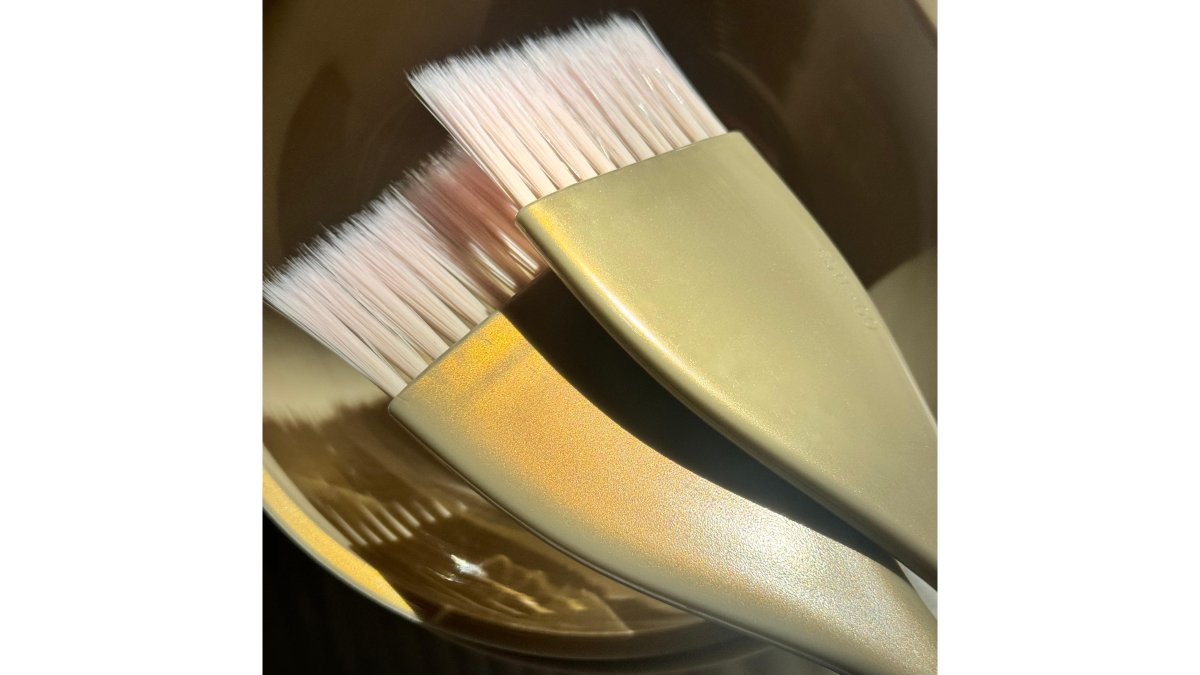
A tint brush is the tool you hold longest, so grip design matters most here. Cheap brushes force a tight pinch grip, the posture that causes cramping by mid-afternoon. ESTL+CO's Hair Color Brushes use a wide base that lets the hand rest open rather than clenched, and feathered bristles spread color more evenly with fewer strokes.
How the Feathered Tip Changes Precision Application
A feathered tip gives you two tools in one brush. The tapered point creates clean sections at the root, while the wider feathered edge sweeps color across larger areas without streaking. For balayage tools work, that means fewer passes, less product waste, and more even color saturation.
2. Hair Color Bowls: Stain-Resistant Design and Palm Fit
The best color bowl is the one you forget you're holding. ESTL+CO's Hair Color Bowls sit in the palm rather than being gripped, removing the wrist tension that builds during long color processing sessions. The U-shaped cutout holds your brush between sweeps, and the tilted edge keeps dye inside the bowl.

At $19.00 for two bowls, the real value is stain resistance. A cheap bowl discolors after a few weeks and eventually cracks; stain-resistant material holds its color and shape through repeated exposure to developer and dye, which matters in a color studio where bowls are in constant rotation.
3. Asymetrie Hair Color Foils: No-Slip Stability for Balayage
Foils that slide are the quiet time-waster of every highlight service. The Asymetrie Collection solves this with an embossed texture that grips the hair at the root. Each sheet is 5 inches by 11 inches with a 12-micron thickness, thin enough to fold cleanly but stable enough to hold position when you flip it over.

For balayage tools and complex sectioning, that stability changes your workflow: less time re-securing foils, more time on blending. At $17.50 per box, the cost per service is negligible, and the time saved adds up fast across a full book.
4. Barrier Cream Stick: Client Protection and Station Efficiency
Skin staining around the hairline is one of the most common client complaints after a color service. The Barrier Cream Stick applies a protective layer in seconds, straight from the tube, with no cotton pads or messy creams.
The ergonomic benefit is indirect but real: a stick format means no bending, no squeezing a tube, no reaching for applicators, and a cleaner station. For salon hygiene, a dedicated barrier product also reduces the risk of dye transferring to the client's skin during color processing.
Preventing Repetitive Strain Injury in Hair Stylists
Repetitive strain injury, or RSI, is cumulative damage from thousands of small, repeated movements over months and years. Colorists sit in a high-risk category because the work stacks three stressors: sustained grip, awkward wrist angles, and long periods standing. Understanding the mechanism lets you audit any tool in your kit against it.
The Three Loads That Build RSI in Colorists
Grip force. A narrow handle forces a pinch grip, recruiting the small muscles of the forearm and thumb at high effort. A wider, palm-fill handle lets the fingers rest open and transfers load to larger muscle groups.
Wrist deviation. Angling a tint brush to reach a hairline or folding a foil at the root moves your wrist away from neutral, compressing structures on one side of the wrist.
Sustained static hold. Holding a bowl for a 45-minute color processing window is a static contraction, which restricts blood flow more than short bursts of movement.
Auditing Your Kit for RSI Risk
Run this check on every tool you touch during a color service:
- Can you hold it with a relaxed, open hand rather than a pinch?
- Does it weigh enough to feel stable but little enough to lift hundreds of times a day?
- Does using it force your wrist away from a neutral, straight position?
- Does it require a sustained static hold, or does it let your hand rest between movements?
- Does the surface stay grippy when wet with developer or dye?
Any tool that fails two or more of these is a candidate for replacement, regardless of price.
Technique Adjustments That Reduce Load
Tool design only solves part of the problem. A few technique habits compound the benefit:
- Alternate hands where your sectioning and application technique allows. Even partial switching spreads load across both arms.
- Move the client, not your wrist. Adjust chair height and head position so you reach with your arm rather than bending your wrist.
- Keep tools within the natural arc of your arm. Reaching across a station adds shoulder and wrist strain to every sweep.
- Rotate between two brushes during a single service so one hand gets micro-recovery while the other works.
Early Warning Signs of Wrist and Hand Fatigue
Watch for these signals before they become chronic:
- Aching or tingling in the fingers after a full day of services
- Stiffness in the morning that takes time to work out
- Weakness when gripping small objects, like a comb or a brush
- Numbness in the thumb or first two fingers
- Pain that lingers past the end of your shift
If any of these persist beyond a week or two, see a healthcare provider. Early intervention makes a real difference, and continuing to work through pain tends to make it worse.
Sanitization and Durability: Making Ergonomic Hair Coloring Accessories Last
Salon-grade tools earn their price through tool maintenance and longevity, and the reason comes down to material science. Two tools can look identical on a shelf and behave completely differently after six months of developer, dye, and disinfectant.
Why Material Choice Drives Grip, Weight, and Chemical Resistance
The three properties that matter most in a coloring tool, grip, weight, and chemical resistance, are all determined by the material and how it's molded.
Silicone vs. plastic handles. Silicone-based grips stay tacky when wet and resist the solvents in developer and color.
Bowl material and stain resistance. A bowl's job is to hold aggressive chemistry without absorbing it.
Foil thickness and behavior. Foil thickness is measured in microns, and it changes how the sheet performs. Thicker foil resists tearing but won't fold tight at the root.
How Ergonomic Tools Hold Up to Chemical Exposure and Heat
A few practical protocols keep ergonomic tools serviceable longer:
- Wipe immediately after use. Dried dye is harder to remove than wet dye and requires more aggressive scrubbing, which wears the surface.
- Follow the manufacturer's disinfectant guidance. Some disinfectants are harsher on certain plastics than others; using the wrong one shortens tool life.
- Inspect for cracks and clouding. A cloudy or cracked surface can harbor residue even after cleaning. Replace rather than nurse it along.
- Treat foils as single-use. Pre-cut, pre-folded foil boxes keep sheets clean and organized until the moment of use, which removes cross-contamination risk from shared applicators.
- Store tools dry and separated. Moisture trapped between stacked bowls or brushes encourages surface breakdown.
The Transport Question for Rental and Mobile Stylists
Stylists who work out of a rental studio or move between locations put tools through a second kind of stress: packing, transport, and unpacking. Tools built from sturdy material handle that cycle without cracking or warping, the practical difference between a tool designed for a color studio and one designed for occasional home use.
Frequently Asked Questions
What are the benefits of using ergonomic hair coloring brushes?
Ergonomic hair coloring brushes are shaped to prevent the tension and pinching that standard brushes cause, which is what leads to cramped fingers during long color services. A wide base makes the grip easier to hold, while a tapered tip creates neater sections and feathered bristles spread color more evenly across the strand. For stylists doing back-to-back appointments, that combination reduces hand fatigue without sacrificing precision application.
How can hair stylists prevent wrist and hand strain?
Start by switching to tools with a non-slip handle and lightweight design, since heavier brushes force you to grip harder. Keep your color bowl within easy reach so you are not overextending your wrist between sweeps. Vary your grip position throughout a service and take short breaks between clients to stretch your fingers and forearms. Preventing repetitive strain injury in hair stylists comes down to reducing the force and repetition your hands deal with every day.
What essential tools should be in a professional hair colorist kit?
A working kit needs tint brushes, a stain-resistant color bowl, foils or sheets for highlighting, and a barrier cream for the hairline. The professional hair colorist tool kit essentials are the items you touch on every single client, so those are the ones worth buying at salon-grade quality.
Are there specific hair coloring tools designed to reduce repetitive motion injuries?
Yes. Brushes with a wide base and feathered tip are built to lower the grip force needed to control color, which directly reduces wrist fatigue. Bowls with a U-shaped cutout hold the brush in place between sweeps, so you are not constantly re-gripping. Foils that are pre-cut and pre-folded cut down on repetitive folding motions during highlighting. Each small design change removes a bit of the repetitive motion that accumulates over a full day behind the chair.
How do high-quality tint bowls improve salon efficiency?
A stain-resistant bowl holds its color after repeated use, so you are not replacing cheap bowls every few weeks. The U-shaped cutout keeps your brush resting in place between sweeps, which saves the small pause of setting it down and picking it back up. A tilted edge keeps dye in the bowl instead of running over the rim. Made to withstand multiple color applications in a day, a sturdy bowl keeps your salon workflow moving without mid-service interruptions.
Color work is physically demanding, and the tools you choose either ease that demand or add to it. At ESTL+CO, we design every tint brush, bowl, and foil around the way colorists actually work: long days, tight schedules, and hands that need to last a career. Our stain-resistant bowls, ergonomic feathered brushes, and no-slip Asymetrie foils are built for the demands of a modern color studio. Get started with ESTL+CO and give your hands the tools they deserve.