

Best Professional Tinting Tools for Salons: 2026 Guide
Table of Contents
- What Separates Salon-Grade Tinting Tools From Beauty Supply Basics
- Quick Comparison: Best Professional Tinting Tools for Salons
- Professional Hair Colorist Tool Kit Essentials for High-Volume Stations
- Best Hair Color Mixing Tools for Consistent Blends
- Hair Color Application Techniques That Demand the Right Tool
- Ergonomics, Maintenance, and Longevity: What Competitors Skip
- Which Tools Should You Pick? A Decision Framework
- Conclusion
- Frequently Asked Questions
Last Updated: September 16, 2026
What Separates Salon-Grade Tinting Tools From Beauty Supply Basics
Beauty supply tinting tools look the part but aren't. The difference between a brush that survives a 12-client Saturday and one that frays by Thursday comes down to three things: material density, ergonomic geometry, and how the tool behaves when it's wet, heavy, and moving fast.
Quick Comparison: Best Professional Tinting Tools for Salons
The short version: every tool below is built for behind-the-chair volume.
| Tool | Price | Best For | Standout Detail |
|---|---|---|---|
| Feathered Brushes (2-pack) | $16.00 | Precision application and blending | Wide feathered tip, ergonomic base |
| Color Bowls (2-pack) | $19.00 | High-volume mixing stations | U-shaped brush rest, tilted edge |
| Asymetrie Foils (500 sheets) | $17.50 | Balayage and foil work | 12-micron, no-slip embossed texture |
| Barrier Cream Stick | $26.50 | Hairline protection | 35 grams, hypoallergenic, stick format |
| Complete Station Bundle | $52.50 | New stations and kit refreshes | Brushes, bowls, and barrier stick together |
How We Evaluated These Tools
We scored each item on four criteria: performance under repeated daily use, feel after hours of grip pressure, resistance to staining and chemical wear, and price versus longevity. Tools that only work for light-duty tinting didn't make the cut.

Professional Hair Colorist Tool Kit Essentials for High-Volume Stations
A high-volume station needs tools that reset fast between clients: duplicates of anything you touch every service, and a layout that keeps your dominant hand moving in a short arc.
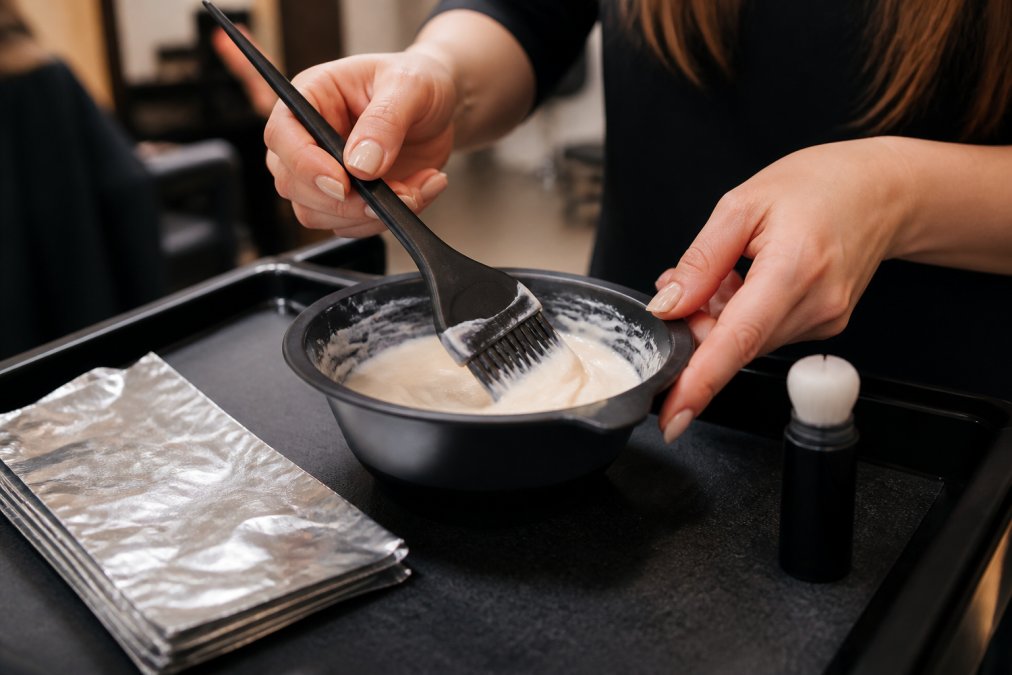
The Complete Station Bundle Approach
Buying individually costs more and leaves gaps. The ESTL+CO Complete Station Bundle packages two feathered brushes, two color bowls, and one barrier cream stick for $52.50, less than buying each piece separately. It's the fastest way to set up a new chair or refresh a station running on mismatched tools. Available in Gold and Silver.
Best Hair Color Mixing Tools for Consistent Blends
Consistency in color mixing comes from bowl geometry and brush weight, not how hard you stir. A bowl that fits your palm lets you control the mix with your fingers instead of your wrist, and a tilted edge keeps product from climbing the wall and drying out of reach.
Why Bowl Geometry and Brush Weight Change Your Mix
A wide-based brush like the ESTL+CO Hair Color Brushes gives an easier grip, minor until hour six. The tapered tip creates cleaner sections, and feathered bristles spread color more evenly. Two per box, $16.00, in Black, Beige, Mauve, or Violet.

Hair Color Application Techniques That Demand the Right Tool
Complex placement work exposes tool weaknesses fast. Balayage, foils, and freehand root melts all require the brush to hold a precise edge while carrying enough product to cover without dripping, a splayed brush can't do either. The fix isn't a better formula; it's matching the tool to the stage of the service.
Stage 1, Prep: Sectioning, Protection, and Surface
Before a brush touches hair, prep tools decide how clean the rest of the service runs. Sectioning clips, a fine-tooth tail comb, and a barrier cream stick belong here. The barrier stick is the one most colorists skip and regret, a thin line along the hairline and ear takes seconds to apply and wipes off with a damp towel, versus ten minutes scrubbing dried color off skin.
Stage 2, Cut: Foils, Measuring, and Trimming
For foil work, the foil itself is a tool, not a wrapper. The ESTL+CO Asymetrie Foils run 12 microns thick at 5 inches by 11 inches, pre-cut and pre-folded, 500 sheets per box for $17.50. The embossed texture grips hair at the root so foils don't slide when flipped, the most common cause of a blown placement on a full head.

Stage 3, Apply: Brushes, Bowls, and Load Control
For balayage, load the feathered brush light and sweep at a shallow angle. The wide tip feathers the edge of the section instead of leaving a hard line, that soft transition is what clients pay for. Load control is the whole game: too much product and the section drips and bleeds; too little and you drag the brush and get a patchy result.
Stage 4, Finish: Thermal Management, Squeegees, and Safety
Finish is the stage most tool guides ignore, and it's where a service looks professional or rushed. A heat gun or dryer with controlled temperature sets and processes foils without scorching hair or melting the backing, thermal management is a tool skill, not an afterthought. A squeegee in the right durometer clears excess product and smooths the surface; too soft and it skates, too hard and it scratches.
Why Stage Grouping Beats a Flat Tool List
When tools are organized by stage, your dominant hand never crosses the station for something from a different part of the service, that's the real productivity gain. A colorist doing mostly foils gets more value from a second feathered brush and a foil box than a third bowl, because the second brush lives in the Apply stage where the bottleneck is.
Ergonomics, Maintenance, and Longevity: What Competitors Skip
Ergonomics and maintenance decide whether your kit lasts a year or three, the section competitors skip, and the one that separates a professional's kit from a hobbyist's.
Ergonomics and Injury Prevention
Repetitive strain is the quiet cost of a high-volume chair. Colorists spend hours in the same grip, wrist angle, and shoulder position, and damage accumulates long before it announces itself. Tool geometry either spreads that load or concentrates it.
- Alternate between two brushes of slightly different handle shapes so your grip isn't locked into one position all day
- Keep the bowl at elbow height, not below it, so your wrist stays neutral instead of flexing down
- Take the thirty-second reset between clients to open and close your hands rather than holding tension through the transition
- Watch your shoulder, not just your hand, a station set too high forces the shoulder up and the strain travels up the arm
Maintenance and Longevity
Maintenance is simpler than people expect, but it has to be consistent to matter:
- Rinse brushes and bowls in cool water immediately after each service, before product sets
- Avoid hot water on stain-resistant surfaces, since heat can dull the finish over time
- Store brushes bristle-up in a holder, never flat in a drawer where tips bend
- Wipe the barrier cream stick clean and cap it to keep the formula from drying out
- Inspect blades and shears weekly for nicks; a dull edge drags hair and forces you to cut harder, which is its own strain
Environmental Impact of Consumables
On consumables, the environmental angle is worth a thought. Foils and barrier cream are thrown away most, so pre-cut 500-sheet foil boxes cut packaging waste versus loose rolls, and a larger barrier stick means fewer tubes in the bin. Reusable alternatives, washable mixing bowls, refillable barrier containers, concentrated cleaners diluted at the station, reduce waste and reordering.
Storage and Organization
Storage is the last piece of longevity. Tools in a jumbled drawer get bent, chipped, and lost. A station caddy or divided tray that keeps brushes bristle-up, bowls nested, and foils flat protects the investment and shaves seconds off every service. Organize by workflow stage, Prep, Cut, Apply, Finish, so the tool you need is always in the same place and missing items are obvious before a client sits down.
Which Tools Should You Pick? A Decision Framework
Use this to pick without overthinking it:
- Solo colorist, light volume: one brush-and-bowl set plus a barrier stick. Start with the bundle.
- Busy chair, back-to-back clients: two sets per station so nothing waits on a wash.
- Heavy balayage and foil work: add the Asymetrie foils and a second feathered brush for light-load sweeps.
- Multi-colorist studio: buy bundles per chair, then top up consumables as they run down.
Conclusion
The tools that hold up in a high-volume studio aren't the loudest packaged. They keep their edge through a full day of chemical exposure and grip pressure, and reset in seconds between clients.
Frequently Asked Questions
What are the essential tools for professional hair color application?
A working kit includes feathered tint brushes for smooth color spread, stain-resistant mixing bowls with a U-shaped brush rest, pre-cut foils for highlighting, and a barrier cream stick to protect the client's hairline. ESTL+CO's Complete Station Bundle covers brushes, bowls, and barrier cream in one purchase, which suits colorists who want a grab-and-go setup without sourcing each piece separately.
How do professional-grade tinting brushes differ from standard brushes?
Professional tinting brushes are built with feathered bristle tips for even color distribution and tapered ends for cleaner sectioning. The wide base and ergonomic handle reduce hand tension during long services. Standard brushes often have stiff, uniform bristles that drag product and leave streaks, while a feathered brush like the ESTL+CO Elegance Brush sweeps color in fewer passes with less wrist strain.
What features should you look for in a salon tint bowl?
Look for stain-resistant material, a tilted edge that keeps dye inside during application, and a U-shaped cutout that holds the brush between sweeps. A bowl that fits comfortably in the palm reduces fatigue across a full day of color services. ESTL+CO's bowls come in three stain-resistant shades and are built to withstand multiple applications daily.
How often should professional colorists replace their tinting tools?
Replacement depends on usage volume and care. Brushes with feathered bristles that begin splaying or losing shape should be swapped out, typically after several months of high-volume work. Bowls that develop cracks or persistent staining should be replaced to maintain a clean station. Storing tools flat and rinsing immediately after each service extends their working life considerably.
What are the benefits of using ergonomic tinting tools in a salon?
Ergonomic tools reduce tension and pinching in the fingers and wrist, which matters when you are applying color back-to-back for hours. A wide-base brush and a palm-fitting bowl let you work with a relaxed grip instead of squeezing harder to maintain control. ESTL+CO designs its brushes and bowls with this in mind, which helps colorists finish the day with less hand fatigue.