

Elevated Workflow vs Precision for Secure Foil Application
Table of Contents
- The Core Trade-Off: Speed vs Accuracy in Secure Foil Application
- Comparison Table: Workflow Speed vs Precision Control
- Best Tools for Balayage and Foil Techniques
- How to Prevent Foil Slippage During Color Application
- Professional Hair Tinting Workflow Best Practices
- Real-Time Monitoring and Sustainability in High-Speed Application
- Conclusion: Balancing Elevated Workflow and Precision
- Frequently Asked Questions
Last Updated: September 23, 2026
The Core Trade-Off: Speed vs Accuracy in Secure Foil Application
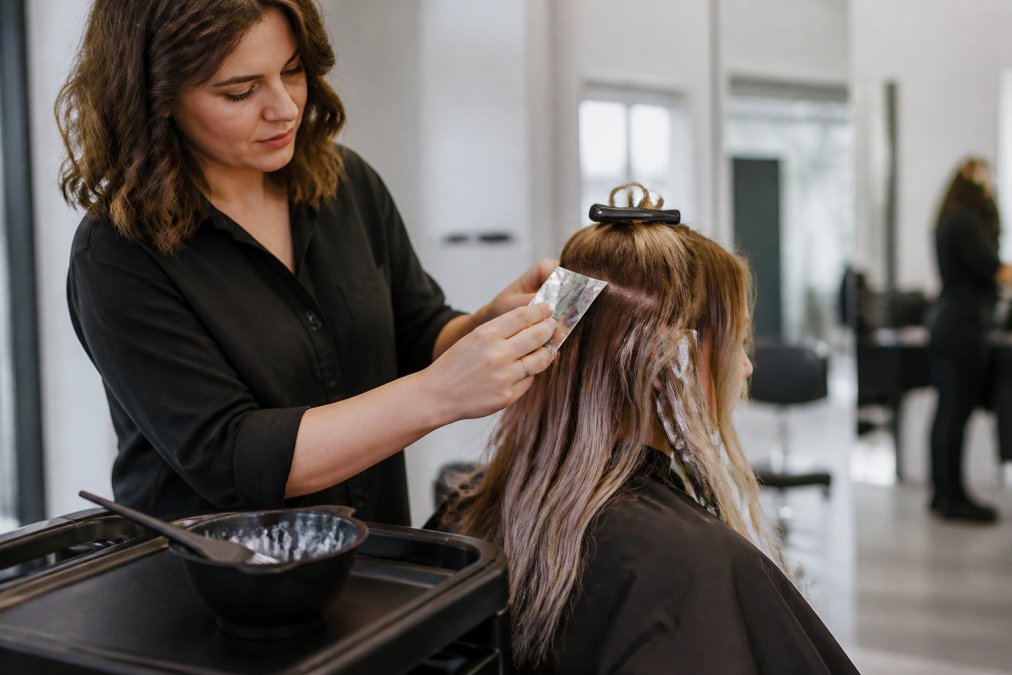
Every colorist hits the same wall: the faster you move through a foil service, the more precision slips. Secure foil application means placing, folding, and processing foils so they stay anchored through saturation, flipping, and processing without shifting at the root. Speed and accuracy are not opposites, but they pull against each other, and how you manage that tension decides whether a four-hour balayage runs smoothly or becomes a repair job.
Comparison Table: Workflow Speed vs Precision Control
The table below maps common foil-application decisions against their speed and precision outcomes. The key column is the last one: whether a decision moves both variables together or forces a trade.
| Decision Point | Speed Impact | Precision Impact | Trade-Off Type | Best For |
|---|---|---|---|---|
| Pre-cut, pre-folded foils | High gain | Neutral to positive | Additive | High-volume colorists |
| Hand-cut foil rolls | Slower | Depends on cutting skill | Neutral | Custom section sizes |
| Embossed no-slip texture | Moderate gain | High gain | Additive | Root stability, flipping |
| Smooth foils | Faster to place | Lower grip at root | Trade-off | Simple, low-tension sections |
| Wide feathered brush tip | High gain | High gain | Additive | Balayage, blending |
| Narrow stiff brush | Slower coverage | Higher control on edges | Trade-off | Detail work, root touch-ups |
| Tilted-edge bowl with brush rest | Moderate gain | Moderate gain | Additive | Multi-application services |
| Batching placements before saturating | High gain | Neutral | Additive | Quadrant-by-quadrant workflows |
| Saturating each foil immediately | Slower | Slight gain | Trade-off | Single-foil corrections |
Why Some Decisions Are Additive and Others Are Trade-Offs
The pattern is consistent: tools and habits that reduce repositioning help speed and precision at once, while tools that only speed up placement trade away grip. The distinction is whether a change removes a step or compresses one.
- Additive changes remove a step. Pre-cut foils eliminate cutting. A brush rest eliminates the dip-and-reposition cycle. An embossed texture eliminates re-pressing after flipping. When a step disappears, both the clock and the defect rate improve.
- Trade-off changes compress a step. A narrow stiff brush covers less area but gives finer edge control. Saturating each foil immediately slows throughput but catches a shifted fold before it sets. These are legitimate choices, but they should be deliberate, not accidental.
Where Precision Actually Degrades at Speed
Precision loss is rarely a single failure, it is a stack of small tolerances that compound:
- Section thickness tolerance. A slightly too-thick weave pushes the foil open as hair swells during processing. At slow speed you feel the resistance and correct it; at speed you fold and move on.
- Product load tolerance. Oversaturation at the root is the leading cause of slippage. A feathered brush spreads a thinner, more even layer, widening the acceptable load range.
- Fold consistency tolerance. A loose fold holds until the foil is flipped, then releases. An embossed surface adds friction that widens the margin for an imperfect fold.
- Repositioning tolerance. Reaching for a new tool or re-dipping disturbs foils already placed. A bowl with a brush rest and a pop-up dispenser keep both hands in the work zone.
The Practical Rule
If a workflow change lets you skip a motion, adopt it, it improves both sides. If it only lets you perform a motion faster, test it against your defect rate before committing. Most colorists find the additive changes (pre-cut foils, embossed texture, feathered brushes, brush rests) deliver the largest combined gain, while trade-off changes are best reserved for detail work where edge control matters.
Best Tools for Balayage and Foil Techniques
The best tools for balayage and foil techniques remove friction from the parts you repeat most: picking up a foil, loading the brush, and sweeping color evenly. Below are the ESTL+CO tools built for that, plus what each changes in practice.
Asymetrie Foils: No-Slip Embossed Design
The Asymetrie Collection uses a no-slip embossed design that gives the foil a stabilizing texture at the root, most valuable during the flip, when smooth foils slide and take your section with them. Each sheet measures 5 inches by 11 inches at 12 microns, and each box holds 500 pre-cut, pre-folded sheets dispensed from a pop-up box. The pre-cut format removes the cutting step entirely, where many "fast" workflows quietly lose time.
Professional beauty industry standards and safety guidance
Elegance Brushes and Bowls: Ergonomic Precision
The Elegance Brush pairs a wide feathered tip with a wide base for an easier grip. The feathered bristles spread color more evenly and feel comfortable against the scalp, while the tapered tip creates neater sections. The ergonomic shape prevents the tension and pinching stiffer brushes cause during long services. Each box includes two stain-resistant brushes in Black, Beige, Mauve, or Violet.
How to Prevent Foil Slippage During Color Application
Foil slippage almost always traces to one of four causes: too much product at the root, a smooth foil surface, an unstable fold, or a section that was too thick. Work through them in this order.
- Check your section size. Thick sections push the foil open as they swell. Keep weaves and slices thin enough that the foil closes flat.
- Control product at the root. Oversaturation is the biggest cause of sliding. Apply a thinner layer near the root and build saturation toward the mid-lengths.
- Use a textured foil. An embossed surface gives hair something to grip; smooth foils depend entirely on the fold.
- Fold with intent. A firm, consistent fold beats a fast one. Crease along the hair, then secure the edges.
- Stabilize before flipping. If the foil shifts when you turn it, the fold was too loose or the section too wet.
- Keep the bowl within reach. Repositioning mid-application disturbs foils already placed.
Professional Hair Tinting Workflow Best Practices
A professional hair tinting workflow is a repeatable sequence, not improvised steps. The fastest colorists never break their own order of operations.
- Set up before the client sits down. Foils dispensed, bowls loaded, brushes within reach.
- Work in a fixed direction. Section, place, saturate, fold, move. Consistency reduces decision fatigue.
- Match the tool to the task. Feathered brushes for blending and balayage, tapered tips for clean edges.
- Batch your foil placements. Place several foils, then saturate them together instead of switching tasks every 30 seconds.
- Track your time per section. Knowing how long a quadrant takes shows where the workflow slows down.
Real-Time Monitoring and Sustainability in High-Speed Application
High-speed application has two rarely discussed costs: you cannot see problems forming, and you generate more waste. Both are addressable, and both are where a workflow-first approach can beat a precision-first one, if you build the feedback loops in deliberately.
Real-Time Monitoring Without Sensors
Industrial foil application uses inline sensors, tension rollers, thickness gauges, optical defect scanners, to catch deviations within milliseconds. A salon chair has none of that. What a colorist has is a set of cheap, fast feedback signals most people ignore when moving quickly. Treat them as your monitoring layer:
- Tactile feedback at the fold. Run your finger along the crease before moving on. A loose-feeling fold will release on the flip. It takes under a second and catches the most common failure.
- Visual check at the root. Look at the foil edge where it meets the scalp. Pooling product or a lifting foil means the section was too wet or too thick. Catching it here costs seconds; catching it after processing costs a repair.
- Weight feedback on the brush. A feathered brush loaded from the tilted edge picks up a consistent bead. If the brush feels heavy or the bead looks uneven, you are overloading, the leading cause of slippage.
- Pattern feedback across the head. If the third foil in a quadrant shifted, the first two probably did too. One early correction is cheaper than four at the end.
Sustainability and Waste in High-Speed Application
Waste in foil application comes from three places, and high-speed workflows amplify all three:
- Offcuts from hand-cut rolls. Trimming a roll to size produces scrap on every section. Pre-cut sheets eliminate this category, you take exactly the sheet you need, and nothing goes in the bin.
- Over-dispensed product. A bowl that forces re-dipping mid-application encourages overloading the brush to avoid a second trip. A tilted-edge bowl with a brush rest lets you load a consistent bead in one motion, reducing product waste per section.
- Rework. A slipped foil that must be re-placed, re-saturated, or corrected after processing consumes foil, product, and time. Every additive workflow change above is also a waste-reduction change, because it lowers the rework rate.
Conclusion: Balancing Elevated Workflow and Precision
The trade-off between speed and accuracy is real, but not fixed. It shrinks when your tools remove the small frictions that force a choice between moving fast and staying precise. Embossed foils that grip at the root, feathered brushes that spread color evenly, and bowls that hold the brush between sweeps all push both sides in the same direction.
Frequently Asked Questions
How does tool ergonomics impact the precision of foil application?
Ergonomic tools reduce hand fatigue and allow for steadier control during long coloring sessions. Brushes with wide bases and feathered tips, like the ESTL+CO Elegance Brush, prevent tension and pinching that can cause shaky placement. Bowls that fit comfortably in the palm, such as the ESTL+CO Hair Color Bowl, keep the tint accessible without awkward wrist angles. When your hands stay relaxed, you can place foils with consistent tension and alignment, which directly improves the security of each foil and the overall precision of the application.
What is the difference between high-speed application and precision foil placement?
High-speed application focuses on moving through sections quickly, often using pre-cut, pre-folded foils and easy-dispensing boxes to reduce downtime. Precision foil placement prioritizes exact tension, clean sectioning, and no-slip positioning to ensure even color development. In practice, the two goals compete: rushing can lead to slippage, while over-focusing on one foil slows the service. The best approach is to use tools that support both, like the Asymetrie Collection foils with embossed grip, so you maintain speed without sacrificing secure foil application.
Why is secure foil application critical for complex balayage results?
Secure foil application keeps the hair section stable while color or bleach processes. If a foil slips, the hair can shift, causing uneven saturation, bleeding, or patchy lift. For balayage, where seamless blends are the goal, any movement disrupts the intended gradient. Using no-slip foils and consistent tension prevents these issues. The ESTL+CO Asymetrie foils are designed with an embossed texture that grips the hair at the root, reducing the chance of sliding when you flip foils or continue working nearby sections.
How can professional tint tools improve daily salon workflow?
Professional tint tools cut down on repetitive adjustments and cleanup. Stain-resistant bowls and brushes mean less time scrubbing between clients, and ergonomic designs reduce hand strain so you can work through a full day without losing speed. Pre-cut, pre-folded foils eliminate tearing and folding time. When each tool is designed for the task, you spend less energy on workarounds and more on the service itself. ESTL+CO's Elegance Collection is built for this: durable, comfortable, and ready for back-to-back color applications.
What features should colorists look for in high-performance foil brushes?
Look for a brush with a wide feathered tip for smooth color spread, a tapered tip for neat sectioning, and an ergonomic handle that prevents cramping. Stain resistance matters for easy cleanup and longevity. The ESTL+CO Hair Color Brush offers these features: a wide base for grip, feathered bristles for client comfort, and a tapered tip for precise application. It comes in four stain-resistant colors and two brushes per box, making it a practical choice for colorists who need reliable tools that support both speed and precision.