

Professional Tint Bowl Set for Salons: 2026 Guide
Table of Contents
- What a Professional Tint Bowl Set Actually Needs
- Why Stain-Resistant Tint Bowls Beat Cheap Alternatives
- ESTL+CO Tint Bowls and Brushes: What You Get at Each Price
- How to Clean Professional Hair Tint Brushes Without Damaging Bristles
- Salon Color Station Organization Tips for High-Volume Days
- Calibration, Accuracy, and Ergonomic Strain: What Most Sets Ignore
- Frequently Asked Questions
Last Updated: October 1, 2026
What a Professional Tint Bowl Set Actually Needs
A professional tint bowl set is a collection of mixing bowls and application brushes built for hair color services, designed to hold developer and dye without warping, staining, or slipping mid-application. ESTL+CO builds these tools for colorists who mix multiple formulas a day.

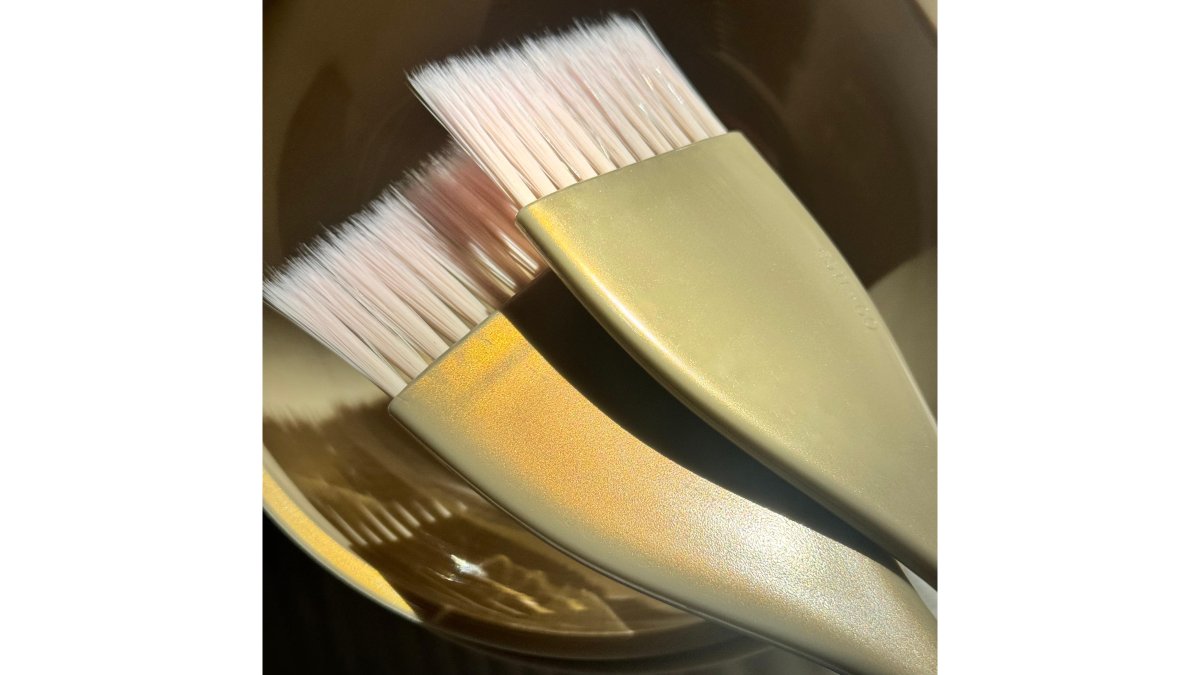
Bowl Capacity, Weight, and the Non-Slip Base
A working tint bowl holds enough product for a full retouch without forcing a mid-service refill. The ESTL+CO professional salon hair color bowls are shaped to sit in the palm, with a tilted edge that keeps dye inside the bowl as you sweep color onto the hair.

Brush Bristle Shape and Ergonomic Grip
Feathered bristles spread color more evenly than flat-cut bristles, which is why they matter for balayage and foil work. The ESTL+CO feathered tint brushes use a wide feathered tip and a tapered end for cleaner sectioning.
Why Stain-Resistant Tint Bowls Beat Cheap Alternatives
Stain-resistant tint bowls hold their color and shape across repeated exposure to developer and bleach, while untreated plastic absorbs pigment and clouds within weeks.
The Real Price Difference
The gap is smaller than most colorists assume. A two-bowl box from ESTL+CO runs $19.00. Cheap bowls cost less per unit but get replaced more often, and a stained bowl makes it harder to judge the true tone of the formula you just mixed.
Chemical Compatibility: What Bleach and Developer Do to Plastic
This is the gap most retail product pages skip. Developer is an oxidizing agent and bleach powder is alkaline and abrasive; together they attack low-grade plastic, which is why cheap bowls develop a chalky film and hold onto pigment.
ESTL+CO Tint Bowls and Brushes: What You Get at Each Price
ESTL+CO sells its tint tools three ways: bowls alone, brushes alone, and a full station bundle. Each is a one-time purchase, with no subscription or refill requirement.
| Option | Price | What's in the Box | Best For |
|---|---|---|---|
| Hair Color Bowls | $19.00 | 2 stain-resistant bowls | Colorists who need extra bowls per station |
| Hair Color Brushes | $16.00 | 2 feathered brushes | Replacing worn brushes without buying bowls |
| Complete Station Bundle | $52.50 | 2 bowls, 2 brushes, 1 barrier cream stick | New stations and full kit replacement |
Hair Color Bowls: $19 for a Two-Bowl Box
Two bowls per box at $19.00 works out to $9.50 per bowl. The Hair Color Bowls listing describes a sturdy material built to sustain drops and last color after color, with a tilted edge that keeps product in the bowl during application.

Hair Color Brushes: $16 for Two Feathered Brushes
Two brushes for $16.00, available in black, beige, mauve, and violet. The Hair Color Brushes listing notes an ergonomic design built to prevent the tension and pinching that leaves colorists with cramped fingers.
Complete Station Bundle: $52.50 for the Full Setup
The Complete Station Bundle includes two feathered brushes, two color bowls, and a barrier cream stick for $52.50. Bought separately, the bowls and brushes total $35.00, so the bundle adds the barrier stick and saves you a second order.
How to Clean Professional Hair Tint Brushes Without Damaging Bristles
Cleaning tint brushes properly means rinsing color out under lukewarm water immediately after the service, working from the bristle tips toward the base, and never soaking them overnight. Hot water sets pigment and warps bristles, and the failure modes are chemical, not just mechanical.
Why Heat and Soaking Break Down a Brush
Color, developer, and lightener are all designed to open the hair cuticle, and they do the same thing to a brush over time. Developer is an oxidizing agent and heat accelerates oxidation, so rinsing under hot water speeds the reaction between residual developer and the bristle fibers, which is why a brush rinsed hot splays and stiffens within weeks.
The Cleaning Routine That Protects the Bristles
- Rinse the bristles under lukewarm water within 15 minutes of finishing the service. The longer color sits, the more it cures onto the bristle surface.
- Work a drop of mild soap through the bristles with your fingertips, tip to base. Do not scrub the ferrule.
- Rinse until the water runs clear, then shake out excess with a downward flick, not a sideways one.
- Lay the brush flat to dry with the bristles over the edge of the counter so air reaches the base.
- Store bristle-up once fully dry.
Skip the overnight soak. Water sitting at the base of the bristles breaks down the bond over time.
Cleaning the Bowl Without Damaging the Surface
The bowl needs a different routine because its failure mode is surface abrasion, not bristle fatigue. Rinse it under lukewarm water immediately after mixing, before residue dries. Dried lightener is abrasive, and scrubbing it off with an abrasive pad creates the micro-scratches that trap pigment later.
A Quick Sanitation Note
Between clients, a rinse is not a sanitize. Most state cosmetology boards require tools that contact a client's hair or scalp to be cleaned and disinfected between uses, and mixing bowls fall into that category when they touch the hair during application. Check your state board's rules for the disinfectant concentration and contact time it accepts; a common pattern is a hospital-grade disinfectant mixed to the label ratio, with the bowl fully submerged for the listed contact time, then air-dried rather than towel-dried.
What This Means for Tool Lifespan
A brush rinsed warm, dried flat, and never soaked will outlast one rinsed hot and stored wet by a wide margin, and the same goes for a bowl wiped before residue dries versus one scrubbed after. The routine takes about 90 seconds per service; replacing a stained bowl or splayed brush takes longer and costs more.
Salon Color Station Organization Tips for High-Volume Days
Station organization is the difference between a colorist who resets in 30 seconds and one who loses five minutes per client. But the bigger cost of a disorganized station is the ergonomic strain you build up reaching, twisting, and re-gripping tools that aren't where your hand expects them.
The Reach Zone That Protects Your Shoulder
Most colorists set up a station by what looks tidy, not by what keeps the arm neutral, forcing a reach across the body or a twist at the waist every time they pick up the bowl.
- Primary zone, within about 12 to 16 inches of your dominant hand, at roughly elbow height. This is where the tint bowl, the brush, and the barrier cream belong. You should be able to pick up the bowl without extending your arm or rotating your torso.
- Secondary zone, within arm's reach but requiring a small extension. Foils, clips, and sectioning tools go here.
- Tertiary zone, requires standing up or turning. Backup bowls, extra developer, and stock go here.
Why the Bowl's Rest Position Matters More Than You Think
Where you set the brush down between sweeps determines how many times per service you re-grip it. A brush balanced on the rim or laid on the counter forces you to pick it up, find the grip, and reposition your hand every time, dozens of micro-adjustments over a full head of foils.
Color-Coding as an Error-Prevention System
Assigning one bowl per formula family is usually framed as an organization tip, but it is really an error-prevention system. When lightener, gloss, and toner each have a dedicated bowl, you remove the possibility of mixing a toner in a bowl that still carries lightener residue, invisible when wet, but an unexpected lift shift once the formula processes.
The Pre-Service Setup Sequence
The setup that works, in order:
- Assign one bowl per formula family and stick to it for the day.
- Stage foils, clips, and barrier cream within arm's reach before the client sits down.
- Set the bowl in the primary zone with the brush in the U-shaped cutout, bristles down.
- Wipe bowls immediately after each mix, before residue dries.
- Reset the station between clients, not between services. A two-minute reset after each client is cheaper than a ten-minute scramble before the next one.
A grab-and-go station means you never leave the chair mid-service, the whole point of buying tools designed as a set rather than assembled piece by piece. The deeper benefit is that a station built around reach and grip reduces the daily strain that builds into a chronic problem over a career.
Calibration, Accuracy, and Ergonomic Strain: What Most Sets Ignore
Two things separate a set that works from one that just looks professional: measurement accuracy and hand strain over a full day.
Frequently Asked Questions
What features should I look for in a professional tint bowl?
Prioritize a tilted edge that keeps dye from spilling during application, a non-slip base, and a U-shaped cutout that holds your tint brush between sweeps. Stain-resistant material matters if you run multiple color services a day. ESTL+CO's Hair Color Bowls, sold as a two-bowl box for $19, include a U-shaped cutout and a tilted edge, and come in black, mauve, and beige.
How do I prevent hair color staining on tint bowls?
Rinse bowls with cool water immediately after each service, before pigment has time to bond to the surface. Avoid abrasive scrubbers that scratch plastic, since scratches trap dye. Stain-resistant tint bowls resist absorption far better than standard plastic, which is why they hold their appearance across repeated bleach and developer exposure. Store bowls dry and stacked rather than nested wet, which traps moisture and residue.
How often should you replace salon tinting brushes and bowls?
Replace brushes when bristles splay, shed, or lose their feathered edge, which typically happens faster with daily bleach work than with standard tint. Replace bowls when you see deep scratches, cracks, or a lingering stain that rinsing no longer removes. In a high-volume station, many colorists rotate a fresh set every few months. Buying two-brush and two-bowl boxes, like ESTL+CO's $16 and $19 options, makes rotation practical.
Are there eco-friendly options for salon tinting equipment?
The most effective step is buying reusable, durable tools instead of disposable bowls and brushes that go in the trash after one client. A reusable set that survives hundreds of applications cuts waste significantly. When a bowl or brush finally wears out, check whether your local waste program accepts the plastic type before disposal. Stain-resistant, reusable tint bowls and feathered brushes are the practical low-waste choice for most salons.
Will a feathered tint brush work for balayage and foil work?
Yes. A tapered tip creates neater sections for foil placement, while feathered bristles spread color evenly across the strand, which suits balayage and freehand techniques as well as standard root retouches. The wide base gives you a steadier grip during long application sessions. ESTL+CO's Hair Color Brushes, $16 for two, are built with a wide feathered tip and ergonomic base to reduce hand tension.