

How to Clean Professional Hair Tint Brushes
Table of Contents
- What You'll Need Before You Start
- Step-by-Step: How to Clean Professional Hair Tint Brushes After Every Use
- How to Remove Hair Color Stains from Brushes
- Best Disinfectant for Salon Tools: Sanitization vs. Cleaning
- Material-Specific Cleaning Protocols for Hair Tint Brushes
- How Often to Clean and When to Replace Hair Tint Brushes
- Storage and Drying Solutions That Extend Tool Lifespan
- Common Mistakes That Damage Bristles
Last Updated: August 22, 2026
Dirty brushes compromise application precision and create cross-contamination risks between clients. Hair tint brushes accumulate color residue, chemical buildup, and trapped hair after every service, shortening their lifespan if not cleaned correctly. This guide covers the right way to clean professional tint brushes, from post-service rinsing to deep cleaning protocols and material-specific care.
What You'll Need Before You Start
Gather supplies before you begin to avoid scrambling with wet color on the bristles.
A well-stocked cleaning station should include:
- Warm water (not hot; excessive heat degrades synthetic fibers)
- Gentle, ammonia-free shampoo or dedicated brush cleanser
- A small mixing bowl for soaking
- Baking soda for stubborn stain removal
- A tail comb or fine-tooth comb to remove trapped hair
- A hair removal tool or soft brush for ferrule cleaning
- Clean salon towels or a drying rack
- A disinfectant solution appropriate for salon tools
- Disposable gloves for chemical cleaning
ESTL+CO's feathered brushes are designed with stain-resistant materials to reduce color adhesion, meaning less scrubbing and faster turnaround between clients.

Step-by-Step: How to Clean Professional Hair Tint Brushes After Every Use
Professional hair tint brushes must be cleaned immediately after every service. Color that dries in the bristles becomes significantly harder to remove and accelerates bristle degradation.
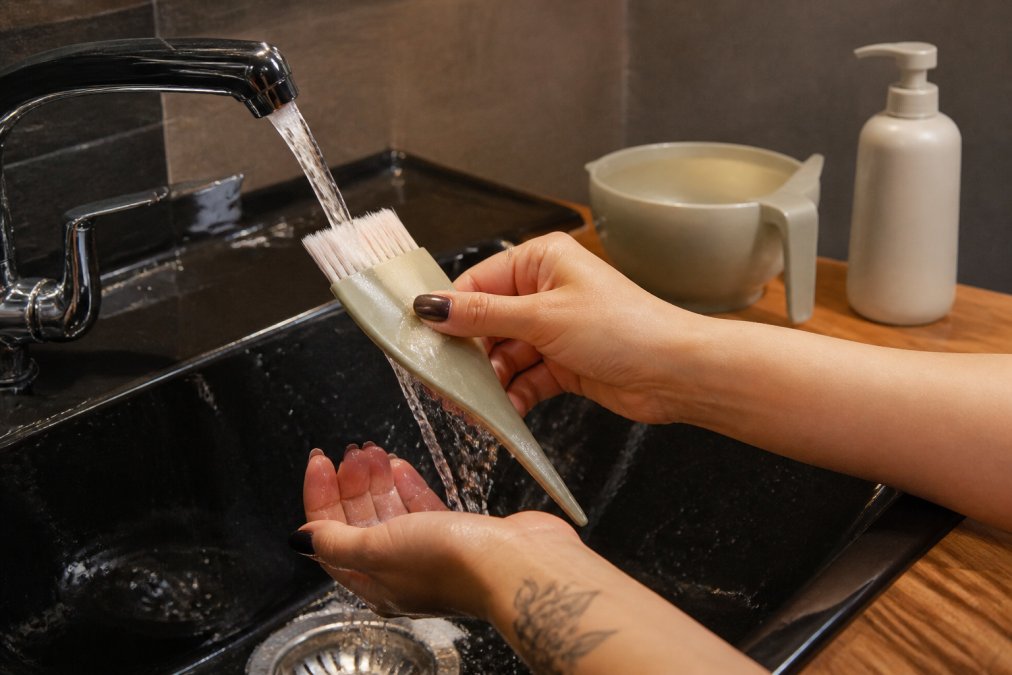
Step 1: Remove Trapped Hair from the Bristles
Pull out trapped hair before water touches the brush. Wet hair tangles tighter and becomes nearly impossible to remove from the ferrule once soaked.
Run a tail comb or fine-tooth comb through the bristles from the ferrule outward, working slowly in one direction. For wide feathered tips, use your fingers first to loosen bulk, then follow with the comb.
Step 2: Rinse Under Warm Water
Hold the brush bristle-side down under warm running water. This direction prevents water from seeping into the ferrule, where most brush damage originates. Water trapped in the ferrule loosens the adhesive that holds bristles in place, causing shedding over time.
Rinse until the water runs mostly clear, which may take 30 to 60 seconds for heavy color applications.
Step 3: Wash with Gentle Shampoo
Apply a small amount of gentle, ammonia-free shampoo directly to wet bristles. Work it in with your fingers using circular motions from the ferrule toward the tips. Avoid harsh dish soaps that strip synthetic fibers of their flexibility and shape retention.
Rinse thoroughly. Shampoo residue can interfere with color mixing in your next service.
Step 4: Soak for Deep Cleaning
For deep cleaning, which every brush needs at least once weekly in a high-volume salon, soaking is essential.
Fill a mixing bowl with warm water and add gentle shampoo or professional brush cleanser. Submerge the bristles only, keeping the ferrule and handle above the waterline. Soak for five to ten minutes. For stubborn buildup, add a teaspoon of baking soda. Baking soda is mildly abrasive and alkaline, breaking down oxidized color deposits without damaging synthetic fibers.
After soaking, rinse under warm running water until clear, then gently squeeze excess moisture with a clean towel.
Step 5: Dry Correctly to Protect Bristle Integrity
Lay brushes flat on a clean salon towel or hang them bristle-side down on a drying rack. Never stand them bristle-up in a cup while wet; gravity pulls moisture into the ferrule. Never use a blow dryer or direct heat, which warps synthetic fibers and breaks down the ferrule bond.
Air dry completely before storing. A dedicated drying rack ensures brushes are ready for the next client without being stored damp.
How to Remove Hair Color Stains from Brushes
The most effective approach for removing hair color stains is a baking soda paste. Mix baking soda with just enough warm water to form a thick paste, apply it to stained bristles, let it sit for five minutes, then scrub gently with your fingers and rinse.
For bleach-related staining, the same method works, though some discoloration on synthetic bristles is permanent after extended exposure. A diluted bleach solution wiped on the bristle surface only is a more aggressive option reserved for heavily stained brushes you're considering replacing. Always rinse thoroughly and check bristle condition afterward.
According to OSHA guidelines on salon chemical safety, proper handling and rinsing of chemical agents in salon environments is essential to prevent skin and respiratory exposure.
Some staining is cosmetic and doesn't affect performance. If bristles are still flexible, the ferrule is secure, and the brush applies color evenly, a stained brush remains functional.
Best Disinfectant for Salon Tools: Sanitization vs. Cleaning
Cleaning and sanitization are not the same step. Cleaning removes visible debris, hair, and color residue. Sanitization reduces microbial contamination to safe levels. Both are required, and they must happen in sequence: you cannot effectively sanitize a dirty brush.
For synthetic-bristle tint brushes, quaternary ammonium compounds are the most widely used disinfectant in salon environments. They're effective against bacteria and fungi and less damaging to synthetic fibers than high-concentration alcohol-based disinfectants.
According to CDC guidelines on environmental infection control, surfaces and tools that contact skin should be cleaned before disinfection to ensure the disinfectant can reach microbial contamination.
After cleaning and drying, wipe the bristles and handle with a quaternary ammonium solution using a clean cloth. Allow the contact time specified on the product label before storing or using the brush.
Material-Specific Cleaning Protocols for Hair Tint Brushes
Cleaning protocols that work for one material can damage another.
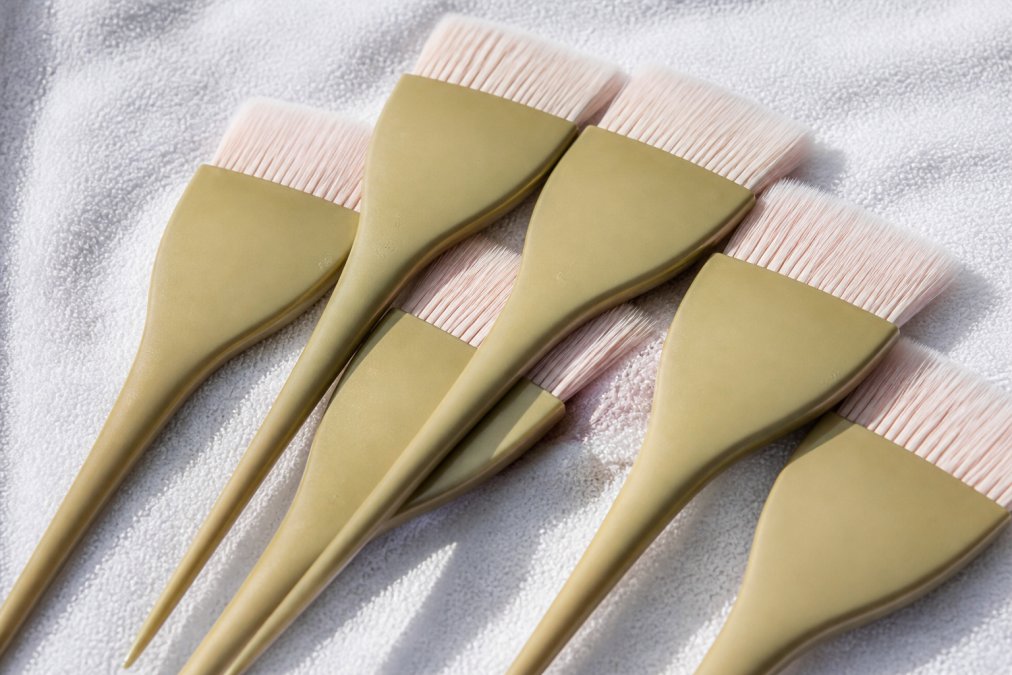
Synthetic fiber brushes (most common) tolerate gentle shampoo, baking soda soaks, and quaternary ammonium disinfectants well. Avoid acetone-based solvents, high-concentration alcohol, and soaking beyond 15 minutes, which break down fiber flexibility and cause permanent bristle splaying.
Natural hair bristle brushes are less common but require gentler handling: use only ammonia-free shampoo, avoid soaking, and condition bristles occasionally with hair conditioner to prevent brittleness.
Silicone-tipped applicators are easiest to clean; warm water and mild soap suffice. Check manufacturer guidance for bleach compatibility.
ESTL+CO feathered brushes use synthetic fibers engineered for color work, built to withstand the cleaning protocols described above.
| Brush Type | Safe Cleanser | Soaking | Disinfectant | Avoid |
|---|---|---|---|---|
| Synthetic fiber | Ammonia-free shampoo | 5-10 min max | Quaternary ammonium | Acetone, high-alcohol |
| Natural hair bristle | Ammonia-free shampoo | No soaking | Diluted gentle disinfectant | Chemical solvents |
| Silicone applicator | Mild soap | As needed | Most disinfectants | Check manufacturer |
How Often to Clean and When to Replace Hair Tint Brushes
Clean brushes after every single use. High-volume salons should deep clean every brush at least weekly; lower-volume studios can extend to every two weeks. Sanitization should happen after every client contact.
Replace brushes when bristles splay and don't return to shape, the ferrule separates or wobbles, bristles shed during normal application, persistent chemical odor remains after cleaning, or color application becomes uneven.
Properly maintained professional brushes should last through hundreds of services. Rapid degradation usually results from improper drying, chemical incompatibility, or skipped cleaning steps.
Storage and Drying Solutions That Extend Tool Lifespan
Storage is underrated as a maintenance factor. A correctly cleaned but poorly stored brush will degrade faster than it should.
Use a dedicated drying rack that holds brushes bristle-side down or horizontally. Horizontal storage prevents moisture migration into the ferrule while drying. Once fully dry, store brushes in a clean, closed container or roll to protect bristles from deformation.
Avoid storing brushes loose in drawers where bristles can bend or compress. Bent bristles don't recover and cause uneven color application.
For traveling stylists, a hard-sided brush case with individual slots protects the ferrule from impact and keeps bristles from contacting other tools.
According to Professional Beauty Association guidelines on salon tool hygiene, proper storage of salon implements between uses is key to maintaining tool performance and client safety standards.
Common Mistakes That Damage Bristles
The most common mistake is storing brushes wet, the fastest way to destroy the ferrule bond and cause bristle loss. Build drying into your workflow, not around it.
Using hot water is the second mistake. Warm water loosens color residue; hot water distorts synthetic fibers. The difference matters over hundreds of cleaning cycles.
Scrubbing bristles against rough surfaces creates micro-abrasions that accumulate over time, causing loss of smooth application feel. Always use your fingers or soft cloth, never a brush or textured surface.
Skipping trapped hair removal before rinsing is another issue. Wet hair in the ferrule holds moisture against adhesive for hours. Remove it dry, every time.
Using wrong cleaning chemicals, acetone, high-concentration isopropyl alcohol, harsh solvents, strips synthetic fibers of flexibility, resulting in stiff brushes that apply color unevenly and need replacing sooner.
Bristle damage is cumulative. Repeated shortcuts add up. Brushes that last receive the same disciplined care on the hundredth service as the first.
Maintaining professional hair tint brushes correctly separates high-performing color studios from those constantly replacing tools and chasing inconsistent results. ESTL+CO's feathered brushes are built for rigorous daily professional use, with stain-resistant materials and ergonomic construction that make both application and cleaning more efficient. Get started with ESTL+CO's Hair Color Brushes and give your tools the foundation they need to perform at the highest level, service after service.
Frequently Asked Questions
How do you disinfect hair color brushes between clients?
After rinsing out all hair color residue with warm water and gentle shampoo, submerge your hair tint brushes in an EPA-registered disinfectant solution, such as a barbicide or quaternary ammonium product, for the contact time specified on the label. Rinse thoroughly, then air dry on a clean rack. This two-stage process (cleaning first, then disinfecting) is required to meet professional salon hygiene standards, since disinfectants cannot penetrate organic material like leftover dye.
Can you use dish soap to clean hair tint brushes?
Dish soap works in a pinch for removing fresh hair color residue because its degreasing agents break down chemical buildup effectively. However, frequent use on synthetic fiber bristles can strip protective coatings and accelerate fraying. A gentle, ammonia-free shampoo is a safer daily option for professional hair tint brushes, as it cleans thoroughly without degrading bristle integrity or loosening the ferrule over repeated washing.
How often should you replace professional hair tint brushes?
Most professional tint brushes used in high-volume salons need replacing every three to six months, depending on cleaning frequency and the chemical formulas used. Signs it is time to replace include splayed or fraying bristles that no longer hold their shape, a loosened ferrule that allows bristles to shed, or permanent staining that affects color accuracy during application. Consistent cleaning after every client significantly extends a brush's usable life.
What is the best way to remove stubborn hair dye from bristles?
For stubborn hair color stains on bristles, make a paste with baking soda and a small amount of gentle shampoo, work it into the bristles, and let it sit for five to ten minutes before scrubbing gently and rinsing with warm water. For oxidative color buildup, a short soak in a diluted clarifying solution can help. Avoid soaking brushes with wooden handles for extended periods, as prolonged water exposure causes the wood to swell and crack the ferrule.
This article was written using GrandRanker