

Ergonomic Hair Brushes for Professional Colorists
Table of Contents
- Why Ergonomic Hair Brushes Matter for Professional Colorists
- How to Prevent Wrist Pain in Hair Styling
- Key Features of Professional-Grade Ergonomic Brushes
- Best Tint Brushes for Balayage and Complex Techniques
- Essential Hair Coloring Kit for Stylists
- Durability and Longevity: Salon-Grade Investment
- Choosing the Right Brush for Your Workflow
- Conclusion
Last Updated: August 23, 2026
Why Ergonomic Hair Brushes Matter for Professional Colorists
Professional colorists spend hours daily applying color, blending, and sectioning hair with precision. The repetitive gripping, twisting, and pressure required creates cumulative strain on hands, wrists, and forearms. Ergonomic hair brushes are essential for protecting your career longevity and daily comfort.
An ergonomic hair brush is specifically designed with hand comfort and injury prevention as primary engineering goals. Unlike standard brushes that force your hand into unnatural positions, ergonomic designs distribute pressure evenly across your palm and fingers, reducing tension and fatigue.

At ESTL+CO, we've designed our feathered brushes specifically for professional color work. The wide, tapered handle reduces gripping force required, while balanced weight distribution prevents the hand strain that builds over years of salon work.
Hand and wrist pain isn't just uncomfortable, it's a career threat. Colorists who develop repetitive strain injuries face reduced income, missed bookings, and potential permanent damage that can force them out of the profession entirely. Investing in ergonomic tools early protects your career longevity.
How to Prevent Wrist Pain in Hair Styling
Wrist pain in hair styling stems from three primary sources: repetitive gripping force, poor hand positioning, and inadequate tool design. Preventing this pain requires addressing all three simultaneously.
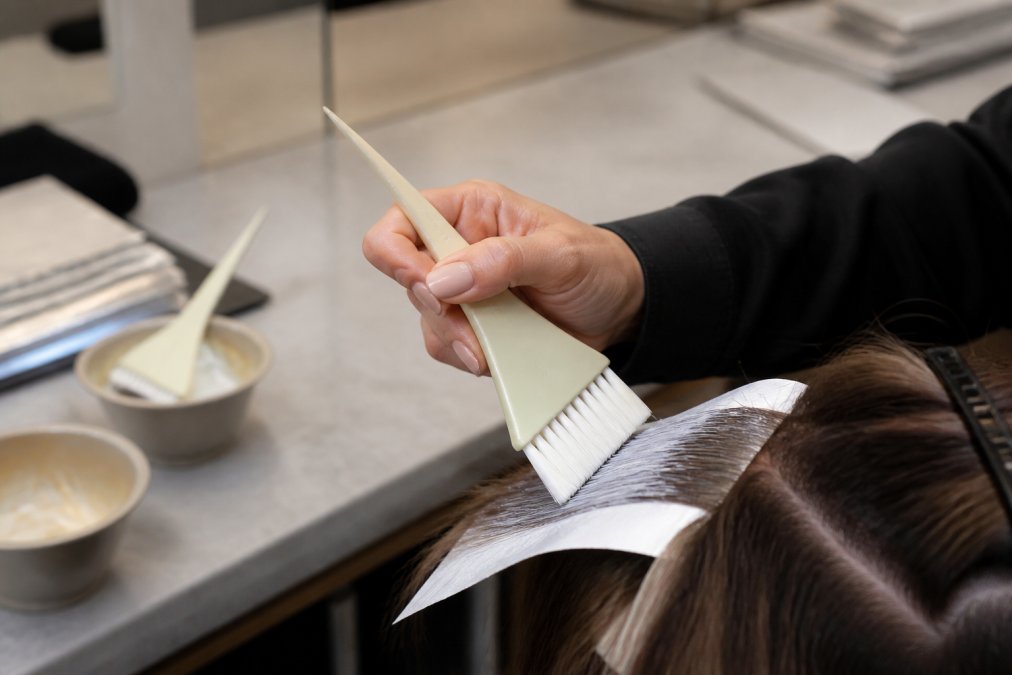
The first prevention strategy is grip technique. Most colorists grip their brushes too tightly, especially during precise applications like balayage or root touch-ups. This white-knuckle grip fatigues your forearm muscles and creates tension that radiates into your wrist. A properly designed ergonomic brush with a non-slip surface allows you to maintain control with less gripping force than traditional brushes. The feathered bristle design also reduces the pressure needed to blend color evenly.
The second strategy involves wrist positioning. Your wrist should remain neutral, not bent backward, forward, or twisted, during most applications (osha.gov). Brushes with angled or tapered handles naturally guide your hand into this neutral position, while straight handles force awkward wrist angles.
The third strategy is taking micro-breaks. Every 30-45 minutes of continuous color application, pause for 2-3 minutes to stretch your hands, wrists, and forearms (osha.gov). Rotate your wrists in circles, spread your fingers wide, and gently flex your palms. These brief pauses prevent cumulative fatigue and actually improve your overall output by preventing the slowdown that occurs when pain sets in.
Weight distribution matters significantly. A brush that's too heavy forces your arm muscles to work harder, transferring strain directly to your wrist. ESTL+CO's ergonomic brushes are engineered to a specification that supports effortless use and control.
Key Features of Professional-Grade Ergonomic Brushes
Professional-grade ergonomic brushes share specific design characteristics that distinguish them from consumer-level alternatives.
Feathered Bristle Design and Precision Application
A feathered bristle design features tapered, graduated bristles that are longer at the outer edges and shorter toward the center. This configuration creates a naturally blended application pattern and reduces the pressure required to achieve even color saturation.
Traditional flat or dense bristle patterns force you to apply consistent pressure across the entire brush width to avoid streaking. Feathered bristles distribute color more naturally, allowing you to use lighter pressure and still achieve professional results. This lighter pressure directly translates to reduced hand fatigue during long color sessions. The tapered tip also enables precision sectioning without the brush slipping or requiring excessive hand tension.
During complex techniques like balayage or babylights, the feathered design allows you to paint finer sections with greater control.
Non-Slip Grip Technology and Weight Distribution
A slippery handle forces you to grip harder to maintain control, which is the primary driver of hand fatigue. Professional ergonomic brushes use textured, non-slip grip surfaces with rubber or silicone coating featuring micro-texture patterns. This surface allows you to maintain control with a relaxed grip.
The grip should be contoured to fit your hand's natural shape, with a slightly wider base near your palm and a tapered section for your fingers. This contouring prevents the handle from rolling in your hand during application.
Weight distribution is equally critical. A well-designed brush concentrates weight in the bristle head and handle base, keeping the center of gravity close to your hand. This prevents the "tail weight" effect where a bottom-heavy brush pulls your wrist downward during extended use.
Material Quality: Stain-Resistant and Chemical-Proof Construction
Professional colorists work with aggressive chemicals, permanent color, bleach, developer, and various treatment products. A brush that deteriorates under these conditions becomes unusable within months. Stain-resistant and chemical-proof materials are non-negotiable for salon-grade tools.
The bristles must be synthetic fibers engineered to resist color staining and chemical breakdown. High-quality synthetic bristles maintain their structure, flexibility, and shape through hundreds of applications. The handle material should be non-porous, molded plastic, composite materials, or treated wood, so it doesn't absorb color or develop permanent staining.
The connection between bristles and handle is critical. Professional brushes use reinforced ferrules that won't loosen or shed bristles under repeated washing and chemical exposure. ESTL+CO's hair color brushes are engineered from materials specifically selected for salon durability, maintaining appearance and functionality even after months of daily use.
Best Tint Brushes for Balayage and Complex Techniques
Balayage and other complex color techniques demand precision that standard brushes can't deliver. The hand positioning required creates unique strain patterns, with your wrist often rotated or extended in ways that don't occur during basic root touch-ups.
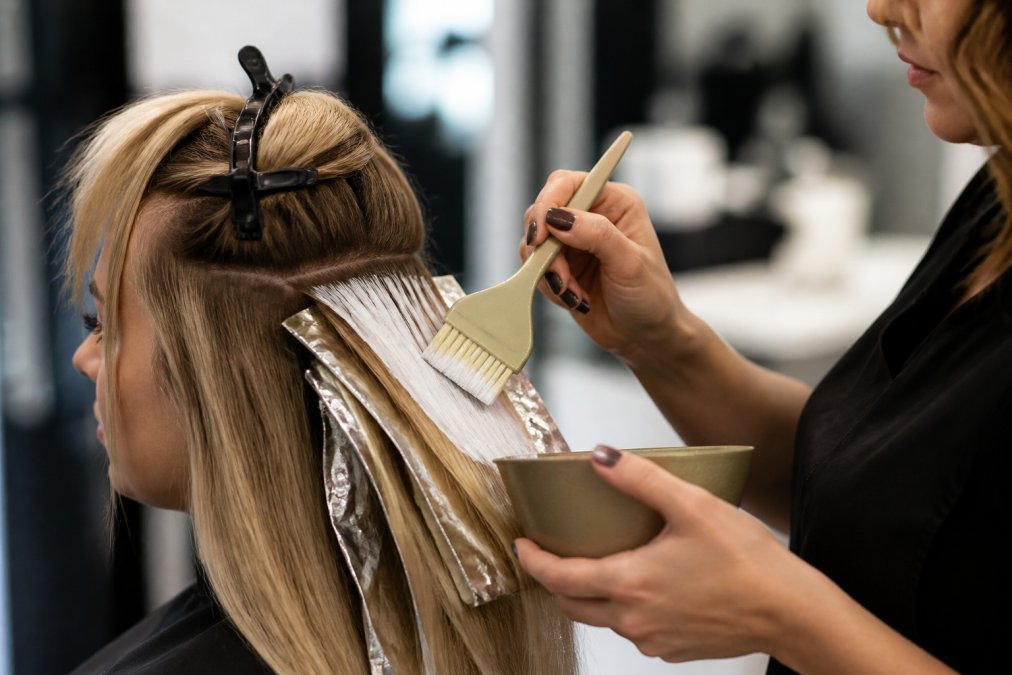
For balayage work, you need a brush with a tapered, pointed tip that allows you to paint fine, deliberate strokes. The feathered bristle design is essential, it creates soft edges that blend naturally into the base color without harsh lines. The brush should be lightweight enough to control during extended wrist angles, but substantial enough to maintain positioning.
The ideal balayage brush has a slightly narrower head than a traditional root-touch-up brush, providing the precision needed for freehand painting. The ergonomic handle becomes even more critical during balayage because you're holding the brush at various angles for extended periods.
For techniques involving foil placement and precise sectioning, a brush with a fine, tapered tip is essential. This allows you to paint accurately within foil section boundaries without color bleeding. The bristle density should be moderate, dense enough to hold sufficient color product, but not so dense that the brush becomes stiff or difficult to control.
Essential Hair Coloring Kit for Stylists
A complete professional hair coloring kit extends beyond just the brush. The entire system, brush, bowl, mixing tools, and application accessories, must work together to support efficient, ergonomic workflow.
The foundation is a high-quality tint bowl that pairs with your brush. The bowl should be non-porous, stain-resistant, and sized appropriately for your typical color volumes. The bowl's shape should have a slight lip or pour spout to prevent color from dripping during transfer.
Brush-to-bowl compatibility is critical for workflow efficiency. Your brush should fit comfortably in the bowl without the handle extending awkwardly or the bristles bunching against the sides. When loading color, the brush should glide smoothly across the bowl's interior without resistance.
A complete kit also includes sectioning clips, a tail comb for precise parting, and application gloves. The sectioning clips should be lightweight and easy to manipulate with one hand. The tail comb should have a fine-tooth section for precise parting and a wider section for general sectioning.
ESTL+CO's hair color brushes are designed to integrate seamlessly into professional workflow. The brush dimensions and weight are calibrated to work efficiently with standard professional bowls, and the handle ergonomics support the full range of salon techniques.
Durability and Longevity: Salon-Grade Investment
Professional tools represent an investment, not an expense. A professional-grade brush costs around $16 for ESTL+CO's feathered brushes, and lasts with proper care. The total cost of ownership can be lower, and tool consistency remains constant throughout that period.
Durability comes down to material selection and construction quality. The bristles must maintain their shape and flexibility through hundreds of washings and chemical exposures. The ferrule must be reinforced so bristles don't shed or loosen. The handle material must resist cracking, discoloration, and deterioration under repeated stress and chemical contact.
Professional-grade brushes are engineered for high-volume use. If you're applying color to 8-12 clients daily, your tools face demands that consumer-level brushes can't withstand. A salon-grade brush is designed with this volume in mind.
The longevity of your tools directly impacts consistency. When you use the same brush for months or years, you develop muscle memory for how that specific tool responds to your technique. Constantly replacing worn-out brushes introduces variability into your color results.
Choosing the Right Brush for Your Workflow
Your ideal brush depends on the specific techniques you perform most frequently and your hand characteristics. A one-size-fits-all approach doesn't work in professional coloring.
Evaluate your primary techniques first. If you spend 60% of your time on root applications, you need a brush optimized for precision root work, slightly narrower, with bristles that deliver consistent saturation without excessive pressure. If balayage is your primary focus, you need a finer, more tapered tip for freehand painting. If you work with complex techniques like babylights or dimension work, you need versatility across multiple applications.
Consider your hand size and grip strength. The ergonomic design should feel natural in your hand immediately, not something you need to adjust to over weeks. If a brush feels uncomfortable during the first few applications, it likely won't improve with time.
The weight of the brush matters significantly. Some prefer a slightly heavier brush that feels more substantial; others find that extra weight creates fatigue. Start with a brush in the standard weight range and adjust based on your experience.
Your work environment also influences the ideal brush choice. Colorists in high-volume salons benefit from maximum ergonomic support because they're performing color applications continuously throughout the day. Freelance colorists might prioritize durability and portability.
Conclusion
The tools you use every day directly impact both your comfort and your career longevity. Ergonomic hair brushes aren't a luxury upgrade, they're a fundamental investment in protecting your hands, wrists, and ability to work at your best. The difference becomes apparent within the first week: less hand fatigue, faster applications, and more consistent results.
ESTL+CO's feathered brushes are engineered specifically for professional colorists who demand precision, durability, and ergonomic support. The stain-resistant construction maintains consistent performance through months of daily use, while the ergonomic handle design reduces the hand strain that accumulates throughout your career. The feathered bristle design delivers the precision you need for complex techniques without requiring excessive pressure or wrist strain.
Start with ESTL+CO's Hair Color Brushes, designed by professionals, for professionals. Your hands will thank you by the end of your first day of use.
Frequently Asked Questions
Q: What makes ergonomic hair brushes better than standard tint brushes?
A: Ergonomic hair brushes are engineered with non-slip grips, balanced weight distribution, and feathered bristle designs that reduce hand fatigue and cramping during long coloring sessions. Unlike standard brushes, they're built to support proper hand positioning and tension reduction, which prevents repetitive strain injuries. The precision application of feathered bristles also improves blending and sectioning accuracy, making your workflow faster and more controlled.
Q: How do ergonomic brushes prevent wrist pain in hair styling?
A: Ergonomic brushes feature thumb-grip technology and balanced weight distribution that minimize tension on your wrist and forearm during repetitive motions. The wider, contoured handle encourages proper hand positioning, reducing the pinching and cramping that standard brushes cause. By distributing pressure evenly across your palm and fingers rather than concentrating it in one area, these tools significantly lower the risk of repetitive strain injury and allow colorists to work longer without discomfort.
Q: Are feathered brushes better for balayage than traditional tint brushes?
A: Yes, feathered brushes excel at balayage and complex techniques because the tapered, feathered tip allows for precise hair sectioning and controlled color saturation. The wider base provides stability while the feathered bristles create softer, more blended application lines compared to traditional flat brushes. This design gives you the control needed for intricate placement and seamless transitions, making balayage work faster and more accurate.
Q: What should an essential hair coloring kit for stylists include?
A: A professional hair coloring kit should include an ergonomic tint brush with feathered bristles for precision application, a stain-resistant tint bowl for mixing and holding color, and properly sized sectioning clips. The brush should feature non-slip grip technology and chemical-proof materials to withstand frequent use and cleaning. A quality kit prioritizes durability and ergonomic design to support long-term career longevity, reduce hand fatigue, and maintain consistency across all your color applications.
This article was written using GrandRanker