

Best Tools for Balayage and Foil Techniques
Table of Contents
- Balayage vs. Foils vs. Foilayage: Choosing the Right Approach
- Best Brushes for Hair Painting: Feather Bristle to Detail Brush
- Balayage Paddles and Hair Painting Boards Compared
- Foilayage Application Techniques and the Tools That Support Them
- Professional Hair Colorist Tool Kit: Tint Bowls, Clips, and Essentials
- Maintaining Hair Integrity: Lightener, Developer, and Tool Sanitation
- Best Balayage and Foil Tools: Budget-Friendly vs. Professional-Grade
- Conclusion
Last Updated: August 20, 2026
The tools you choose for balayage and foil work directly determine the quality of the result. At ESTL+CO, we've spent years working alongside professional colorists to understand where standard tools fall short and where precision equipment makes a measurable difference. This guide covers the best tools for balayage and foil techniques, from feather bristle brushes to foil selection, sectioning tools, and everything a working colorist needs in their kit.
Quick Picks:
- Best Overall Brush: ESTL+CO feathered brush, ergonomic design built for freehand hair painting and precision highlighting
- Best Paddle Set: Framar Balayage Board & Paddle Set, two working surfaces for varied coverage
- Best Detail Brush: Framar Detail Brush Set, flat and angled options for precision work
- Best Sectioning Tool: Iro Comb Highlight and Balayage Comb, cuts foiling time significantly
- Best Budget Paddle: Product Club hardwood paddles, narrow, durable, and affordable
Balayage vs. Foils vs. Foilayage: Choosing the Right Approach
Balayage is a freehand hair painting technique where lightener is applied directly to the surface without foils, creating soft, blended, multidimensional color. Foil highlights use sectioned hair wrapped in foil to isolate strands and accelerate lift, creating more defined, uniform lightening. Foilayage combines both: freehand painting applied to foil-enclosed sections, delivering the soft gradient of balayage with the accelerated lift of foil processing.
Choosing the right approach determines which tools you need. Freehand balayage demands a quality balayage paddle and brush for controlled, feathered strokes. Foil techniques require precise sectioning, the right foil thickness, and clips that hold tension without slipping. Foilayage requires the full kit working in coordination.
A common mistake is treating all three as interchangeable in tool requirements. The wrong brush on foilayage leads to uneven saturation at the foil edge. The wrong foil thickness causes slippage during processing.
| Technique | Foils Used | Key Tools Needed | Result Profile |
|---|---|---|---|
| Balayage | No | Paddle, feather brush | Soft, sun-kissed blend |
| Foil Highlights | Yes | Foils, clips, detail brush | Defined, high-contrast lift |
| Foilayage | Yes | Paddle, feather brush, foils, clips | Blended gradient with strong lift |
Best Brushes for Hair Painting: Feather Bristle to Detail Brush
The brush is the most personal tool in a colorist's kit and the one most stylists underestimate until they switch to something better.
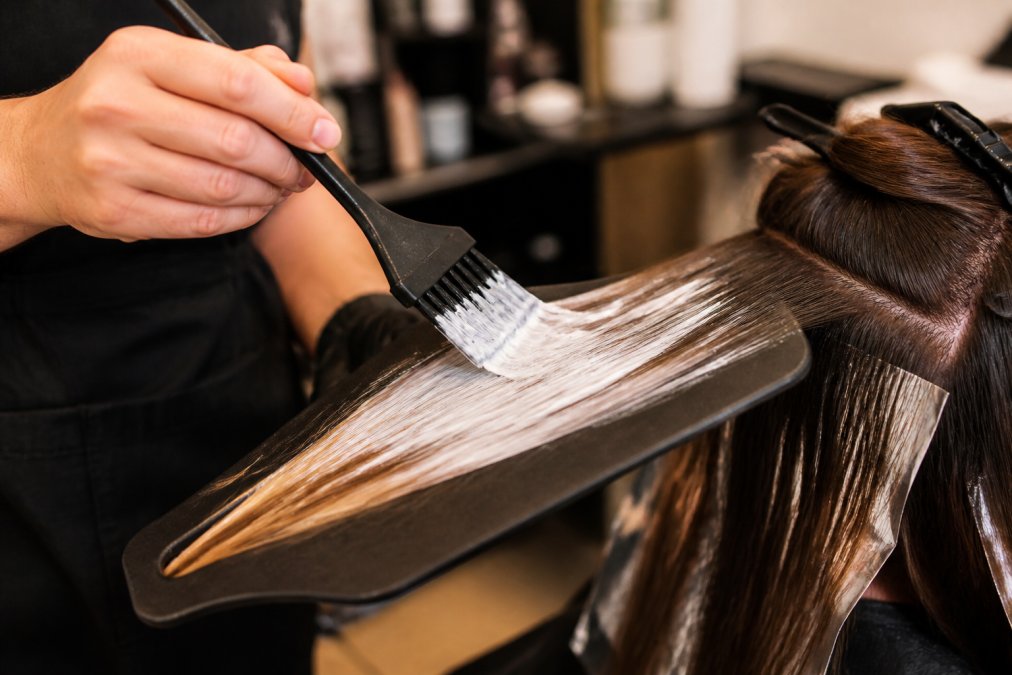
Feather Bristle Brushes for Freehand Technique
Feather bristle brushes are the standard for freehand balayage because the bristle structure allows graduated product placement, heavier at the mid-shaft and lighter at the ends, creating the soft, seamless blend that defines well-executed balayage.
ESTL+CO's feathered brushes are the top pick. The ergonomic handle reduces hand strain during long applications, a real concern for stylists doing multiple balayage services back-to-back. The feathered bristle design gives precise control over lightener transfer per stroke, which matters on fine hair or when avoiding a harsh root line. A poorly balanced brush forces your wrist into a compensating position over hours of work.
Visit ESTL+CO's website for current pricing on their feathered brush collection.
Detail and Angled Brushes for Precision Highlighting
Detail brushes handle work feather bristle brushes cannot: root smudge application, precise highlight placement around the hairline, and clean foilayage edges. The Framar Detail Brush Set ($9.99) includes flat and angled brushes with AccuSoft bristles that balance softness with enough stiffness for controlled bleach application.
The angled brush is particularly useful for foilayage, it lets you paint a clean, defined line at the foil edge before feathering back toward the root. Without that precision, you get bleed and uneven lift at the fold.
Balayage Paddles and Hair Painting Boards Compared
A balayage paddle gives you a stable, controlled surface to paint against so lightener doesn't bleed through to underlying hair. The quality of that surface and the ergonomics of the handle determine how clean your application looks and how long your wrist holds out.
Hardwood vs. Plastic Paddles: What Changes in Practice
Product Club hardwood paddles are narrow, lightweight, and built for precision on longer hair sections. The hardwood surface doesn't flex, giving you a firm painting surface even with thick sections. They're durable for daily use and affordable enough to replace without hesitation. The narrow design is a limitation on very wide sections.
Framar Balayage Board & Paddle Set ($17.99) provides two plastic paddles with different working surfaces: a smaller 6" x 4.25" board and a larger 9.25" x 4" paddle. The diamond texture grips hair effectively and prevents slipping during application. Plastic paddles are easier to clean than hardwood and hold up well to repeated sanitizing.
Wella Professionals Balayage Paddle adds an integrated storage dish for excess product, a detail that improves workflow on busy days. The Redken Gear Balayage Paddle Board supports even saturation, reducing patchiness on first-time lifts.
Foilayage Application Techniques and the Tools That Support Them
Foilayage is where balayage and foil techniques converge, and tool selection matters most. The freehand painting step requires the same brush control as standard balayage. The foil step introduces variables, thickness, texture, heat conductivity, and foil slippage, that each affect the final result.
Choosing the Right Foil: Thickness, Embossed vs. Flat, and Pre-Cut vs. Roll
Foil thickness affects thermal conductivity and heat buildup during processing. Thinner foils heat faster, accelerating lift but requiring closer monitoring. Thicker foils are more forgiving and hold their shape better during folding, reducing foil slippage on longer sections.
Embossed foils have a textured surface that grips hair more effectively than flat foils, reducing movement during processing. For foilayage, where the painted section must stay positioned exactly as placed, embossed foils are the more reliable choice. Pre-cut foils save time in high-volume settings. Roll foils give flexibility in length, useful for longer hair or custom folds.
Sectioning Tools That Cut Foiling Time
The Iro Comb Highlight and Balayage Comb ($29.99) is the most technically interesting sectioning tool available. The 13 cm pin accommodates wider sections, and the parting head grabs hair cleanly for consistent weaves. By adjusting the angle, you can achieve medium, fine, or chunky weave densities without switching tools. For stylists doing high volumes of foiling, the time savings are significant.
Standard tail combs and sectioning clips remain essential. Duck-bill clips hold tension on completed foil sections without distorting the fold. Butterfly clips manage larger portions of unworked hair.
Professional Hair Colorist Tool Kit: Tint Bowls, Clips, and Essentials
A professional hair colorist tool kit is the complete collection of mixing, application, and sectioning tools a colorist uses across every service.
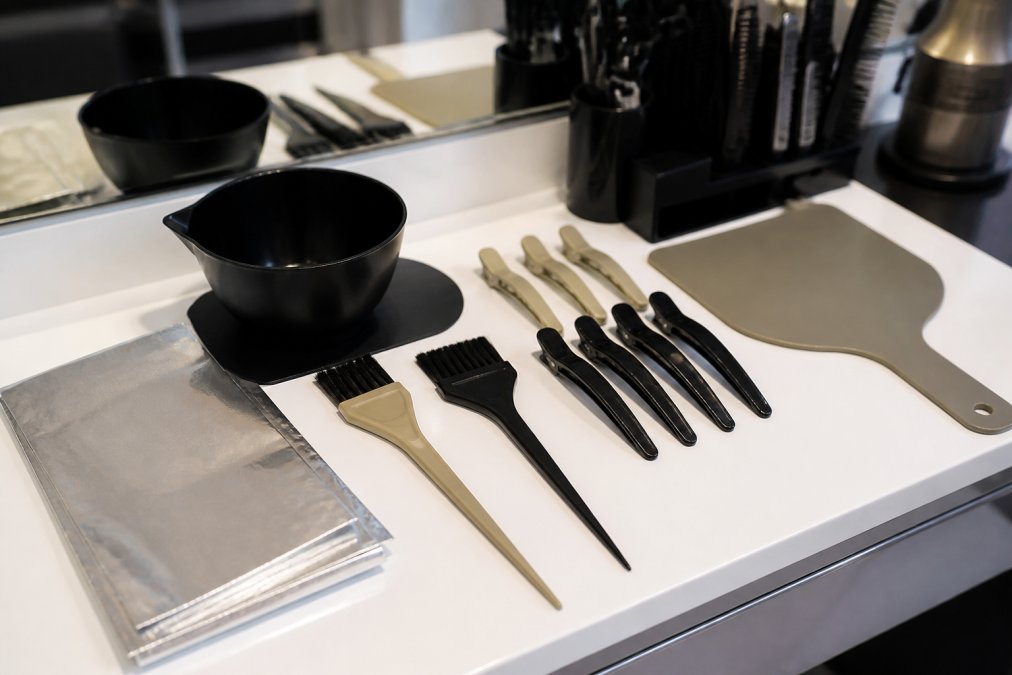
The tint bowl is where most colorists underinvest. A cheap bowl stains, warps, and makes it harder to judge bleach consistency by color. Stain-resistant tint bowls maintain a clean interior surface that lets you read your lightener mix accurately.
The Olivia Garden iBlend Color Brushes feature a scalp-hugging shape that ensures every bristle contacts the scalp, working well for root application and treatment services.
Essential kit checklist:
- Stain-resistant tint bowl (minimum two, one for lightener, one for toner)
- Feathered balayage brush for freehand painting
- Detail brush set (flat and angled) for precision work
- Balayage paddle (narrow and wide)
- Duck-bill clips (12-pack minimum for foiling)
- Butterfly clips for section management
- Pre-cut foils or foil roll in your preferred thickness
- Sectioning comb and tail comb
- Timer (processing time management is non-negotiable)
Maintaining Hair Integrity: Lightener, Developer, and Tool Sanitation
The biggest variable in any lightening service isn't the foil or brush, it's the lightener-to-developer ratio and understanding your client's hair porosity. Previously lightened hair lifts faster than virgin hair. High-porosity hair absorbs product unevenly and can show banding if processing time isn't monitored carefully.
According to American Board of Certified Haircolorists guidelines, consistent developer volume selection based on hair texture and target lift is one of the most commonly cited factors in color correction cases. A 20-volume developer gives controlled lift on most natural levels. A 30-volume developer accelerates processing for resistant, low-porosity hair.
Heat protectant application before lightening services is standard practice for maintaining hair integrity, particularly on previously color-treated hair. Bleach consistency, neither too thick nor too runny, affects how evenly the lightener processes.
Tool sanitation is critical. Brushes that aren't cleaned thoroughly between clients carry product residue that alters bleach consistency on the next application. Hardwood paddles need to be sealed and inspected regularly. Plastic paddles and stainless steel tools should be sanitized according to your state board's cosmetology sanitation requirements. As documented in EPA's guidance on salon disinfectant products, disinfectants used on non-porous salon tools must be EPA-registered to meet professional hygiene standards.
Best Balayage and Foil Tools: Budget-Friendly vs. Professional-Grade
The honest answer on budget versus professional-grade tools: the gap matters more in some categories than others.
For brushes, professional-grade construction pays off over time. A well-made feathered brush with an ergonomic handle outlasts several cheap alternatives and delivers more consistent results per stroke.
For paddles, the difference between budget and professional is smaller. A solid hardwood paddle at a lower price point performs comparably to a premium plastic paddle for most freehand balayage applications.
For foils, the difference is real. Budget foils tend to be thinner and more prone to tearing during folding, causing foil slippage mid-service. Embossed foils at a mid-range price point consistently outperform flat budget foils for foilayage work.
For tint bowls, investing in stain-resistant, professional-grade bowls pays off in longevity and cleanliness. A bowl that discolors makes it harder to assess bleach consistency accurately.
| Tool Category | Budget Option | Professional-Grade | Where It Matters Most |
|---|---|---|---|
| Balayage brush | Basic synthetic brush | ESTL+CO feathered brush | Freehand technique, hand fatigue |
| Balayage paddle | Product Club hardwood | Framar Board & Paddle Set | Section width, grip, durability |
| Detail brush | Generic angled brush | Framar Detail Brush Set | Precision at foil edges, root smudge |
| Sectioning comb | Standard tail comb | Iro Comb with stand | Foiling speed, weave consistency |
| Foils | Flat budget foils | Embossed mid-range foils | Foilayage grip, slippage prevention |
| Tint bowl | Basic plastic bowl | Stain-resistant pro bowl | Bleach consistency accuracy |
The real cost of budget tools isn't the purchase price, it's the color corrections that follow inconsistent applications. For colorists doing complex techniques like foilayage, the tool kit is part of the service quality. According to Cosmetics & Toiletries professional education resources, tool precision in chemical services directly correlates with outcome predictability, particularly in multi-step lightening processes.
Eco-friendly alternatives are worth noting. Several manufacturers now produce foils from recycled aluminum, and some paddle options use sustainably sourced hardwood. For salons with sustainability commitments, these options are increasingly available without sacrificing performance.
Frequently Asked Questions
What is the difference between traditional balayage and foilayage?
Traditional balayage uses a freehand hair painting technique applied directly to the hair without foils. Color or lightener is painted onto the surface of sections for a soft, sun-kissed result with gradual saturation. Foilayage combines that freehand painting approach with foil wrapping after application. The foil traps heat, accelerating lift and producing more contrast and brightness than open-air balayage alone. The result sits between classic balayage and full foil highlights in terms of multidimensional color and definition.
Which brush types are best for hand-painted balayage vs. foil application?
For hand-painted balayage, feather bristle brushes give the most control over bleach consistency and saturation. The tapered tips allow seamless blending at the root smudge area without hard lines. For foil application, a flat or angled detail brush works better because it deposits lightener precisely onto the section before folding, reducing foil slippage and keeping product off the foil edges. Having both brush types in your professional hair colorist tool kit covers the full range of techniques.
Do professional colorists prefer pre-cut foils or rolls for balayage and foil techniques?
Pre-cut foils save significant time in high-volume salons because there is no measuring or tearing mid-service. Rolls give more flexibility for varied section sizes, which matters during color correction or when working with unusual hair textures. Embossed foils are generally preferred over flat foils for foilayage because the texture grips the hair, reduces foil slippage, and improves thermal conductivity so the lightener processes more evenly. The right choice depends on your service volume and the range of techniques you perform daily.
What are the essential features of a high-quality tint bowl for lightener?
A professional tint bowl should be stain-resistant so repeated lightener and toner use does not degrade the surface or create cross-contamination risks. A non-slip base keeps the bowl stable during fast-paced applications. Measurement markings help maintain accurate developer ratios, which directly affects lift consistency and hair integrity. Ergonomic shaping that allows one-handed holding reduces fatigue across long color services. Bowls that are easy to sanitize between clients are especially important for colorists working in high-volume or multi-stylist environments.
What tools are needed for balayage at home versus in a professional salon?
At-home balayage kits typically include a basic paddle or board, a single flat brush, and pre-mixed lightener. Professional salons require a broader setup: feather bristle and detail brushes for varied saturation, sectioning clips for clean hair sectioning, a stain-resistant tint bowl for accurate mixing, a balayage paddle for support during freehand technique, and appropriate foils for foilayage services. Professionals also factor in developer volume selection based on hair porosity and target lift, plus heat protectant and toning products for finishing.
The challenge for most colorists isn't technique, it's having the right tools to execute that technique consistently across a full day of services. ESTL+CO's professional hair colorist tool collection, including stain-resistant tint bowls and ergonomic feathered brushes designed by colorists for colorists, gives your kit the precision and durability that high-volume work demands. Get started with ESTL+CO and bring that level of consistency to every balayage and foil service you deliver.
This article was written using GrandRanker