

How to Achieve Seamless Hair Color Blends 2026
Table of Contents
- What Seamless Hair Color Blending Actually Means in 2026
- Step 1: Assess Hair Texture and Porosity Before You Mix
- Step 2: Master Color Melting and Root Smudge Techniques
- Step 3: Foilayage Application Techniques for Depth and Dimension
- How to Avoid Harsh Lines in Balayage
- Best Brushes for Hair Color Blending and Precision Application
- Step 4: At-Home Maintenance to Preserve Seamless Hair Color
- Conclusion
Last Updated: August 21, 2026
What Seamless Hair Color Blending Actually Means in 2026
Seamless hair color blending is the technique of transitioning between two or more shades so gradually that no visible line exists between them. The goal is color that reads as completely natural, as though the hair grew that way. In 2026, the shift is away from high-contrast looks toward dimensional color that mimics how sunlight hits hair, lived-in color with tonal depth and soft transitions between a deeper base and lighter mid-lengths. Seamless blending is as much a science as it is an art: hair porosity, base color depth, and transition points all determine whether a result looks editorial or muddy.
Step 1: Assess Hair Texture and Porosity Before You Mix
Most blending failures happen before a single brush touches hair. Skipping a thorough texture and porosity assessment is the single most common mistake colorists make.
Hair texture determines how color distributes through the strand. Fine hair accepts color faster and shows banding more readily. Coarse hair resists saturation and often needs longer processing or elevated developer to achieve the same depth.
How Porosity Affects Color Saturation and Transition Points
Hair porosity is the hair's ability to absorb and retain moisture and color molecules. High-porosity hair absorbs color rapidly and unevenly, creating harsh transition bands even with flawless application. Low-porosity hair repels color initially, requiring longer processing and often a porosity equalizer.
To test porosity: take a clean, dry strand and drop it into a glass of water. High-porosity hair sinks fast; low-porosity hair floats. For high-porosity hair, extend the blending zone by at least 2-3 centimetres beyond where you'd normally stop (peer-reviewed research). For low-porosity hair, apply your root melt formula with slightly more saturation at the base, knowing some will be repelled before it deposits.
According to American Board of Certified Haircolorists guidance on porosity and color absorption, porosity is one of the most underassessed variables in professional color consultations.
Shade Matching for Skin Tone Compatibility
Shade matching for seamless hair color isn't only about the hair, it's about the face. Warm-toned skin reads best against golden, copper, and caramel base colors. Cool-toned skin benefits from ashier, more neutral bases. Your lightest highlight placement should frame the face and be chosen for skin tone compatibility first, hair color trends second.
Step 2: Master Color Melting and Root Smudge Techniques
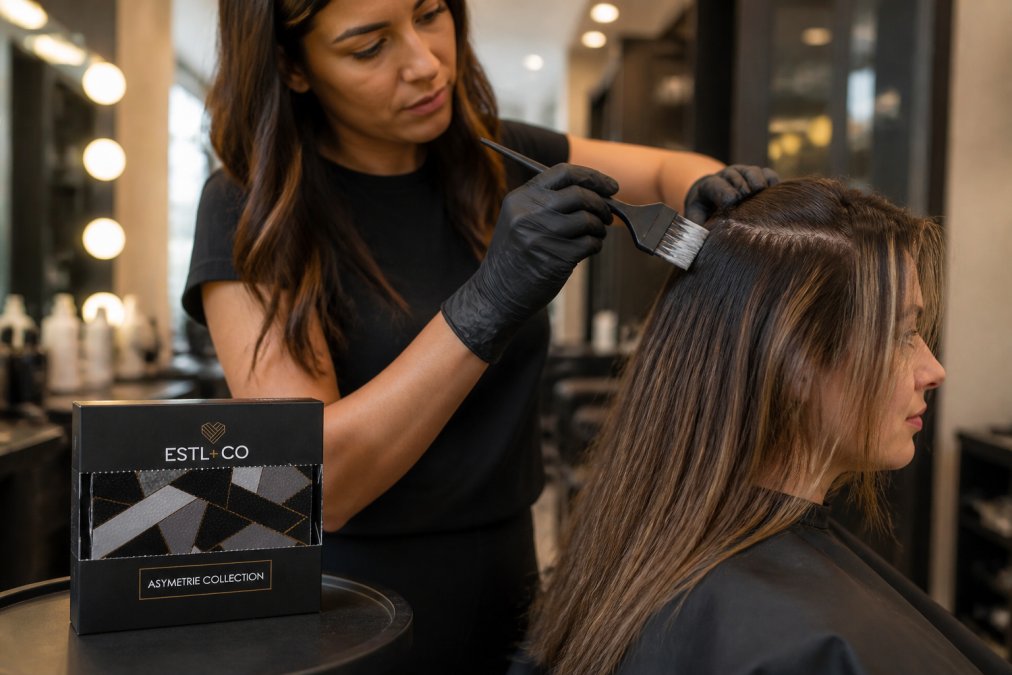
Color melting is the technique of blending two or more shades together directly on the hair, creating a gradient with no hard line between them. Root smudging applies a darker shade, usually demi-permanent, at the root zone, blended downward to soften the demarcation between the client's natural base and lightened mid-lengths.
Root Tap and Root Melt for Natural Transitions
Root tap involves pressing color into the root area with a brush tip in a stippling motion, creating a diffused edge. Root melt blends the color downward, physically marrying the root shade to the mid-length tone.
The technique that works best depends on desired grow-out behavior:
- Apply the root formula in sections no wider than 2.5 centimetres
- Use a feathered brush to stipple the color at the demarcation point in small circular motions
- Pull the formula downward with the brush tip in a sweeping motion, decreasing pressure as you move toward the mid-lengths
- Check the transition point under natural light before processing
A common mistake is applying too much product at the root tap zone, which creates a heavy, dark band rather than a soft shadow.
Dimensional Color and Tonal Balance
Dimensional color results from intentional contrast between depths, a slightly deeper base giving way to lighter mid-lengths and brighter ends. Choose your base shade first, then select highlight and mid-tone shades within two to three levels of that base. Going wider than three levels creates a result that's too high-contrast for a seamless blend. A gloss treatment applied over the finished color pulls all tones together and improves longevity.
Step 3: Foilayage Application Techniques for Depth and Dimension
Foilayage combines freehand balayage painting with foil wrapping. The freehand application creates soft, natural placement, while the foil generates additional heat and lift, producing brighter results with more controlled saturation than open-air balayage alone. This technique is particularly effective on darker base colors where maximum lift is needed without compromising natural-looking placement.
For a step-by-step foilayage application:

- Section the hair into quadrants and work from the nape upward
- Isolate each panel no thicker than 0.5 centimetres for fine hair, up to 1 centimetre for coarse hair
- Paint the lightener freehand onto the panel, starting 2-4 centimetres from the root and feathering the edges
- Fold the foil to enclose the panel, pressing firmly at the root edge to prevent bleed
- Vary the starting point of your lightener application across panels to create depth and dimension
Foilayage vs. Traditional Balayage: When to Use Each
| Technique | Best For | Lift Potential | Grow-Out Behavior |
|---|---|---|---|
| Traditional Balayage | Levels 5-7 base | 2-3 levels | Very gradual, low maintenance |
| Foilayage | Levels 3-6 base | 3-5 levels | Soft, 8-12 week refresh cycle |
| Full Foil | Even, all-over lift | 4-6 levels | More visible grow-out |
Traditional balayage is the right choice when the client's base is light enough to achieve the target without maximum heat, or when the desired result is very gradual and low-maintenance. Foilayage is the right choice when the client needs significant lift and wants precise, controllable highlight placement.
How to Avoid Harsh Lines in Balayage
Harsh lines in balayage result from too-clean a starting point for the lightener, insufficient feathering at the transition zone, or mismatched developer volume. Never start your lightener application with a straight horizontal line. Begin with a V-shape or sweeping diagonal, then feather the top edge with the brush tip before closing the foil.
For transition zone feathering, a brush with a wide, feathered tip distributes product over a broader area with each stroke, creating a more gradual fade. A narrow or stiff brush concentrates product and creates edges.
Visual Troubleshooting: Correcting Uneven Blends
For isolated over-lightened sections: apply a demi-permanent toner one level darker than the target shade directly to the affected area. Process for 10-15 minutes, checking every five minutes.
For banding or striping: a root smudge applied over the entire demarcation zone creates a unified shadow that visually breaks up the stripe. Follow with a gloss treatment to unify tonal balance.
For muddy or low-contrast results: the lightener didn't achieve sufficient lift before toning. A targeted re-lightening service on the mid-lengths, with careful feathering into the root zone, restores needed contrast.
According to the Professional Beauty Association's technical education library, correction services are among the most technically complex in the color category, and getting the diagnosis right before applying any correction formula is non-negotiable.
Best Brushes for Hair Color Blending and Precision Application
The brush is the most direct point of contact between the colorist's intention and the result on the hair. A brush that doesn't distribute product evenly or that fatigues the hand is a liability.
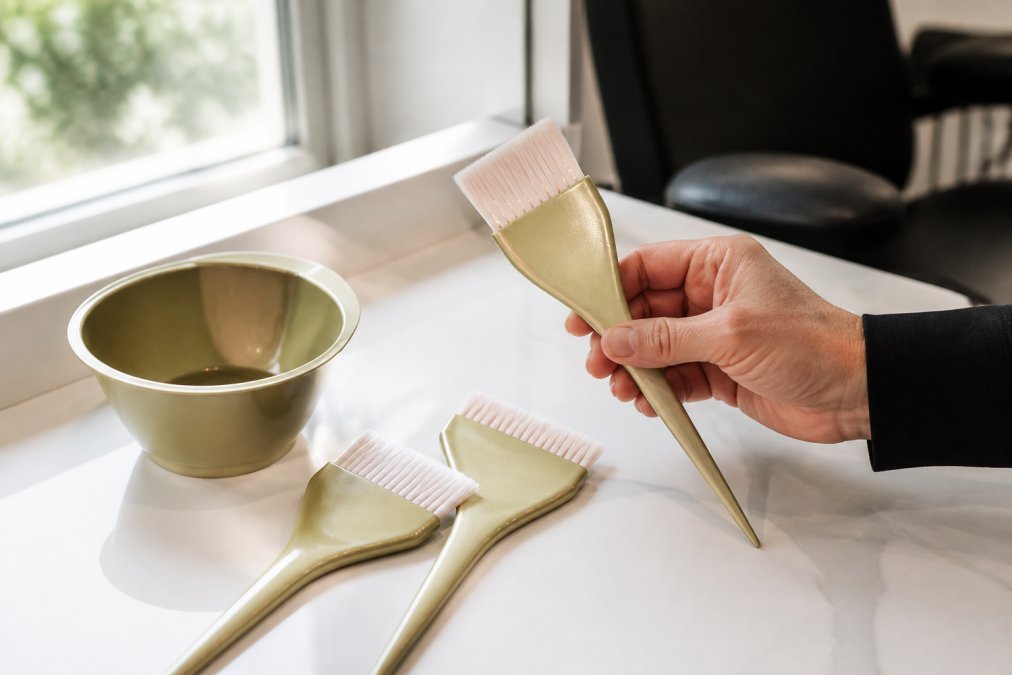
The ESTL+CO Hair Color Brushes from the Elegance Collection are designed specifically for complex color work. The wide feathered tip distributes formula across a broader surface area with each stroke, exactly what root smudge and color melting techniques require. The ergonomic handle design reduces cumulative hand strain from high-volume color days.
For balayage and foilayage work, the feathered tip is critical. A stiff, narrow brush concentrates product and creates edges; a feathered tip diffuses it and creates transitions. Pair the brushes with the ESTL+CO Hair Color Bowls from the Elegance Collection, stain-resistant, professional-grade bowls designed to hold formula at the right consistency without absorbing pigment.

Step 4: At-Home Maintenance to Preserve Seamless Hair Color
A seamless blend that fades unevenly within four weeks is a client retention problem. Setting clients up with the right maintenance routine is part of the service.
The core maintenance framework:
- Shampoo frequency: Washing every 2-3 days rather than daily significantly extends color longevity
- Water temperature: Rinsing with cool or lukewarm water closes the cuticle, helping color stay deposited
- Color-safe products: Sulfate-free shampoos preserve both base color and toner deposit
- Weekly gloss or toning mask: A purple or blue toning mask neutralizes brassiness and keeps tonal balance consistent
- Heat protection: A heat protectant applied before every thermal styling session is non-negotiable
A well-executed root melt and properly feathered transition will grow out gracefully for 10-12 weeks without a visible line. A poorly executed one will show demarcation within four to six weeks.
| Maintenance Step | Frequency | Impact on Color |
|---|---|---|
| Sulfate-free shampoo | Every wash | Preserves toner deposit |
| Cool water rinse | Every wash | Seals cuticle, reduces fade |
| Toning mask | Weekly | Neutralizes brassiness |
| Heat protectant | Before every heat style | Slows color degradation |
| Salon gloss refresh | Every 6-8 weeks | Restores tonal balance |
The conversation about maintenance should happen at the end of every color service. Clients who understand why these steps matter will follow through and come back.
Achieving genuinely seamless hair color blends requires precise tools at every stage. ESTL+CO's Elegance Collection, including the feathered Hair Color Brushes at $16.00 and the stain-resistant Hair Color Bowls at $19.00, gives professional colorists the precision this work demands. For foilayage services, the Asymetrie Collection Hair Color Foils at $17.50 are engineered for controlled heat and clean fold lines. Get started with ESTL+CO and deliver seamless results that hold up between visits.

Frequently Asked Questions
What is the difference between foilayage and traditional balayage?
Traditional balayage is painted freehand onto the hair surface and processed open to the air, creating a softer, more diffused result. Foilayage uses the same freehand painting technique but wraps sections in foil after application. The foil traps heat, which lifts the hair further and produces more defined, brighter highlights with stronger color saturation. Foilayage suits clients who want seamless hair color with noticeably lighter results, while open-air balayage delivers a subtler, lived-in finish.
How do you avoid harsh lines in balayage and color melting?
Harsh lines form when there is an abrupt jump between the base color and the lightened section with no soft transition zone. To prevent this, use a feathered brush to feather the product at every transition point rather than cutting it off cleanly. Root smudging or a root tap with a tinted gloss treatment over the demarcation line softens the boundary further. Blending while the product is still wet gives you the most control over the gradient before it sets.
What tools do professional colorists need for seamless hair color blending?
The core toolkit includes a wide feathered blending brush for soft application and feathering at transition points, a stain-resistant tint bowl for clean color mixing, and quality hair color foils for foilayage sections. A fine-tipped brush handles precision work around the root area and hairline. Ergonomic handles matter too, colorists applying balayage and dimensional color techniques for multiple clients per day benefit significantly from brushes designed to reduce hand and wrist fatigue.
How do you maintain seamless hair color between salon visits?
Color longevity depends on the products used at home between appointments. A sulfate-free shampoo slows color fade, while a weekly gloss or toning treatment refreshes tonal balance and keeps the grow-out looking intentional rather than neglected. Clients with a root smudge or root melt already have built-in low-maintenance transitions, so scheduling touch-ups every 10 to 14 weeks is usually sufficient to keep the seamless blend intact without visible demarcation.
This article was written using GrandRanker