

How Do You Improve Posture While Coloring Hair?
Last Updated: October 31, 2026
Quick Summary
To improve posture while coloring hair, set up your station so tools sit within easy reach, raise the client's chair to your natural working height, and step in close rather than leaning over. Change positions at every stage of the service and take short walks or stretches during processing time.
- Place your tint bowl at about elbow height so your arms stay relaxed.
- Raise the client's chair until their head sits near your lower sternum height.
- Bend at the hips rather than the lower back when you need to see the root line.
- Step away from the chair and walk for at least one minute during processing.
- Check the client every 10-15 minutes and pair each check with a short stretch.
Table of Contents
- Why Posture Breaks Down During Color Services
- Set Up Your Station Before the First Section
- Position Your Client So You Don't Have to Bend
- Step-by-Step Posture Guide for Each Coloring Stage
- Stretches for Hairstylists Between Clients
- Daily Posture Habits That Protect Your Back and Neck
- Building a Setup That Keeps Your Posture Strong Next Session
- Frequently Asked Questions
Hairstylists spend hours bent over clients, and good posture while coloring is hard to hold when the strain adds up fast. Your back, neck and shoulders pay the price for every foil, every root touch-up and every long processing wait. This guide from ESTL+CO explains why posture breaks down during color services and what you can change today, step by step.
Why Posture Breaks Down During Color Services
Color work asks your body to hold the same position for long stretches. You lean in to see the root line, reach across the chair to grab a section and twist to reach a client's crown. Each small movement adds load to your lower back and shoulders.
The problem is rarely one bad move. It is the pattern. Hospital for Special Surgery notes that physical therapist guidance on posture and movement advice boils down to one idea: no posture is good for too long. Even a "perfect" stance becomes harmful when you never change it.
A common mistake is working with the station too low or too far away. You compensate by hunching, and the habit sticks around between clients.
Set Up Your Station Before the First Section
Your setup decides how much you bend and reach. Start by arranging your tools so everything sits within easy reach.
- Place your tint bowl at about elbow height so your arms stay relaxed.
- Keep your feathered brush and sectioning clips on the same side as your dominant hand.
- Move your mixing station close enough that you never have to stretch across the client.
- Adjust your chair or stool so your feet sit flat and your hips sit slightly above your knees.
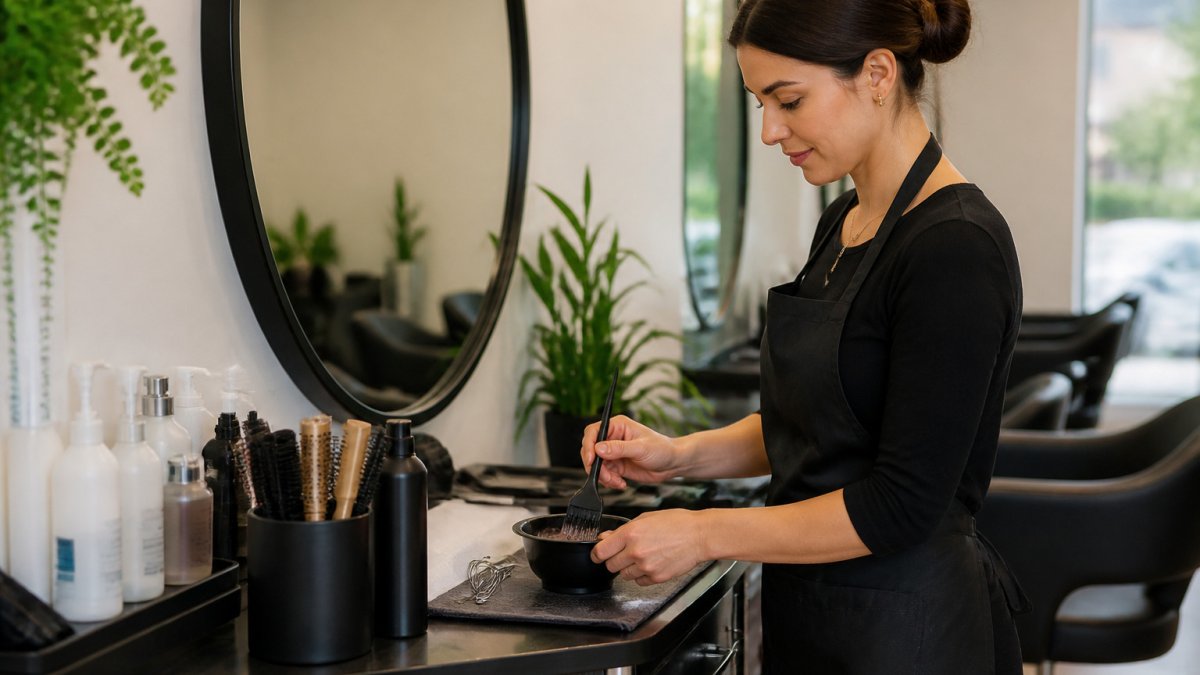
Watch out: Reaching for supplies mid-application can strain your shoulder. Pre-stage everything before you start.
Position Your Client So You Don't Have to Bend
Client position matters as much as your own. Raise the chair until the client's head sits close to your natural working height. Tilt the head forward or back only as far as the section needs.
Work from the side of the head rather than standing behind it when you can. This keeps your spine more upright. For back-of-head work, step in close and keep your chest tall instead of dropping your head forward.
Step-by-Step Posture Guide for Each Coloring Stage
Your posture should change with the work, not lock into one stance for the whole service. The cues below walk through each stage of a color service, from sectioning to the final blow-dry, with the specific body position that keeps your neck and lower back neutral. Most practitioners find that the strain comes from holding one position too long, so treat each stage as a chance to reset.
Sectioning
- Stand with your feet about shoulder-width apart and your weight evenly distributed.
- Raise the client's chair until their head sits near your natural working height, roughly the height of your lower sternum, so your elbows stay bent near 90 degrees.
- Section with your fingertips rather than your whole hand to keep your wrist neutral.
- Turn your whole body toward each new section instead of twisting at the waist.
Root Application and Foiling
- Step in close to the head rather than reaching across it; keep your chest tall.
- Bend at the hips, not the lower back, when you need to see the root line.
- Keep the tint bowl at about elbow height so your arms stay relaxed.
- Apply color with short, controlled strokes close to the scalp; long reaches force your shoulder forward.
Processing and Waiting
Processing time is not idle time for your body. Use it to change position:
- Step away from the chair and walk for at least one minute.
- Roll your shoulders back and gently tilt your head ear-to-shoulder on each side.
- Return to the next section with a fresh stance rather than resuming the same hunch.
A simple pattern many stylists use is to check the client every 10-15 minutes and pair each check with a short walk or stretch. That keeps you from standing still for the full developer time.
Rinsing and Shampooing
- Pivot your feet to face the shampoo bowl instead of twisting your torso.
- Lower the client's chair or adjust the bowl height so you are not bending over the sink.
- Keep your knees soft and your back tall as you work the water through the hair.
Blow-Drying and Styling
- Raise the client's chair so the head is at chest height; do not stoop over the crown.
- Hold the dryer with a relaxed grip and switch hands when you can.
- Work in sections so you are not reaching across the head repeatedly.
Adaptations for Mobility Limitations, Pregnancy, or Pain
Not every stylist can stand for a full service, and that is fine. Practical options include:
- Seated application: Use an adjustable stool with a backrest and roll it close to the chair so you are not reaching.
- Client positioning: Ask the client to tilt their head toward you rather than you leaning toward them.
- Assistance: For long services, have a colleague take over the rinse or blow-dry stage.
- When to stop: If you feel sharp pain, numbness, or tingling in your arms or hands, stop and rest; persistent symptoms warrant a conversation with a healthcare professional.
The stages of a color service each call for a different body position, so the table below lists the posture cue and timing for each one.
| Stage | Posture cue | Timing |
|---|---|---|
| Sectioning | Chair near lower sternum height, elbows near 90 degrees | Before each section |
| Root application and foiling | Step in close, bend at hips not lower back | Keep bowl at elbow height |
| Processing and waiting | Walk and roll shoulders | At least 1 minute per break |
| Processing checks | Pair each check with a short walk or stretch | Every 10-15 minutes |
| Rinsing and shampooing | Pivot feet, lower chair or bowl, soft knees | During rinse |
| Blow-drying and styling | Head at chest height, relaxed grip, switch hands | Work in sections |
Stretches for Hairstylists Between Clients
Short stretches between clients undo the day's tension. Try these three moves for about 30 seconds each:
- Standing chest opener: clasp your hands behind your back and lift gently.
- Neck release: tilt your ear toward each shoulder and hold.
- Hand and wrist stretch: extend each arm and gently pull the fingers back.
If hand cramps are your main problem, hand health guidance for repetitive tasks explains why regular breaks matter for any repeated motion.
Daily Posture Habits That Protect Your Back and Neck
Your posture on the clock affects your posture behind the chair. Keep your screens at eye level when you check formulas or book clients. Stand tall during consultations instead of slouching over the counter.
Pick one habit to start this week, such as a midday walk or a chair adjustment before every client. Read more daily prevention tips for hand pain while coloring for further ways to protect your body. Small, steady changes beat a big overhaul you abandon in a month.
Building a Setup That Keeps Your Posture Strong Next Session
Good posture starts with good tools. A well-designed brush and bowl reduce the grip and reach that build strain. Compare ergonomic hair brushes in this buying guide to find the right fit for your hands. The Complete Station Bundle from ESTL+CO pairs feathered brushes with color bowls for precise application.

For a complete starting point, the Complete Station Bundle from ESTL+CO includes two feathered brushes, two color bowls and a barrier cream stick for $52.50. We recommend checking your setup every few weeks and adjusting the chair and counter height as your body and routine change.
Frequently Asked Questions
How should a hairstylist stand while coloring hair?
Stand with feet shoulder-width apart, one foot slightly forward, and knees soft rather than locked. Keep your weight balanced over both feet and your spine stacked, with ears over shoulders. Bring the work to you instead of leaning into it, and keep your elbows close to your body when applying color with a brush. Shifting your stance every few sections prevents the same muscles from holding one position for too long.
How can I reduce back pain while coloring hair?
Start with chair and client height, since most back strain comes from bending forward to reach the head. Raise or lower the chair so your hands work at about elbow height, and use a footrest if your legs feel locked. Take a short movement break during processing time, stand up and roll your shoulders, and avoid twisting your torso to reach one side of the head. If pain persists beyond the workday, consult a physical therapist or physician.
How often should hairstylists take breaks to stretch?
Take a brief movement break at each processing interval, even if it is only 30 to 60 seconds to stand, stretch your neck and shoulders, and walk a few steps. Longer breaks between clients help you reset your posture before the next service. Physical therapy guidance generally holds that no posture is good for too long, so changing position frequently matters more than any single ideal stance.
Can ergonomic hair brushes help reduce hand and wrist strain?
The ESTL+CO Complete Station Bundle, priced at $52.50, includes two feathered brushes and two color bowls designed for easy mixing and clean workspaces.
