

How to Dispose of Hair Dye Safely at Home and in the Salon
Last Updated: October 30, 2026
Quick Summary
Hair color disposal should start by sorting leftovers, since unmixed dye, mixed color, developer, and lightener each need a different path. Never pour dye or developer down a drain; small amounts of mixed color can be hardened and bagged, while large amounts go to a household hazardous waste facility.
- Sort hair color waste first: unmixed dye, mixed color, developer, powder lightener, and packaging each have a different path.
- Never pour dye, developer, or leftover paste down a sink, toilet, tub, or storm drain.
- Let small amounts of mixed color harden on paper, then seal in a bag for the regular trash unless local rules say otherwise.
- Empty tubes and bottles fully before rinsing; wet dye inside usually gets rejected by recycling programs.
- Salons should use one labeled, closed waste container per station and scrape leftovers before washing tools.
Table of Contents
- Why Hair Color Disposal Matters for Salons and Home Users
- How to Dispose of Hair Dye at Home, Step by Step
- Salon Hair Color Waste Disposal: Managing Leftover Color and Lightener
- Sorting Tubes, Foils, Bowls, and Packaging for Recycling
- Hair Dye Recycling Programs and Specialist Waste Services
- Reusable Hair Color Tools That Cut Waste in the Studio
- Booking Your Next Color Service With a Lower-Waste Plan
- Frequently Asked Questions
Why Hair Color Disposal Matters for Salons and Home Users
Eco friendly hair color disposal practices matter more than most stylists realize.
Hair dye is a chemical product. Leftover color, developer, and lightener cannot simply go down the drain or into the regular trash without thought.
Green Circle Salons describes a recovery system that includes color waste, aimed at keeping it out of landfills and waterways (Green Circle Salons Waste Recovery).
- Home users need simple, safe steps for small amounts.
- Salon teams need a repeatable routine for daily volume.
- Both groups benefit from fewer disposable tools.
How to Dispose of Hair Dye at Home, Step by Step
Most ranking guides assume you work in a salon with a pickup contract. If you color your hair at home, you are largely on your own, and the rules are different for every type of leftover. Use this decision guide before you throw anything away.
First, identify what you actually have
Hair color waste is not one material. Each type below has a different disposal path:
- Unmixed dye and unmixed developer. Still in the original bottles, never combined. These are the easiest to manage: keep them capped, upright, and labeled, and use them for a future application if they are within the manufacturer's shelf life.
- Mixed color (dye plus developer already combined). This is chemically active and will harden. It cannot be returned to a bottle or saved for later.
- Powder lightener. A fine powder that becomes a paste when mixed. Unmixed powder should stay sealed and dry.
Step-by-step handling
- Read the label before anything else. Manufacturers print disposal instructions and hazard warnings on the carton or bottle. When the label and your local rules disagree, follow the stricter of the two.
- Never combine leftovers. Do not pour dye into a developer bottle, do not mix two brands, and do not add water to stretch a batch. Combining chemicals can create heat, gas, or an unpredictable reaction.
- Let small amounts of mixed color harden. Spread leftover paste thinly on a paper towel, cardboard, or old newspaper in a ventilated area away from children and pets. Once it is fully hard, wrap it and place it in a sealed bag in the regular trash, unless your municipal guidance says otherwise.
- Keep developer separate and capped. Developer is an oxidizer. Store it upright with the cap tight, away from heat and other chemicals, until you can dispose of it. Do not store it long-term in a closed container with dye residue.
- Rinse empty tubes and bottles only after emptying them fully. Scrape or squeeze out as much product as possible first. A tube with wet dye inside is usually rejected by recycling programs.
- Check local recycling rules for the container. Rigid plastic bottles and aluminum tubes are recyclable in many curbside programs, but rules vary by material and by municipality. Rinse, dry, and replace caps according to your local guidance.
- Bag contaminated tools. Gloves, applicator brushes, and bowls with hardened product usually belong in the trash, not recycling. Reusable bowls and brushes should be wiped and washed instead of discarded.
What not to put in the regular trash
Some items should never go in a standard bin, even bagged:
- Large volumes of liquid dye or developer
- Products with a label warning that says "hazardous," "corrosive," or "do not dispose of in household trash"
- Aerosol color sprays that still contain pressure
For these, search your city or county website for "household hazardous waste" and the product type. Many municipalities host drop-off days or permanent collection sites, and some accept cosmetics and personal care chemicals. Requirements differ by location and by product, so confirm before you drive over.
A quick decision guide by material
| Material | Typical home disposal path |
|---|---|
| Unmixed dye or developer (usable) | Keep capped and use within shelf life |
| Mixed color, small amount | Harden, wrap, seal, regular trash (confirm locally) |
| Mixed color, large amount | Household hazardous waste facility |
| Powder lightener, unused | Keep sealed and dry; use or follow label |
| Empty rinsed tube or bottle | Curbside recycling if accepted locally |
| Contaminated gloves, brushes, bowls | Regular trash; switch to reusable tools where possible |
| Unknown or unlabeled liquid | Household hazardous waste facility |
The single biggest at-home mistake is treating all hair color waste as one material. Sort it first, then follow the label and your local rules, and never use the drain as a disposal method.
Salon Hair Color Waste Disposal: Managing Leftover Color and Lightener
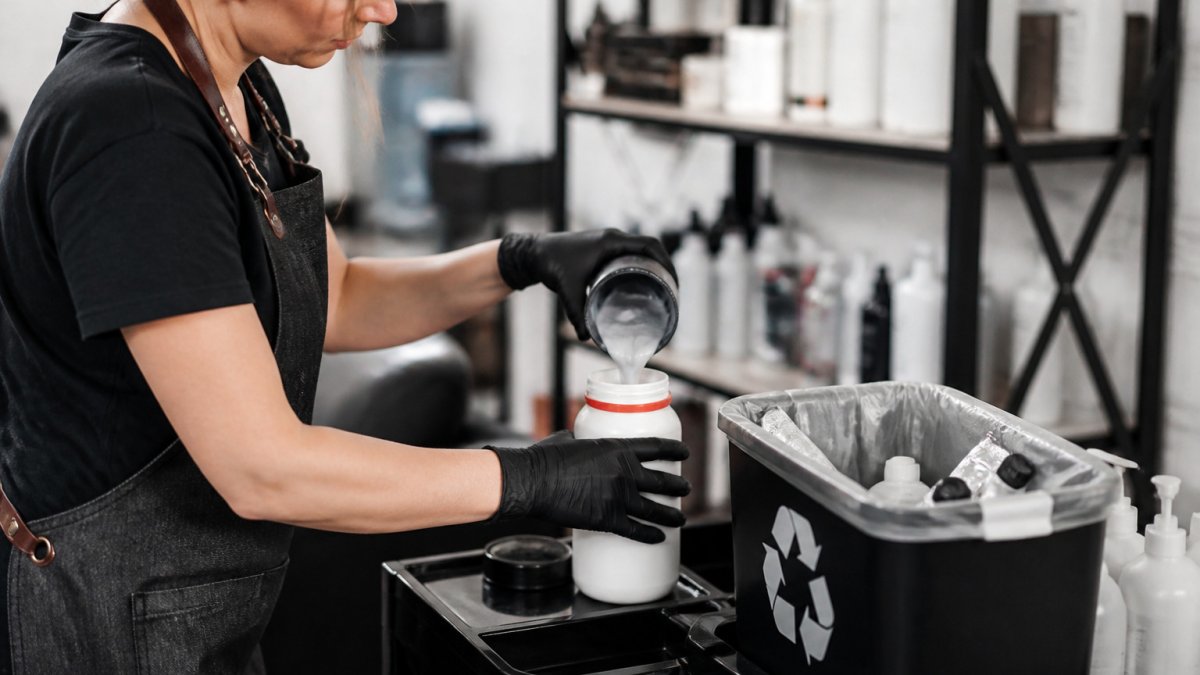
Salons generate color waste every service, so the goal is a repeatable routine that any team member can follow, not a one-time cleanup. The strongest programs combine source reduction (mixing less) with a documented containment and handoff process for what is left.
Reduce leftover color before it exists
- Batch by service, not by habit. Mix the measured amount for each client's formula rather than a standard scoop. A digital scale and a written formula card make this consistent across stylists.
- Track overmixing. Note when bowls come back with more than a thin film of product. A weekly review of those services usually reveals a handful of formulas that are routinely overmixed.
- Use up open developer and lightener within the manufacturer's window. Product that expires unused becomes waste you paid for twice, once at purchase and again at disposal.
Contain liquid dye and developer safely
This is the step most salons get wrong. Leftover liquid needs a defined container and a defined owner.
- Designate one labeled waste container per station or per color bar. Use a rigid, screw-top container that will not tip. Label it clearly with the contents and the date it was last emptied.
- Never pour leftover dye or developer back into a stock bottle. Cross-contamination can ruin a full bottle and create an unpredictable reaction.
- Do not combine different products in one container unless your waste hauler specifically instructs you to. Mixing oxidizers with other chemicals can generate heat or gas.
- Keep the lid closed between uses. Developer is an oxidizer and can react with residues; a closed, labeled container also keeps fumes out of the salon air.
- Wipe bowls and tools before washing. Scrape hardened or excess product into the waste container first, then wash reusable bowls and brushes. This keeps chemical residue out of the sink.
- Hand off on a schedule. Store the sealed container in a designated, ventilated area away from heat and client areas until your waste provider collects it or you transport it to a permitted facility.
Handle lightener and powder waste
Powder lightener behaves differently from liquid color. Keep unused powder sealed and dry, and never let it sit open where moisture can clump it. Mixed lightener hardens quickly; scrape it into the same labeled waste container once it has set. If your local rules classify lightener as hazardous, route it through a licensed waste service rather than the regular trash.
Build a daily and monthly routine
- Daily: scrape and seal leftovers, wipe tools, cap developer, and confirm the waste container is closed.
- Weekly: check container levels, note any overmixed formulas, and confirm pickup or drop-off is scheduled.
- Monthly: review waste volume against service counts to spot trends, and refresh team training on the containment steps.
Confirm what your local rules require
Disposal requirements vary by municipality, by product, and by volume. Before you set up or change a routine, contact your local waste office or your hauler and ask three questions: which color products they accept, how liquids must be contained, and whether they require documentation. Keep a written record of the answers so new team members follow the same process.
A salon disposal program succeeds or fails on containment. One labeled container, a closed lid, a scrape-before-wash habit, and a scheduled handoff will do more than any single recycling purchase.
Sorting Tubes, Foils, Bowls, and Packaging for Recycling
Not every salon item goes in the same bin. Sorting at the station saves time and reduces contamination.
- Color tubes: Empty them fully, then sort according to the tube material and your recovery program.
- Aluminum foils: Clean off dye, then keep them separate from paper and plastic.
- Plastic bowls and applicators: Check whether your program accepts them before adding them to recycling.
Contamination is the main reason recycling fails. A foil with wet dye on it may be rejected. Clean and dry items first whenever possible.
Hair Dye Recycling Programs and Specialist Waste Services
Specialist programs handle salon waste that regular recycling cannot take. Services like Green Circle Salons collect hair, foils, plastics, and color waste for recovery (Green Circle Salons Waste Recovery).
Before you sign up for any program, ask:
- Which materials do they accept, including color?
- How do they handle liquids and chemical waste?
- What pickup schedule do they offer?
Reusable Hair Color Tools That Cut Waste in the Studio
Reusable tools are one of the simplest ways to reduce disposable waste.
ESTL+CO makes stain-resistant tint bowls and ergonomic feathered brushes designed for professional colorists. Stain-resistant bowls are designed for repeated use in the studio. For tips on keeping brushes in good condition, read our guide to cleaning hair color application brushes.
Pricing depends on quantity and delivery, so contact ESTL+CO for current prices or a quote.
Booking Your Next Color Service With a Lower-Waste Plan
A lower-waste color service starts with the booking.
If you are a stylist, planning ahead helps too. Review your bookings, mix only what each service requires, and use our lightener mixing guide to keep batches consistent. Small habits add up across hundreds of appointments.
Frequently Asked Questions
How should you dispose of leftover hair color?
Do not pour leftover hair color down the drain. Mix the unused dye with an absorbent material such as kitty litter, sawdust, or paper towels, seal it in a bag or container, and place it in your household trash unless your local waste authority gives different instructions. Leave the product in its original container when possible and check the label for any specific disposal guidance. Keep it away from children and pets until it is sealed and removed. Many municipal waste programs accept household chemicals on designated collection days, so check your city or county website for drop-off options before throwing out larger quantities.
Can hair dye be poured down the drain?
No. Hair dye contains chemicals such as developers, alkalizing agents, and metallic or synthetic dye compounds that can harm wastewater treatment systems and the environment. Pouring it down sinks or toilets can also clog plumbing and move contaminants into waterways. Rinse only the small amount of residue from tools into a sink if your local rules allow it, using as little water as possible, and dispose of the bulk of unused product through a sealed container in the trash or a household hazardous waste program.
Can hair color tubes and bottles be recycled?
It depends on the material and on local recycling rules. Many plastic bottles and aluminum tubes are not accepted in curbside recycling because they hold residue. Empty the container as completely as you can, scrape out what remains into a sealed bag for trash, and rinse lightly if your program requires clean containers. Check the recycling code and your local guidance before placing any package in the bin.
What is the most eco-friendly way to dispose of hair color packaging?
Reduce waste first by buying only the quantity you need and choosing products with minimal packaging. For disposal, empty each package fully, separate metal foils and aluminum tubes from plastic and cardboard, and use a recovery program where one is available. Salons can set up dedicated bins for foils, tubes, and boxes so staff sort materials consistently. Rinse and dry containers before recycling when your local rules call for it, and never mix chemical residue into recyclable streams.
Eco friendly hair color disposal is a daily habit, not a one-time project. Start with fewer leftovers, clean sorting, and reusable tools. ESTL+CO builds professional tint bowls and feathered brushes for colorists who want a more efficient studio. Contact ESTL+CO for current pricing or to see which tools fit your workflow.
