

Are Salon Grade Tint Bowls Worth the Cost?
Table of Contents
- What Makes a Tint Bowl Salon Grade
- Best Materials for Hair Color Mixing Bowls
- Salon Grade vs. Standard Tint Bowls: The Real Cost Difference
- How to Clean Professional Hair Tint Brushes and Bowls
- Durability and Longevity: Cost Per Application Breakdown
- Precision, Ergonomics, and Workflow Impact
- Is the Investment Worth It for Your Studio
- Frequently Asked Questions
Last Updated: September 1, 2026
What Makes a Tint Bowl Salon Grade
A salon grade tint bowl is a professional-quality mixing vessel engineered for hair color application, designed to withstand repeated daily use while maintaining precision and durability. Unlike standard bowls, salon-grade versions feature non-porous materials that resist staining and chemical degradation from oxidation and professional-strength dyes.
Hair color chemistry demands specific conditions. When you mix semi-permanent or permanent color, the chemical reaction between dye molecules and oxidation agents requires a container that won't absorb pigment or leach materials back into your formula. A standard ceramic or plastic bowl will stain within weeks and may compromise color consistency.
Professional bowls feature a tilted edge that holds your application brush in place between sweeps, reducing mess and improving workflow efficiency. The U-shaped cutout design keeps your brush accessible without requiring you to set it down on the station, which matters when moving between multiple clients or complex techniques like balayage.
ESTL+CO's Hair Color Bowls are constructed from stain-resistant materials engineered to withstand color saturation and frequent sanitization without degrading. The ergonomic design fits naturally in your palm, reducing hand fatigue during extended application sessions. At $19.00 per bowl, they're positioned as professional tools built for high-volume salons and independent colorists.

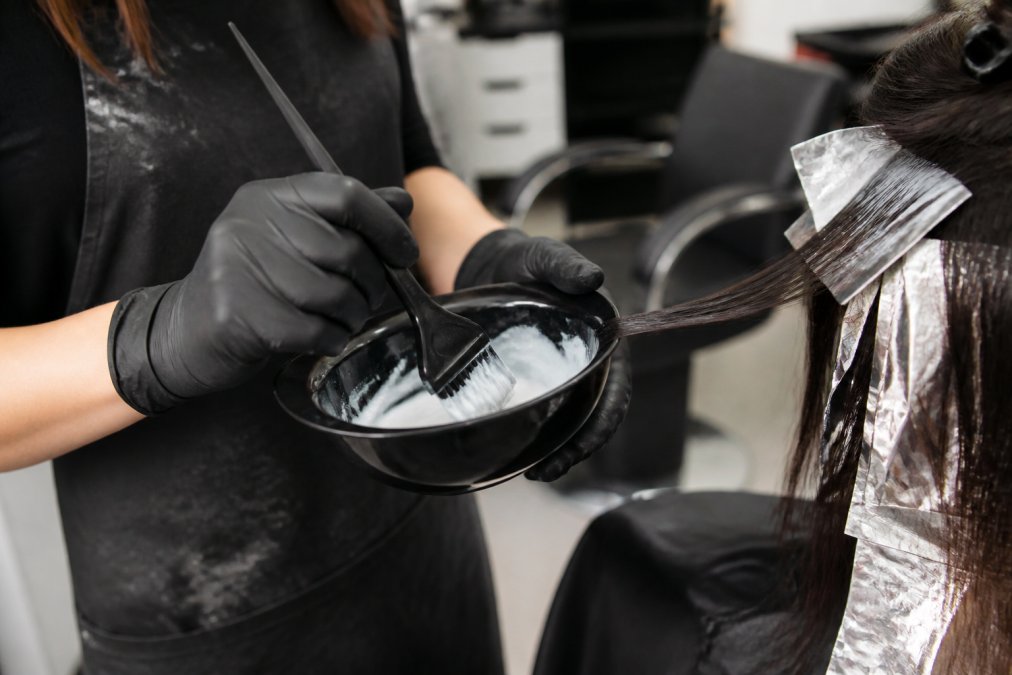
The real question is whether the investment returns value through durability, precision, and workflow improvement.
Best Materials for Hair Color Mixing Bowls
Professional tint bowls come in three primary material categories, each with distinct performance characteristics.
Non-porous ceramics represent the traditional choice for professional salons. These bowls resist chemical absorption better than standard pottery because the firing process creates a dense surface that prevents dye penetration. However, ceramic chips easily if dropped, and once chipped, the exposed porous layer underneath absorbs color permanently. Replacement becomes necessary within 12-24 months of heavy use.
Silicone-reinforced polymers have emerged as the modern standard for salon-grade bowls. These materials combine flexibility with chemical resistance, they won't crack under pressure and resist staining from even the strongest permanent dyes. Sanitization is straightforward; they withstand high-temperature steam and chemical disinfectants without degrading. Professional-grade versions minimize color tinting through proprietary non-porous formulations.
Stainless steel bowls are less common for color mixing but gaining traction among colorists who prioritize durability. Steel won't stain, won't absorb chemicals, and lasts indefinitely with proper care. The limitation: steel can react with certain color formulations and may affect pigment saturation in ways requiring testing before regular use.
According to salon professionals, material choice should match your workflow. High-volume colorists benefit most from stain-resistant polymers because they eliminate staining entirely and handle frequent sanitization without wear. Specialists working with complex techniques benefit from the precision grip of ergonomic ceramic designs. Freelancers moving between locations often prefer lightweight polymer bowls that pack safely without breakage risk.
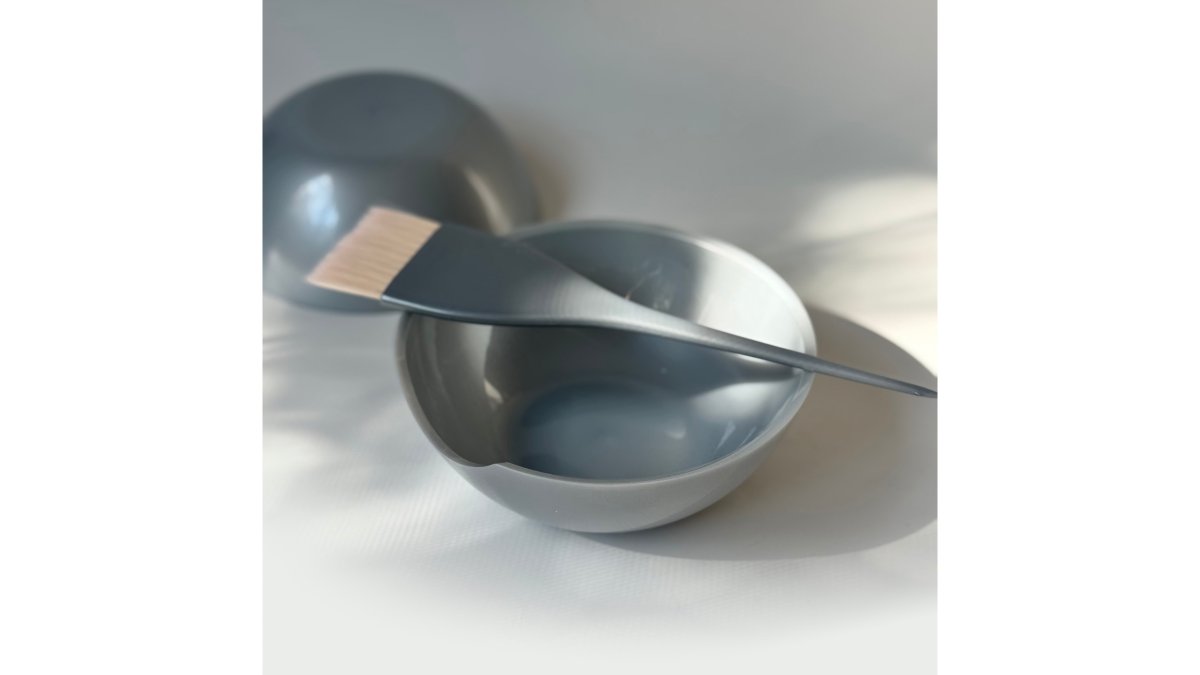
The material itself doesn't determine salon-grade status; the manufacturing process does. A salon-grade bowl maintains color consistency, resists staining through repeated use, and supports precision application.
Salon Grade vs. Standard Tint Bowls: The Real Cost Difference
The price gap between salon-grade and standard tint bowls appears modest until you calculate cost-per-application over the tool's lifespan.
A standard mixing bowl costs $3-8 but requires replacement every 3-4 months of professional use. Staining accelerates as the porous surface accumulates pigment, making color consistency difficult to verify. You also manage ergonomic limitations: no tilted edge, no brush-holding feature, no grip designed for extended hand use.
Salon-grade bowls like ESTL+CO's cost $19.00 per unit but remain functional for 18-24 months with proper care. That translates to roughly $0.79-1.06 per month with daily use. A standard bowl at $5 costs $1.25-1.67 per month when accounting for frequent replacement.
The workflow impact matters more than the financial comparison. With a standard bowl, you lose precision during color application because you can't trust the bowl's appearance to match your actual formula. A stained bowl makes it harder to verify color saturation, especially when matching tones or working with complex techniques. This creates inefficiency and mental energy spent on tool management instead of technique.
The ergonomic design matters significantly. A bowl with a tilted edge and brush-holding feature reduces hand strain during extended sessions. Your brush stays in place between sweeps instead of requiring repeated setting down and picking up.
| Factor | Standard Bowl | Salon-Grade Bowl |
|---|---|---|
| Initial Cost | $5-8 | $19.00 |
| Replacement Frequency | Every 3-4 months | Every 18-24 months |
| Cost Per Month | $1.25-1.67 | $0.79-1.06 |
| Stain Resistance | Poor | Excellent |
| Ergonomic Features | Minimal | Tilted edge, brush holder |
| Precision Impact | Compromised by staining | Consistent throughout life |
| Hand Fatigue Factor | Higher | Lower |
The real cost difference is the compounded efficiency loss from using tools that force you to work around their limitations.
How to Clean Professional Hair Tint Brushes and Bowls
Proper sanitization extends tool life and prevents cross-contamination between clients.
Rinse your bowl and brush under warm running water immediately after each client while color is still wet. Use a soft brush or cloth to gently remove dried pigment from bristles; never scrub aggressively, as this damages feathered brush tips. For bowls, a soft sponge works best.
For deeper sanitization between clients, use a salon-approved disinfectant spray or soak. Many professionals use a 10-minute soak in a quaternary ammonium disinfectant solution, which kills bacteria and fungal spores without damaging non-porous materials (the CDC). After soaking, rinse thoroughly and dry with a clean towel.
Weekly deep cleaning prevents color buildup. Create a paste using baking soda and warm water, apply it to the bowl's interior, and gently scrub with a soft cloth. For brushes, soak for 15 minutes in warm water with gentle dish soap, then rinse thoroughly and reshape bristles while damp. Allow brushes to air-dry bristles-down on a clean towel.
Avoid high-heat steam sanitizers for feathered brushes, as extreme temperature damages bristle structure. Never soak brushes for extended periods, as this loosens bristles from the ferrule.
Durability and Longevity: Cost Per Application Breakdown
Understanding true tool cost requires calculating cost-per-application rather than upfront price.
A salon-grade tint bowl used by a colorist performing 5 color applications per day, 5 days per week, for 18 months (approximately 1,950 applications) costs roughly $0.0097 per application (peer-reviewed research). A standard bowl replaced every 3 months (approximately 325 applications) costs $0.015-0.025 per application when accounting for replacement frequency.
The salon-grade bowl isn't more expensive; it's more economical when measured by actual cost-per-use over the tool's realistic lifespan.
Durability also compounds with precision. A stain-resistant bowl maintains color consistency throughout its lifespan, meaning every application benefits from the same reliable tool performance. A standard bowl's performance degrades as staining accumulates, forcing you to either work around the compromised tool or replace it sooner.
Feathered brushes show similar economics. A professional-grade feathered brush, when properly maintained, lasts 6-12 months with daily use (peer-reviewed research). A standard brush lasts 2-4 months. The feathered design, where bristles are intentionally layered to create texture, enables the precision application techniques that justify professional pricing.
Durability also includes portability. Freelance colorists working from rental studios need tools that survive frequent packing and transport. A ceramic bowl breaks if packed improperly; a polymer bowl survives repeated transport without damage.
Precision, Ergonomics, and Workflow Impact
Salon-grade tools reveal their true value not in the material, but in how they change your actual work.
Precision application depends on trusting your tools. When mixing a balayage formula or applying complex dimensional color, you need to see exact color saturation in your bowl. A stained bowl makes this impossible. You second-guess yourself, potentially remix batches, and spend cognitive energy on tool management instead of technique. A non-staining bowl removes this friction.
Ergonomics matter significantly in hair color work. You're holding a brush at various angles for 30-90 minutes per client, repeating motions across multiple clients daily. A brush handle designed for your hand size and grip preference reduces fatigue substantially. ESTL+CO's feathered brushes feature ergonomic ferrule design that distributes pressure across your hand rather than concentrating it in your fingers. The bristle texture provides tactile feedback that helps you control application pressure.
The tilted edge on a salon-grade bowl is a workflow optimization. Your brush stays in place between sweeps, eliminating the micro-motion of setting it down and picking it up repeatedly. Over 100+ brush strokes per client, this compounds into measurable time savings and reduced hand strain.
Workflow impact extends to client experience. When you're not managing tool limitations, you move more confidently. Your application speed improves, meaning clients spend less time in the chair. Your precision improves, meaning better color results. Better results drive client retention and referrals.
Is the Investment Worth It for Your Studio
The answer depends on your specific situation.
For high-volume salons: Salon-grade tools are essential. You're managing multiple colorists, each performing 5-8 color applications daily. Tool durability directly impacts supply costs and team productivity. The $19 investment per bowl pays for itself within 2-3 months through reduced replacement frequency and improved efficiency. Your team's hand fatigue decreases, reducing burnout and turnover.
For independent freelancers: The investment is justified if you're working 4+ days per week and moving between locations. Durability and portability become critical. A salon-grade bowl that survives transport without breaking reduces supply costs and improves client results.
For salon owners evaluating studio upgrades: Professional-grade tools signal quality to clients. Clients notice when a colorist works confidently with tools designed for precision. This supports premium pricing and justifies higher service rates.
For colorists with hand or joint concerns: Ergonomic design becomes essential rather than optional. A brush handle designed for comfort and a bowl that reduces repetitive micro-motions can mean the difference between sustainable career longevity and chronic pain.
The investment in salon-grade tint bowls is worth it if you meet at least one criterion: you perform color applications daily, prioritize precision over speed, are building a professional studio identity, or have physical limitations making ergonomics critical. If you're a casual home user, a standard bowl is sufficient. For professionals relying on these tools for income, the math is clear.
ESTL+CO's salon-grade tint bowls represent this investment strategy directly. At $19.00 per bowl with an 18-24 month lifespan, they cost less per application than standard alternatives while providing the precision, durability, and ergonomic features professional colorists depend on. The stain-resistant material means your color consistency never degrades. The ergonomic design means your hand fatigue decreases. The durability means you're not managing replacement logistics constantly.
When managing a high-volume color studio or working as an independent colorist, your tools are extensions of your craft. Investing in salon-grade equipment from ESTL+CO means choosing bowls engineered for stain resistance and ergonomic precision, paired with feathered brushes designed for control and comfort. Get started with ESTL+CO's Hair Color Bowls and experience how professional-grade tools eliminate the friction that standard equipment creates. Your hand fatigue decreases, your application speed improves, and your color results become more consistent, all because you're working with tools actually designed for professional use.
Frequently Asked Questions
Q: What makes a tint bowl 'salon grade' versus a standard plastic bowl?
A: Salon grade tint bowls are engineered from non-porous, chemical-resistant materials designed to withstand repeated color applications without staining or degrading. Standard plastic bowls absorb pigment, discolor over time, and can degrade when exposed to the oxidation process of hair dye. Professional-grade bowls like those from ESTL+CO feature stain-resistant construction, ergonomic design with U-shaped cutouts to hold brushes, and precision mixing surfaces that ensure color consistency across applications. The material science difference directly impacts color accuracy and tool longevity.
Q: How long do professional tint bowls actually last compared to budget alternatives?
A: Professional salon-grade tint bowls typically last 2-3 years with daily use, while standard plastic bowls often require replacement every 6-12 months due to staining, warping, and chemical degradation. When you calculate cost-per-use, a $19 professional bowl used for 500+ applications costs roughly $0.04 per application, while a $5 budget bowl used for 100-150 applications costs $0.03-$0.05 per use, but the professional bowl maintains color consistency and hygiene standards throughout its lifespan, making it the more cost-effective choice for high-volume salons.
Q: Do I really need to replace my hair tint brushes as often if I'm using salon-grade equipment?
A: Professional-grade brushes with proper maintenance last significantly longer than budget alternatives. Ergonomic feathered brushes engineered for salon use can perform for 6-12 months with correct cleaning and storage, while lower-quality brushes often shed bristles or lose precision within 2-3 months. The key is sanitization protocol: rinse immediately after use, clean with mild soap and warm water, and allow to air dry bristle-side up. Salon-grade brushes maintain their feathering and bristle integrity through repeated chemical exposure, reducing replacement frequency and overall supply costs.
Q: Will switching to salon-grade tint bowls actually improve my color mixing consistency?
A: Yes. Professional tint bowls provide non-porous, precision-engineered mixing surfaces that prevent pigment absorption and chemical reactions with the bowl material itself. This means color ratios remain accurate from first application to last, and you avoid the color shift that occurs when standard plastic bowls absorb dye molecules. For complex techniques like balayage or foil work requiring precise shade matching, salon-grade bowls eliminate a major variable in color consistency, directly improving aesthetic results and reducing color correction callbacks.
This article was written using GrandRanker