

Colortrak Alternative for Professional Colorists in 2026
Table of Contents
- Why Professional Colorists Are Switching From Colortrak
- What a Professional Hair Colorist Tool Kit Essentials List Should Include
- Ergonomic Hair Tint Brushes That Reduce Hand Strain
- Stain-Resistant Hair Color Bowls Built for High-Volume Salons
- Comparing Salon-Grade Accessories: Materials, Durability, and Heat Resistance
- Sanitization and Sterilization Protocols for Professional Tools
- Cost-Benefit Analysis: Everyday vs. Specialized Coloring Tools
- Sustainability and Eco-Friendly Disposal in the Color Room
- Frequently Asked Questions
Last Updated: September 25, 2026
Why Professional Colorists Are Switching From Colortrak
Searching for a Colortrak alternative for professional colorists usually starts with a specific frustration: a brush that frays, a bowl that stains, or a foil that slides. At ESTL+CO, we hear the same three complaints: grip fatigue, staining, and inconsistent application.
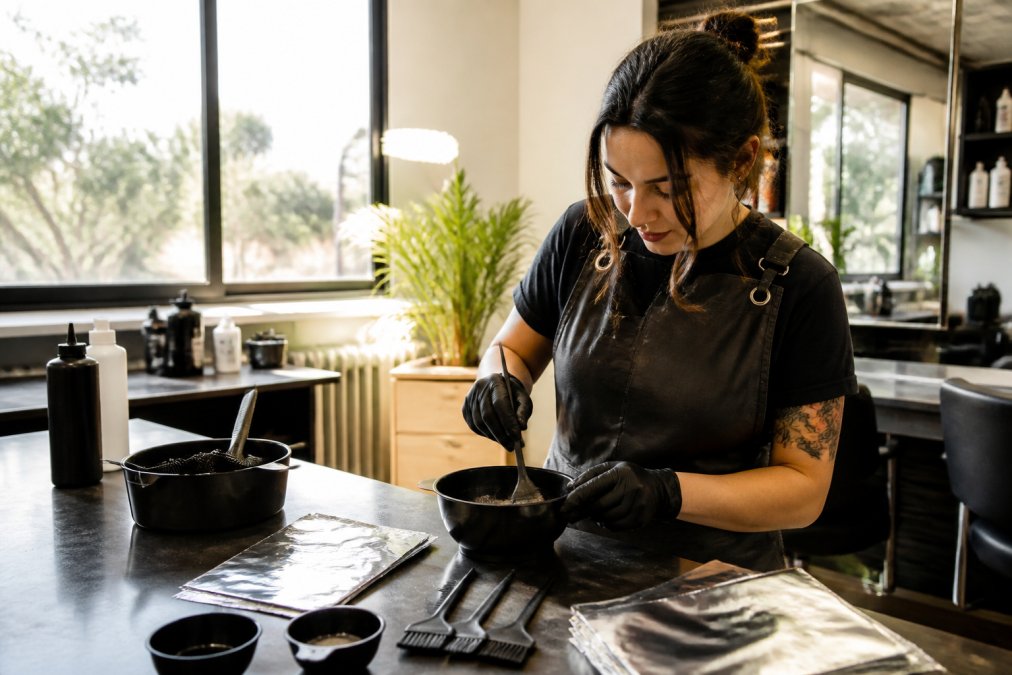
Three things drive most switches:
- Grip and weight balance across long service days
- Stain resistance that survives bleach and dark dye
- Bristle structure that spreads color evenly instead of streaking
What a Professional Hair Colorist Tool Kit Essentials List Should Include
A professional hair colorist tool kit essentials list covers four core categories: application tools, mixing vessels, sectioning and foiling supplies, and protection items. Everything else is optional.
Here's the working kit most colorists actually use daily:
| Category | Core Items | Why It Matters |
|---|---|---|
| Application | Feathered tint brushes (at least 2) | Even saturation, cleaner sections |
| Mixing | Stain-resistant bowls with brush rest | Fewer mid-service interruptions |
| Foiling | Pre-cut, pre-folded foils | Faster placement, no slipping |
| Protection | Barrier cream stick | Prevents hairline staining |
Ergonomic Hair Tint Brushes That Reduce Hand Strain
Ergonomic hair tint brushes reduce hand strain by widening the grip base and removing the pinch points that force your fingers into a tight hold. Standard tint brushes taper hard toward the handle, which is what makes your fingers cramp by hour four. A wide-based brush lets you hold it loosely and still keep control.
Feathered Tips vs. Standard Bristles: Application Differences
Feathered bristles spread color across a wider surface with less pressure, producing more even saturation and a softer blend line. Standard bristles concentrate product in a narrower band, useful for root retouches, harder to control on balayage.
Where feathered tips win:
- Balayage and freehand painting, where blend control matters
- Full-head color, where speed and evenness matter
- Clients with sensitive scalps, since less pressure is needed
Where standard bristles still make sense:
- Dense root touch-ups
- Precise line work on short hair
Stain-Resistant Hair Color Bowls Built for High-Volume Salons
Stain-resistant hair color bowls hold their color and shape through repeated bleach and dark-dye applications, which matters most in high-volume salons. A bowl that discolors after a week of bleach work isn't just ugly; it makes it harder to judge the tone of the mixed color.

Look for three things:
- Non-porous material that resists dye absorption
- A tilted edge that keeps product in the bowl
- A brush rest so the brush doesn't sit in a puddle between sweeps
Comparing Salon-Grade Accessories: Materials, Durability, and Heat Resistance
Salon-grade accessories are distinguished by three measurable traits: material composition, durability under repeated chemical exposure, and heat resistance during processing.
Material Composition: What Each Surface Actually Is
- Tint brushes, look for a handle molded from a single piece of non-porous polymer rather than a two-piece glued assembly. A one-piece handle has no seam for developer to seep into. Synthetic feathered bristles also hold their splay longer.
- Mixing bowls, flexible, non-porous polymer resists dye absorption and survives drops on tile. Rigid bowls crack; soft bowls flex and recover, though very soft bowls can tip when overfilled, which is why a wide, flat base matters as much as the material.
- Foils, embossed foil grips the hair shaft at the root because the texture creates friction against the cuticle. Smooth foil slides. The emboss pattern, not the thickness alone, is what stops a foil from slipping when the client turns their head.
- Barrier cream, a stick format applies a consistent layer without the waste of a pump or tube. The formulation matters less than the delivery mechanism for most colorists.
Durability Under Chemical Exposure
Chemical resistance is not a single property; it is a cycle. Apply lightener or oxidative dye, let it sit for the full processing time, wipe clean, and inspect for discoloration, cloudiness, or tackiness. A tool that passes repeatedly is genuinely salon-grade; one that fails will absorb pigment within weeks. Colorists tracking replacement intervals find a non-porous bowl outlasts a porous one by several multiples of service cycles, porous surfaces have microscopic channels that pigment enters and never fully leaves.
Heat Resistance During Processing
Heat resistance matters most during processing, when color develops under a cap, a dryer, or ambient salon heat. Non-porous polymer bowls and one-piece brush handles hold their shape; thin, rigid plastics can warp at the rim, creating a lip that traps product.
Side-by-Side Comparison
| Product | Material Focus | Durability Mechanism | Heat Behavior | Price |
|---|---|---|---|---|
| Hair Color Brushes | One-piece non-porous handle, feathered synthetic bristles | No seam for developer to enter; bristles resist splay | Holds shape under processing-cap heat | $16.00 |
| Hair Color Bowls | Flexible non-porous polymer, wide flat base | Resists dye absorption; flexes instead of cracking | Rim does not warp at processing temperatures | $19.00 |
| Asymetrie Collection | 12-micron embossed foil, pre-cut to 5 by 11 inches | Emboss texture creates root friction; no trimming waste | $17.50 | |
| Barrier Cream Stick | Hypoallergenic stick formulation | 35 grams, largest stick format available | Stable at room and processing temperatures | $26.50 |
Keep a dedicated 'test' bowl for new-product trials so a failed surface never touches a paying client's color.


Sanitization and Sterilization Protocols for Professional Tools
Sanitization and sterilization protocols for coloring tools follow a simple sequence: remove product residue, wash with soap and cool water, disinfect with an EPA-registered salon disinfectant, then dry completely before storage. Skipping the drying step is the most common error.
- Scrape or wipe excess color into a waste bin
- Wash with mild soap and cool water
- Soak in an EPA-registered disinfectant per label contact time
- Rinse and dry fully before storing
- Replace any tool with cracks, pits, or persistent staining
Cost-Benefit Analysis: Everyday vs. Specialized Coloring Tools
Cost-benefit analysis of coloring tools comes down to replacement frequency, not sticker price.
Everyday vs. Specialized: The Real Difference
Everyday tools are built for occasional use. Specialized tools are built for daily chemical exposure. The materials, seams, and failure modes all differ.
| Factor | Everyday Tool | Specialized Tool |
|---|---|---|
| Handle construction | Two-piece, glued | One-piece, molded |
| Bowl surface | Porous, stains early | Non-porous, resists pigment |
| Foil | Smooth, cut to size | Embossed, pre-cut |
| Typical replacement window | Weeks to a few months | A year or more with care |
| Failure mode | Frays, stains, warps | Wears gradually |
Long-Term ROI for Independent Stylists
Long-term ROI for independent stylists is driven by three factors: replacement frequency, time saved per service, and client discomfort prevented.
- Replacement count, estimate how many times you'd buy the tool in a year at your service volume.
- Per-service time cost, a stained bowl forces re-mixing or second-guessing tone; a fraying brush adds seconds to every section. Multiply those seconds by your weekly services.
- Client-discomfort cost, a tight-grip brush causes hand fatigue, which shows up as slower application and, eventually, a shorter career. Hardest to quantify, easiest to ignore.
- Transport and storage, if you pack and unpack daily, count the drops and packing cycles. A tool that survives a year of transport is worth more than its price tag suggests.
Rinse bowls in cool water immediately after service, before product dries. Warm water can set certain dye pigments into the surface over time, and once a bowl takes on a tint, it never fully releases it.
Sustainability and Eco-Friendly Disposal in the Color Room
Sustainability in the color room centers on reducing single-use waste and disposing of chemical residue correctly. Foils, gloves, and applicator waste drive most of a colorist's daily trash volume.
Practical steps that actually reduce waste:
- Use pre-cut foils sized correctly so you're not trimming and discarding offcuts
- Switch to reusable, stain-resistant bowls and brushes instead of disposable alternatives
- Follow local regulations for disposing of developer and dye residue
- Choose tools built to last multiple years rather than replacing them seasonally
Frequently Asked Questions
How should you clean hair color brushes after use?
Rinse bristles under warm water immediately after each client to prevent color from setting. Work a small amount of gentle soap through the bristles, then rinse until the water runs clear. For a Colortrak alternative that holds up to daily cleaning, look for stain-resistant bristles and a sealed handle that won't absorb dye. Air-dry brushes bristle-side down in a clean cup. Avoid soaking handles, which can crack and harbor bacteria over time.
What features should professional colorists look for in ergonomic hair tint brushes?
Prioritize a wide, balanced base that reduces grip strength needed during long application sessions. Feathered bristles spread color evenly and feel softer on the client's scalp. The tapered tip helps create neater sections for precision work. Stain-resistant materials matter because color buildup degrades bristle performance. A brush that fits comfortably in smaller hands without forcing a tight pinch will cut stylist fatigue across a full day of services.
Are there more durable alternatives to standard plastic tint bowls?
Yes. Stain-resistant hair color bowls made from sturdy, drop-tested material outlast thin disposable bowls that crack or warp after a few uses. The ESTL+CO Elegance Collection bowls, for example, use a tilted edge to keep dye contained and a U-shaped cutout that holds the brush between sweeps. At $19.00 for two bowls, they cost more upfront than a single disposable bowl but replace dozens of cheap ones over a year, which matters for high-volume salons.
How do ergonomic tint brushes improve application speed and precision?
A brush designed to prevent tension and pinching lets you work longer without cramping, which keeps your application consistent from the first client to the last. The feathered tip on ESTL+CO's Elegance Brush covers more surface area per sweep, and the tapered tip creates cleaner section lines. Combined with pre-cut, pre-folded foils that stay stable at the root, you spend less time repositioning and more time on color saturation and blending.
What materials are best for stain-resistant hair color tools?
Look for tools with sealed, non-porous surfaces that resist bleach and dye absorption. ESTL+CO's brushes and bowls come in Black, Beige, Mauve, and Violet finishes, all stain resistant, so color doesn't bleed into the next client's formula. For foils, the Asymetrie Collection uses 12-micron thickness with an embossed no-slip design that holds hair in place during application. These material choices directly affect tool durability and how often you need to replace your kit.
The tools you choose shape every service you deliver, and the wrong ones cost you time, comfort, and client trust long before they cost you money. ESTL+CO builds salon-grade equipment designed by a professional, for professionals, with stain-resistant tint bowls, ergonomic feathered brushes, and pre-cut foils that hold where you place them. If you're ready to stop fighting your tools mid-service, get started with ESTL+CO and give your color room equipment built to match how you actually work.