

Best Professional Hair Color Brush Alternatives for 2026
Table of Contents
- Why Your Choice of Hair Color Brush Alternative Matters
- Quick Comparison: Top Professional Alternatives
- Material Safety: Why You Must Avoid Metal Tools
- Bristle Types and Ergonomics for Self-Application
- Best Tools for Balayage and Foil Techniques
- Precision Balayage Application Techniques
- Cleaning and Maintenance of Your Color Brushes
- Conclusion: Upgrade Your Color Kit
- Frequently Asked Questions
Last Updated: September 8, 2026
Why Your Choice of Hair Color Brush Alternative Matters
The right application tool determines whether color lands evenly or streaks, whether sections stay clean or bleed, and whether your hand cramps by the third client. A best professional hair color brush alternative isn't just a budget workaround; it is a decision about material safety, bristle performance, and control during precision work. We design tint tools for working colorists, so we know exactly where cheap substitutes fail under daily salon pressure.
Most guides treat any brush as interchangeable. That assumption is wrong, and it costs you time on corrections. The tool you choose directly affects saturation, how well the formula penetrates the hair shaft, and whether you can execute clean balayage or foil sections without dragging product where it does not belong.
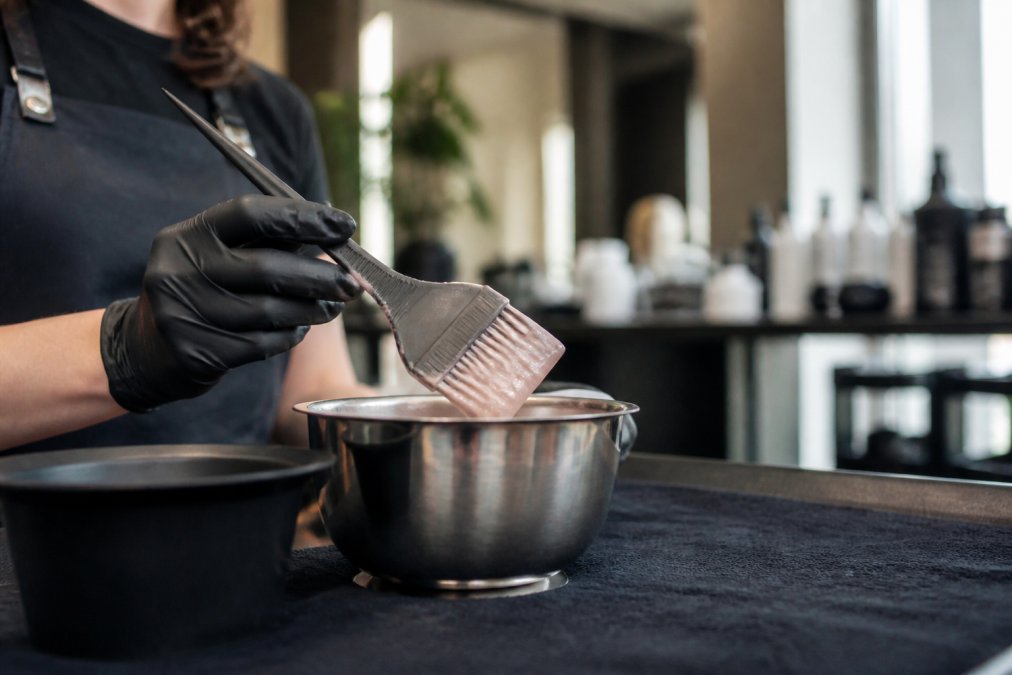
The gap between a purpose-built tint brush and a generic substitute becomes obvious the first time you apply a thick, high-lift formula. A well-designed brush holds the product and releases it evenly; a poor one lets it pool at the base or drip mid-section. For a tool you use on every single client, the choice deserves more thought than grabbing whatever is clipped to the shelf.
Quick Comparison: Top Professional Alternatives
When you evaluate options, the differences come down to handle ergonomics, bristle firmness, material reactivity, and how the tool handles various color viscosities. Here is how the main categories stack up against the professional standard.
| Brush Type | Material Safety | Best For | Ergonomic Handle | Reusable |
|---|---|---|---|---|
| Feathered tint brush (ESTL+CO) | Non-metallic, stain-resistant | Balayage, root touch-up, full application | Yes, wide base | Yes |
| Disposable applicator brush | Non-metallic | Single-use, quick touch-ups | No | No |
| Household paintbrush | Metal ferrule risk | Not recommended | No | No |
| Classic tint brush | Non-metallic | General application | Varies | Yes |
The feathered design stands apart because the wide base distributes pressure across your fingers rather than concentrating it. Disposable options have their place for sanitation-sensitive work, but they lack the bristle tension needed for controlled saturation on dense hair.

Material Safety: Why You Must Avoid Metal Tools
Most guides tell you to avoid metal, but few explain why. The reason is rooted in the chemistry of hair color development. Permanent and demi-permanent colors rely on an oxidation reaction: when the alkaline color base (usually ammonia or ethanolamine) opens the cuticle, the hydrogen peroxide developer triggers oxidative polymerization of the dye precursors inside the cortex (peer-reviewed research). This reaction is what builds larger color molecules that get trapped in the hair shaft.
Introducing certain metals into that mix disrupts the process. Iron, copper, and aluminum, common in hardware-store brush ferrules and staples, can catalyze premature oxidation of the developer (PubMed). Instead of the color developing evenly over the recommended 30-45 minutes, it can develop faster at the point of contact, leading to banding, off-tones (often a green or muddy cast on blonde formulas), or uneven lift that requires a corrective color service to fix (the FDA).
A second, less obvious risk is corrosion. Over time, repeated exposure to alkaline color formulas can corrode metal staples and ferrules, especially if the brush is not dried immediately after rinsing. That corrosion can flake into your mixing bowl, contaminating the formula and introducing particulates that drag through the hair and create patchy saturation.
Professional-grade tint brushes eliminate this risk entirely by using seamless, non-metallic designs. The ESTL+CO feathered brush, for example, is built with a solid, seamless handle and a bristle base secured without metal staples. Every surface that contacts the formula, from the bristles to the handle, is chemically inert, so the color stays stable from the bowl to the hair.
For colorists who work with high-lift blondes or lighteners, this distinction is not theoretical. Lighteners are more alkaline and more reactive than deposit-only colors, which makes them more likely to interact with stray metal. A brush that is safe for a demi-permanent gloss may still cause issues with a heavy-duty lightener. The safest rule is to keep metal entirely out of your application path, not just at the ferrule but also in the mixing bowl and clips you use to section.
A quick field test: if you are unsure whether a brush has hidden metal, run a strong magnet along the handle and bristle base. If it sticks, do not use it for color. This simple check takes seconds and can save you from a full-head correction later.
Bristle Types and Ergonomics for Self-Application
Bristle tension is the hidden variable in clean application. Firm bristles push color through dense texture and create sharp lines at the scalp or section edge. Soft bristles flex too much, causing the brush to skate over the hair and deposit uneven color. Synthetic fibers are the standard for color work because they resist staining and rinse clean without absorbing formula.
Ergonomics matter more for self-application than most colorists admit. When you reach around to apply color to the back of your own head, your wrist angles differently than it does on a client. A brush with a narrow, round handle forces your fingers to grip harder, which leads to cramping by the end of a long appointment.
The ESTL+CO Elegance Brush is designed with this exact problem in mind. Its wide base creates an easier grip that prevents the tension and pinching that leaves your fingers cramped.
Best Tools for Balayage and Foil Techniques
Balayage demands a brush that delivers paint-like strokes with visible dimension. The best tools for balayage and foil techniques combine a tapered tip for fine control with enough bristle body to load a generous amount of lightener. Foil work adds another requirement: the brush must place product precisely so the foil folds cleanly without smearing.
For sweeping freehand balayage, a wider feathered brush excels. It picks up more product per dip, so you can lay down a smooth sweep in fewer strokes, which keeps the lightener fresh and workable longer. A thin, narrow brush forces you to reload constantly, slowing your pace and risking patchy saturation on thick sections.
The ESTL+CO Hair Color Brush, priced at $16.00, pairs a wide feathered tip with a tapered point for neater sections. This combination supports both broad sweeping motions and fine detailing at the hairline or around the face.
Precision Balayage Application Techniques
Mastering balayage application techniques starts with how you load the brush. Dip only the tip into the mixing bowl, then wipe one side against the bowl's rim. This leaves a controlled amount of product on the brush, preventing drips and giving you a predictable release rate as you paint.
Work in thin sections, no wider than the brush itself. Hold the section taut with your non-dominant hand, then paint with the feathered edge flat against the hair. For a softer, more diffused line, use less pressure and let the bristle tips do the work. For a sharper demarcation, press the brush edge down firmly to deposit more product at the root boundary.
A clean hair color brush makes every technique easier. Product residue from a previous application changes how the bristles release formula, so a brush that rinses completely is a non-negotiable part of precision work.
Cleaning and Maintenance of Your Color Brushes
Your brush will only perform as well as its maintenance routine allows. But the standard advice, rinse, shampoo, dry, misses the specific ways color brushes fail. Understanding those failure modes tells you exactly why a disciplined cleaning routine matters.
The first failure point is bristle memory. Synthetic bristles are extruded polymers that hold their shape under tension. When color residue dries between the fibers, it acts like a glue that pulls bristles out of alignment. Over time, the brush loses its feathered edge and begins to deposit color unevenly, not because the bristles wore out, but because dried residue permanently deformed them. This is why rinsing immediately after use is non-negotiable, not just for hygiene but for preserving the brush's geometry.
The second failure point is handle degradation. Color formulas are alkaline, and repeated exposure can weaken the seal between the bristle base and the handle. If you leave a brush soaking in water or cleaning solution, that liquid seeps into the joint and accelerates separation. A brush that starts to wiggle at the base is beyond saving; it will deposit color unpredictably and can even shed bristles into a client's hair mid-application.
For a weekly deep clean, use a dedicated brush cleaner or a gentle sulfate-free shampoo. Work the cleaner through the bristles with a soft toothbrush, then rinse until the water runs completely clear. If you see color still releasing after several rinses, the brush has absorbed formula into the fibers, a sign that the bristles are porous or damaged and the brush is nearing the end of its usable life.
Staining is normal with permanent color, and a stained brush is not necessarily a dirty one. The distinction matters: staining is surface discoloration of the fibers, while buildup is a physical residue that changes bristle texture. A stained brush that rinses clean and holds its shape is still performing correctly. A brush that feels stiff, sticky, or tacky has buildup and needs a deeper clean or replacement.
For colorists who move between rental studios, transport is an additional stressor. A brush tossed loosely into a kit bag gets crushed, bent, and exposed to whatever else is in the bag, including powder lightener that can scratch the bristles. Store your brush in a protective case or a separate compartment, and never pack it wet. Moisture trapped in a closed bag creates a breeding ground for bacteria and can warp the handle.
A common pattern among working colorists is owning two or three brushes in rotation. This gives each brush time to dry completely between uses and extends the life of all of them. A single brush used daily without a full drying cycle will degrade faster than one that gets 24 hours to air out.
The stain-resistant design of the ESTL+CO brushes addresses one specific maintenance pain point: the fibers are formulated to release color more completely during rinsing, which reduces the residue that leads to bristle deformation. This material property directly affects how often you need to deep-clean and how long the brush holds its feathered edge.
Conclusion: Upgrade Your Color Kit
The best professional hair color brush alternatives solve real problems: material safety against oxidation reactions, ergonomic handles that prevent hand fatigue, and bristle designs that support both balayage and precise root work. A $16 investment in the right tool outperforms a drawer full of cheap brushes that compromise your results.
Your color kit is only as strong as its weakest tool. The ESTL+CO Hair Color Brush brings the ergonomic, stain-resistant, feathered design that professional colorists need for blending, applying, and defining with ease. Get started with ESTL+CO and upgrade your color kit to salon-grade equipment built for the modern studio.
Frequently Asked Questions
What can I use instead of a hair color brush?
Several safe alternatives exist. The best professional hair color brush alternatives include feathered tint brushes with synthetic fibers, applicator bottles with precision tips, and wide-tooth combs for sectioning. Avoid metal tools because they can trigger a chemical reaction with hair dye that alters the color result. For root touch-up, a tapered tail brush offers control. Choose tools with ergonomic handles to reduce hand fatigue during at-home coloring sessions.
Are there professional-grade alternatives to standard tint brushes?
Yes. Professional-grade alternatives include brushes with firm synthetic bristles designed for even distribution and stain-resistant handles. The ESTL+CO Hair Color Brush features a wide feathered tip, a tapered tip for neater sections, and an ergonomic design to prevent tension. At $16.00, it is a durable, reusable option for precision application. Unlike disposable applicators, these brushes hold their shape and maintain bristle tension for consistent results.
What are the best tools for balayage if I lack a professional brush?
If you lack a professional brush, the best tools for balayage include a fine-tooth comb for teasing and sectioning, a wide paddle brush for blending, and a tint brush with soft bristles for sweeping color onto the surface. For balayage application techniques, focus on the brush's saturation and angle. A feathered brush with a wide base, like the ESTL+CO Elegance Brush, creates smoother, more diffused lines compared to a standard narrow brush.
Can a makeup brush be used as a hair color brush alternative?
A makeup brush is not a good substitute. Makeup brushes have soft bristles that lack the tension needed to saturate hair evenly with dye. They also absorb too much product and are harder to clean thoroughly. A proper tint brush uses synthetic fibers designed to resist staining and rinsing clean. For precision work like root touch-up or balayage, invest in a dedicated professional hair color brush for control and predictable results.