

Why Professional Colorists Use Feathered Brushes
Table of Contents
- What Makes Feathered Brushes Different
- Feathered vs. Firm Bristles: Why the Difference Matters
- Best Tools for Balayage and Foil Techniques
- Balayage Blending Techniques With Feathered Brushes
- How to Choose a Hair Tint Brush for Your Workflow
- Durability, Ergonomics, and Long-Term Performance
- Conclusion
- Frequently Asked Questions
Last Updated: September 4, 2026
What Makes Feathered Brushes Different
Afeathered brush is a professional hair coloring tool defined by its wide, tapered tip with bristles that flex and splay under pressure, allowing the brush to diffuse product rather than lay it down in a hard line. This design is the single most important distinction in professional dye application, because it directly controls how saturation meets the hair. Where a standard firm brush acts like a pencil, a feathered brush acts like a calligraphy pen, giving the colorist control over both the width of the stroke and the softness of its edge.

At ESTL+CO, we design and test tint tools alongside working colorists, and the physics of the feathered tip is why professional colorists use feathered brushes for nearly every technique that demands a gradient effect. The bristle flexibility allows you to adjust pressure mid-stroke. Press down for a denser deposit of color, or lighten your touch to let the bristles fan out and create diffused edges that melt into the natural hair color. That range of expression is impossible with a rigid tool.
Feathered vs. Firm Bristles: Why the Difference Matters
Most guides treat brush choice as a matter of personal preference. It is not. The difference between feathered and firm bristles is a difference in what the brush physically allows you to do with the hair cuticle and the product you are laying down.
Firm bristles are engineered for saturation. They hold a heavy load of tint, maintain a rigid shape, and deposit color with a hard, defined edge. This makes them appropriate for root application or any line where you need stark precision with zero bleed. Feathered bristles, by contrast, are engineered for diffusion. They are the tool of choice for seamless transition work: root smudging, color melting, and the soft interior sections of a balayage.
| Bristle Type | Edge Quality | Best For | Control Style |
|---|---|---|---|
| Firm | Hard, defined line | Root touch-ups, precise sections | Heavy pressure, direct deposit |
| Feathered | Soft, diffused edge | Balayage, smudging, melting | Variable pressure, float technique |
The practical takeaway is this: you need both in your kit, but if you are doing dimensional color, the feathered brush is the workhorse. Firm brushes create the starting line; feathered brushes erase it.
Best Tools for Balayage and Foil Techniques
When colorists search for the best tools for balayage and foil techniques, they are really asking which brush gives them the widest margin for error on live hair while maintaining control over product placement. The answer lies in understanding how bristle architecture changes the mechanics of each technique.
For balayage, the feathered brush excels because the tapered, splaying bristles create a graduated deposit zone. When you load a feathered brush with lightener and apply it to a section, the outer bristles contact the hair first and deposit the heaviest saturation, while the inner bristles, which are shorter due to the taper, make lighter contact and diffuse the product edges. This natural gradient is mechanically impossible with a firm brush, which deposits color uniformly across its entire width. A narrow firm brush forces you to make multiple overlapping passes to cover a section, which increases the risk of banding and uneven processing. A wide firm brush deposits too much product in a hard line, requiring you to blend with a separate tool afterward, adding a step and introducing inconsistency.
For foil techniques, the choice depends on whether you are working with traditional foils or balayage foils. With traditional foils (where you need a clean, saturated line), a firm brush is often the right choice because it deposits color precisely at the base without dragging product onto neighboring sections. However, many colorists now use a hybrid approach: a firm brush to establish the base saturation inside the foil, then a feathered brush to soften the interior edges before closing the foil. This prevents a harsh demarcation line when the foil is removed and the color processes into the surrounding hair.
The handle and grip width matter more in foil work than in freehand balayage because you are repeating the same motion dozens of times in a single service. A brush with a barrel handle (wider base) distributes grip pressure across your palm and fingers, while a thin handle concentrates pressure into a pinch grip between your thumb and index finger. After 20-30 foils, the pinch-grip hand begins to fatigue, and fatigue leads to inconsistent pressure, which leads to uneven color deposit. A wider handle also allows you to work with a more relaxed wrist angle, reducing repetitive strain on the forearm and wrist, a critical factor for colorists who perform foil services multiple times per week.
When selecting a brush for mixed workflows (both balayage and foils), look for a medium-width feathered brush (approximately 1.5 to 2 inches across the tip) with a tapered edge. This width is wide enough to cover a generous balayage section without requiring multiple passes, but narrow enough to fit inside a traditional foil without dragging product onto the surrounding hair. The feathered edge gives you the flexibility to use firm pressure for saturated root work inside the foil, or light pressure for soft diffusion in freehand balayage, all with a single tool.
Balayage Blending Techniques With Feathered Brushes
The core balayage blending techniques with feathered brushes all rely on one principle: controlling the edge of the color deposit. The float technique is the foundation. Load the brush with product, then float it across the surface of the hair section with light pressure, letting the feathered tips skim the top of the strand rather than pushing through it. This deposits color on the exterior of the section, creating the soft, sun-kissed effect that defines balayage.
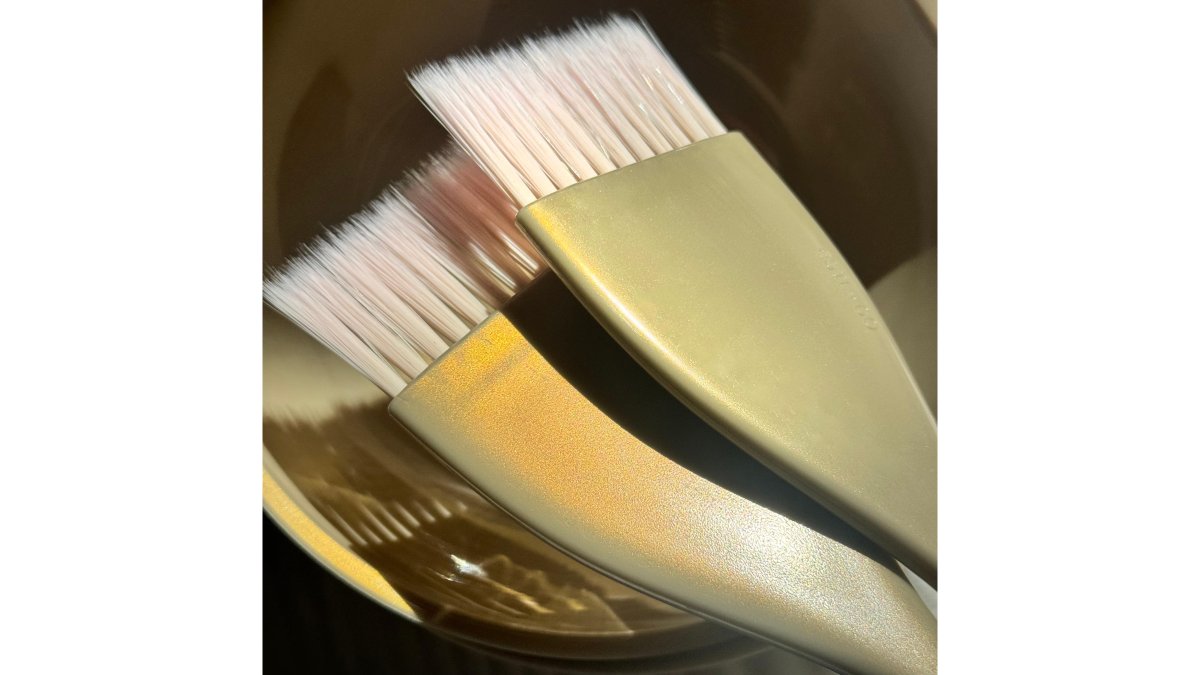
To achieve a seamless transition between shades, work in thin sections and use a sweeping, C-shaped motion. Start the stroke where you want the most saturation, then lift the brush away from the hair as you move down the strand. The feathered bristles will naturally lighten their contact, producing the gradient without a visible demarcation line. This is the technique professional colorists use for root smudging and color melting, where the goal is to create depth without a hard boundary.
How to Choose a Hair Tint Brush for Your Workflow
Choosing how to choose a hair tint brush comes down to matching the tool to the techniques you perform most often. If your book is full of gray coverage and root touch-ups, a firm brush with a precise edge will serve you. If you do dimensional color, balayage, or any form of freehand painting, the feathered brush is non-negotiable.
Before you buy, consider the handle. Ergonomics and hand fatigue are real concerns, especially for stylists working out of rental studios who pack their kit daily. A brush with a wide base distributes pressure across your fingers rather than concentrating it in a pinch grip. This is the difference between finishing a full day of foils with tired hands versus cramped, aching fingers. The brush should feel balanced in your hand, regardless of hand size, because the grip width is designed to accommodate a natural hold.
Also check the bristle material. Synthetic fibers that are chemical resistant will hold up to lightener and tint far longer than natural bristles, which can degrade and become brittle with repeated exposure to alkaline color. A stain-resistant brush will not absorb pigment into the ferrule, which keeps the tool hygienic and prevents color contamination between clients.
Durability, Ergonomics, and Long-Term Performance
A professional tint brush is an investment, and the question of durability is really a question of whether the tool can survive the daily cycle of use, cleaning, and sanitization without losing the bristle taper that makes it effective. In a high-volume salon, brushes are used, wiped, rinsed, and dropped into sanitizing solution multiple times per day. The brush must withstand that without the bristles splaying permanently, the ferrule corroding, or the handle absorbing product.
Chemical Compatibility and Bristle Degradation
Hair color is alkaline, typically ranging from pH 8 to pH 10 depending on the ammonia content and developer volume (peer-reviewed research). Prolonged exposure to alkaline environments breaks down certain materials at the molecular level. Natural bristles (boar, horse, or badger hair) are protein-based and become brittle and frayed when exposed to alkaline solutions repeatedly (peer-reviewed research). The cuticle layer of the bristle swells, the protein chains weaken, and the bristle loses its flexibility and tapered shape. This is why professional-grade tools use synthetic fibers, typically nylon or polyester blends engineered to resist alkaline degradation.
However, not all synthetic fibers are equal. Lower-grade nylon can absorb alkaline color molecules into the fiber itself, causing permanent staining and weakening the bristle from within. High-quality synthetic bristles used in professional tools are treated with a chemical coating that prevents absorption and allows color to sit on the surface, where it can be rinsed away cleanly. This is why a salon-grade feathered brush will maintain its color and flexibility for months of heavy use, while a budget synthetic brush from a beauty supply store will become discolored, stiff, and prone to splaying within weeks.
The ferrule (the metal or plastic band that holds the bristles) is equally critical. Cheap ferrules are made from uncoated aluminum or low-grade plastic that corrodes when exposed to alkaline color and water. Corrosion weakens the bond between the ferrule and the bristles, causing bristles to shed or fall out during application. Professional brushes use stainless steel ferrules or chemically resistant plastic, which do not corrode and maintain a tight grip on the bristles indefinitely.
Sanitization Protocols for Feathered Bristles
The delicate tapered structure of feathered bristles requires a sanitization approach different from firm brushes. Aggressive scrubbing or high-pressure rinsing can damage the taper and cause the bristles to splay prematurely.
After each use, rinse the brush immediately under warm running water while gently fanning the bristles with your fingers to remove excess product. Do not use a brush comb or stiff bristle cleaner on feathered bristles; these tools will break the taper. Instead, use a soft cloth or your hand to gently separate any bristles that have stuck together.
For sanitization, soak the brush in a quaternary ammonium (quat) sanitizing solution or a 10% bleach solution for the time specified by your salon's infection control protocol (typically 10-15 minutes) (the CDC). Avoid barbicide or alcohol-based sanitizers, which can dry out synthetic bristles and cause them to become stiff and brittle over time. After soaking, rinse thoroughly under warm water and gently squeeze excess liquid from the bristles by pressing them between your fingers, never wring or twist the brush.
Allow the brush to air-dry bristles-down in a clean, dry area. Do not store the brush bristles-up in a cup or container while wet, as moisture trapped in the ferrule can cause mold growth and corrosion. Once dry, store the brush bristles-up in a clean, dry container away from direct sunlight, which can degrade synthetic fibers over time.
Long-Term Performance and Replacement Cycles
A professional-grade feathered brush that is cleaned and sanitized properly will maintain its taper and performance for 6-12 months of heavy salon use (defined as 30+ color services per week). The bristles will gradually become slightly shorter as individual bristles shed naturally, but the taper and flexibility will remain intact. When you notice that the brush no longer fans out evenly, or that the tapered edge has become blunt or frayed, it is time to replace it.
Keep a rotation of at least two feathered brushes in your kit so that one can be sanitizing or drying while you use the other. This extends the life of each brush by reducing the frequency of sanitization cycles and allows the bristles to fully dry between uses, which prevents moisture-related degradation.
Conclusion
Mastering dimensional color requires tools that respond to your touch, and the feathered brush is the instrument that separates a basic tint application from a true color melt. The bristle flexibility gives you control over saturation and edge quality, while the ergonomic design protects your hands through long services. If you are ready to elevate your blending, applying, and defining, ESTL+CO offers stain-resistant tint bowls and feathered brushes engineered for the demands of the modern color studio. Get started with ESTL+CO and experience the difference in your daily workflow.
Frequently Asked Questions
What is a feathering brush and how is it different from a standard tint brush?
A feathering brush features tapered, soft bristles that diffuse product edges rather than apply it in hard lines. Unlike firm-bristled brushes that create defined sections, feathered brushes allow colorists to blend and soften color transitions. The tapered tip provides precision for painting individual hair sections, while the flexible bristles distribute product evenly without over-saturating. This design makes feathered brushes essential for balayage, highlights, and root smudging where seamless color melting is the goal.
How do feathered bristles improve balayage blending?
Feathered bristles create diffused edges that naturally blend colors together rather than leaving harsh lines. When applying balayage, the soft bristles flex as you paint, allowing product to distribute gradually across hair sections. This flexibility means you can achieve color melting with fewer passes, reducing product waste and application time. The tapered design lets you paint precisely while the bristle softness handles the blending automatically, which is why professional colorists rely on feathered brushes for complex techniques like balayage and foil work.
Will switching to feathered brushes actually reduce hand fatigue during long coloring sessions?
Yes. Feathered brushes with ergonomic handles reduce the pressure and tension required during application. Because the soft bristles require less force to distribute product and blend edges, your hand muscles work less throughout the day. Over an 8-10 hour shift with multiple clients, this difference compounds significantly. Brushes designed with wider bases and tapered grips, like the ESTL+CO Hair Color Brush, are engineered to prevent cramping and pinching, which are common with traditional firm-bristled tools. ESTL+CO's ergonomic design is intended to reduce hand strain.
How do I know if a feathered brush will work for my specific coloring techniques?
Feathered brushes excel for balayage, highlights, lowlights, root smudging, and color melting. If your work involves blending, creating soft transitions, or precision painting on foils, feathered bristles are the right choice. Check the bristle density and tapered shape, higher density brushes work better for thick hair, while looser bristle patterns suit finer textures. For complex foil techniques, a brush with a narrower tapered tip gives you more control over individual sections. ESTL+CO's feathered brushes are designed for professional-grade work across all these techniques, making them suitable for most salon and studio workflows.
This article was written using GrandRanker