

Natural Remedies for Hand Fatigue in Hair Stylists
Table of Contents
- Why Hair Stylists Get Sore Hands: Causes and Warning Signs
- Ergonomic Hair Brushes for Professional Colorists: What Actually Reduces Strain
- How to Reduce Hand Strain During Long Coloring Sessions
- Hand Exercises for Hair Stylists: A Daily Stretch Routine
- Massage, Temperature Therapy, and Anti-Inflammatory Habits
- Post-Shift Recovery: Nutrition, Hydration, and Sleep
- When Home Remedies Are Not Enough: Seeking Medical Care
- Conclusion
- Frequently Asked Questions
Last Updated: September 21, 2026
Why Hair Stylists Get Sore Hands: Causes and Warning Signs
Hand fatigue is the aching, weak, or tingling feeling that builds in your hands and wrists after hours of cutting, coloring, and holding tools. For hair stylists, it is a common occupational complaint that builds over months, not from a single long day.
Repetitive Motion, Grip Force, and Nerve Compression
Holding shears, brushes, and foils keeps your hands pinched for hours, which can lead to:
- Repetitive strain injury in the tendons of the fingers and thumb
- Tendonitis from repeated squeezing and twisting
- Carpal tunnel syndrome, where swelling presses on the nerve in the wrist
- Joint inflammation and stiffness in the knuckles
Early Signs You Should Not Ignore
Catching these early makes home care more effective:
- Tingling or numbness in the fingers, especially at night
- A weak grip when opening jars or holding a brush
- Aching that lingers after your shift ends
- Stiffness in the morning that takes time to loosen
- Pain that travels from the wrist up the forearm
One common mistake is waiting until the pain is constant. By then, the issue is harder to reverse.
Ergonomic Hair Brushes for Professional Colorists: What Actually Reduces Strain
Ergonomic hair brushes for professional colorists keep your wrist neutral and spread grip pressure across your whole hand, reducing the force needed to apply color. But "ergonomic" is a marketing word until you know which design features actually change how your hand works.
Handle Shape: Offset vs. Level vs. Contoured
The biggest variable in tool strain is handle geometry, which most guides skip.
- Level (straight) handles keep the wrist in line with the forearm when the tool is used horizontally. Good for flat work, but they force you to bend the wrist when you tilt the brush to reach a section.
- Offset handles angle the head relative to the grip. This keeps the wrist closer to neutral during angled application, the position you're in most of the day when sectioning and applying color.
- Contoured or feathered handles follow the natural curve of the fingers, which spreads pressure across the palm instead of concentrating it in the thumb and index finger.
Grip Diameter and the Power Grip Problem
There is a real trade-off here:
- Too thin: Your fingers wrap further around, forcing a tighter pinch grip. Over hours, that pinch is what fatigues the thumb.
- Too thick: You lose fine control and compensate by gripping harder with the whole hand.
- The sweet spot: A diameter that lets your fingers and thumb nearly touch without squeezing, roughly the width of a comfortable pen grip for your hand size.
Grip force matters more than total hours: a relaxed hand on a well-sized handle outlasts a tight hand on a thin one.
Weight and Balance
A lighter tool reduces wrist load, but balance matters as much as weight. A head-heavy brush forces your wrist to fight the lever arm all day, while one balanced near the grip feels lighter than it is. Test tools by holding them in your working position for a full minute.
Shear Tension: The Tool Nobody Talks About
Brushes get the attention, but shears are where a lot of hand fatigue starts. Two adjustments matter:
- Tension screw: If the tension is too tight, every cut requires extra thumb force. Too loose, and the blades fold hair instead of cutting, which makes you squeeze harder to compensate. A properly tensioned shear should cut a tissue-paper test cleanly with light thumb pressure.
- Handle design (offset vs. opposed): Offset shears let the thumb sit in a more natural, relaxed position and reduce the reach your thumb has to make. Opposed (straight) shears keep the thumb extended, which is harder on the thumb joint over a full day.
- Finger rest and tang: A well-placed finger rest takes weight off the pinky and ring finger and lets the hand rest between cuts instead of hovering.
Quick Tool Audit
Run this once a month:
- Check shear tension with a tissue test.
- Confirm your brush handle keeps your wrist neutral in your most common working angle.
- Swap in a lighter or better-balanced tool for your longest appointments.
- Replace any tool with a handle that has worn smooth or lost its contour.
ESTL+CO provides industry-leading hair tint tools meticulously designed by professionals for professional hair colorists. Our collection features high-quality, stain-resistant tint bowls and ergonomic feathered brushes engineered to elevate your daily workflow. By focusing on precision and performance, we deliver the essential tools color experts need to blend, apply, and define with absolute ease.
How to Reduce Hand Strain During Long Coloring Sessions
You reduce hand strain during long coloring sessions by changing how you hold, move, and rest your hands, not by working faster. Small adjustments add up over a full day.
Try these steps:
- Loosen your grip. Hold brushes and shears lightly. Tight grip is the biggest strain driver.
- Switch hands when you can. Alternate for mixing, capping, and sectioning.
- Keep your wrist neutral. Avoid bending it up or down while applying color.
- Raise your station height. A station that is too low forces you to reach down.
- Use foils and clips to your advantage. Let tools hold sections instead of your fingers.
- Rest every 30 to 45 minutes. Even a 20-second hand shake helps circulation.
Hand Exercises for Hair Stylists: A Daily Stretch Routine
Hand exercises for hair stylists are short stretches that keep wrist mobility and range of motion steady. A five-minute routine before and during your shift eases hand fatigue.
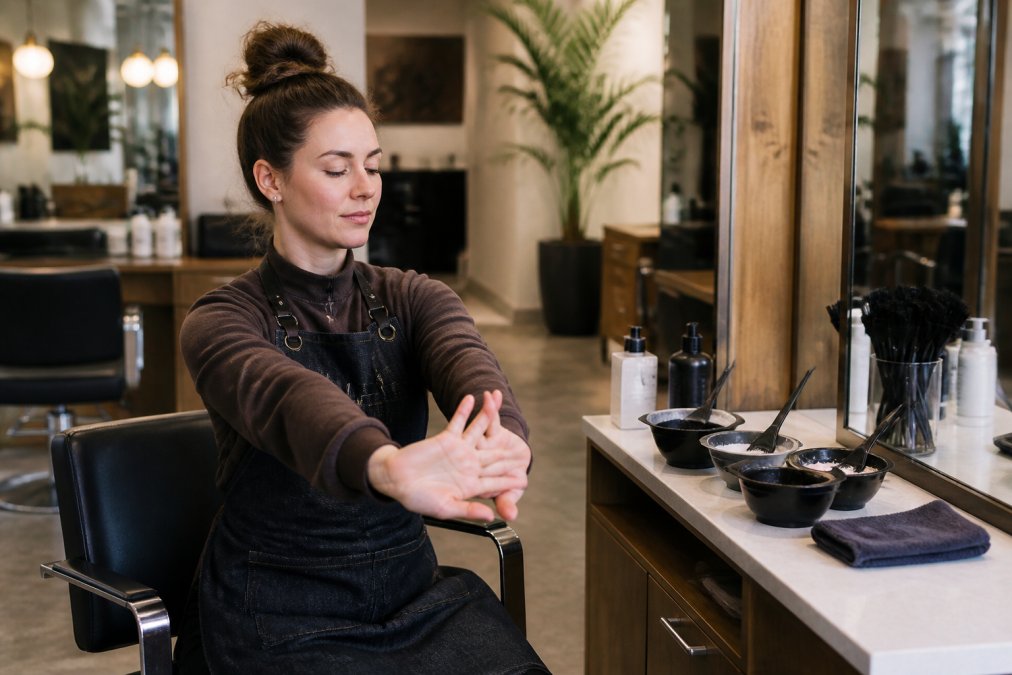
Pre-Shift Warm-Up and Mid-Day Reset
Do this before your first client:
- Wrist circles: 10 slow turns each direction
- Finger spreads: Open wide, hold 5 seconds, repeat 10 times
- Tendon glides: Curl fingers gently, then straighten, 10 reps
- Thumb stretch: Pull the thumb softly across the palm, hold 15 seconds
Mid-day, repeat the same set. Add a gentle forearm stretch by extending your arm and pulling your fingers back.
Massage, Temperature Therapy, and Anti-Inflammatory Habits
Massage, temperature therapy, and anti-inflammatory habits are the three natural remedies most stylists reach for first, but most advice lumps them together without saying when to use heat, when to use cold, or how long to apply either. Getting the timing wrong can make a tired hand feel worse.
A Clear Heat-vs-Ice Protocol
The rule of thumb practitioners use: heat before work, cold after work, and never the wrong one on a swollen joint.
- Before your shift (5-10 minutes): Warm water or a warm compress. Heat increases blood flow and makes stiff tendons and fascia more pliable, so your first few clients don't feel like a cold start.
- Between clients (30-60 seconds): A quick warm rinse or hand massage. This is a circulation reset, not a treatment.
- After your shift (10-15 minutes): Cool packs or a cool water soak. Cold reduces the low-grade swelling and inflammation that builds from hours of grip force.
- If a joint is hot, red, or visibly swollen: Skip heat entirely. Use cold only, and treat that as a signal to see a doctor.
Massage That Actually Targets the Right Tissue
Hand fatigue in stylists usually lives in three places: the thenar eminence (the meaty base of the thumb), the forearm flexors, and the space between the thumb and index finger. Massaging only the palm misses most of it.
- Thenar eminence: Press your opposite thumb into the base of your palm in slow circles. This is the muscle that drives scissor and brush grip.
- Thumb web: Pinch and knead the webbing between thumb and index finger. This is where a lot of shear-holding tension collects.
- Forearm flexors: Starting just below the inner elbow, work down toward the wrist with firm, slow strokes. This is the tendon line that feeds your fingers.
- Wrist crease: Gentle circular pressure, not deep digging. Nerves run close to the surface here.
Anti-Inflammatory Habits Worth Keeping
Dietary anti-inflammatories are supportive, not curative. The best-evidenced ones:
- Omega-3s (fatty fish, walnuts, flaxseed), support tendon and joint tissue over time.
- Turmeric with black pepper, curcumin absorption is poor on its own; pairing it with piperine helps.
- Ginger, commonly used for everyday joint achiness.
- Vitamin C and protein, building blocks for collagen repair (covered more in the recovery section below).
Consistency matters more than any single food: a monthly turmeric capsule does nothing, but a daily pattern of omega-3s, hydration, and protein does.
Night Splinting
A wrist splint worn overnight keeps the wrist in a neutral position while you sleep, which is when many stylists notice tingling or numbness. Neutral positioning reduces pressure on the median nerve. Wear it on the affected side only, and loosen the straps if your fingers tingle or turn pale.
Post-Shift Recovery: Nutrition, Hydration, and Sleep
Recovery happens between shifts, not during them. Nutrition, hydration, and sleep decide how well your tendons repair.
A post-shift routine that works:
- Cool your hands for 10 minutes
- Do a slow stretch set
- Drink water and eat a protein-rich meal
- Sleep with your wrist supported
When Home Remedies Are Not Enough: Seeking Medical Care
Home care is not enough when symptoms last more than two weeks, worsen, or include numbness and weakness. At that point, see a doctor.
Seek care if you notice:
- Numbness that does not go away
- Dropping tools or brushes
- Pain that disrupts sleep
- Weakness in your grip
Conclusion
Hand fatigue builds quietly, and colorists who protect their hands early are the ones still working comfortably years later. The right tools make a real difference.
Frequently Asked Questions
What causes hand fatigue and soreness in professional hair stylists?
Hand fatigue in stylists usually comes from three overlapping sources: repetitive motion from cutting, combing, and applying color; sustained grip force on shears and brushes; and awkward wrist positions held for hours. Together these create repetitive strain injury risk in tendons and nerves. Long coloring sessions add extra load because you hold a brush in a fixed pinch grip while reaching across a client's head. Circulation also drops when your hands stay clenched, which makes stiffness and aching worse by the end of a shift.
How can I relieve hand fatigue naturally after a long shift?
Start with temperature therapy: warm water or a warm compress for five to ten minutes to improve circulation, then a cool rinse if there is swelling. Follow with gentle wrist mobility work, including slow circles and range of motion stretches, and light massage along the forearm and palm to release trigger points. Elevate your hands for a few minutes. Hydration and an anti-inflammatory meal help tendon recovery overnight. If soreness lasts more than a few days or comes with numbness, see a physical therapist or physician.
How do ergonomic tools help reduce hand fatigue during coloring sessions?
Ergonomic hair brushes for professional colorists reduce the force you need to apply. A handle sized to your grip, a lighter overall weight, and a feathered brush head that spreads color in fewer strokes all cut down on pinch pressure and repetitive motion. Tools alone will not fix everything, but paired with stretching and breaks they lower the daily load on your joints.
What are the early warning signs of carpal tunnel syndrome in stylists?
Watch for numbness or tingling in the thumb, index, and middle fingers, especially at night. Other early signs include a weak grip, dropping tools, and a burning sensation that travels up the forearm. Symptoms that flare during long coloring sessions or after repetitive motion point to nerve compression. Do not wait for pain to become constant. A wrist splint at night, hand exercises for hair stylists, and an evaluation from a physician or physical therapist can prevent the condition from progressing.