

Preventing Cross Contamination with Hair Color Brushes
Table of Contents
- Why Hair Color Brushes Are a Hidden Cross-Contamination Risk
- How to Clean Professional Hair Tint Brushes: Step-by-Step
- Salon Tool Disinfection Protocols That Actually Work
- Hair Color Brush Maintenance for Long-Term Bristle Integrity
- Single-Use vs. Reusable Tools: Weighing Cost and Environmental Impact
- Color-Coding and Storage: Building a Hygienic Workstation
- Conclusion
- Frequently Asked Questions
Last Updated: September 27, 2026
Why Hair Color Brushes Are a Hidden Cross-Contamination Risk
A used hair color brush is one of the dirtiest tools on your station. It looks clean enough after a quick rinse, but the bristles hold color, developer, and whatever touched your client's scalp minutes earlier. That residue can transfer to the next client. This is the core of preventing cross contamination with hair color brushes, and most salons get it wrong because the brush never looks dirty.

Cross-contamination happens when a contaminated tool touches a new client's hair or skin. A brush carries three things that matter:
- Chemical residue from dye and developer
- Pathogens picked up from the scalp
- Formula traces that can alter the next color mix
The stakes are real. Scalp irritation and chemical exposure are common complaints in color services. A dirty brush can spread both from one chair to the next.
How to Clean Professional Hair Tint Brushes: Step-by-Step
Cleaning a professional hair tint brush takes about two minutes per brush if you do it right after use. Waiting until the end of the day lets color set into the bristles, and set color is far harder to remove.
Here's the workflow that works:
- Rinse immediately. Run warm water through the bristles right after the service.
- Apply antibacterial soap. Work it into the base of the bristles, not just the tips.
- Comb through with a fine comb. This pulls trapped pigment out from between bristles.
- Rinse until the water runs clear. Any color in the runoff means more rinsing.
- Disinfect. Soak in an EPA-registered disinfectant for the full contact time on the label.
- Dry bristle-down. Store upright or flat so water drains away from the ferrule.
- Inspect before reuse. Frayed or stiff bristles hold residue and need replacing.
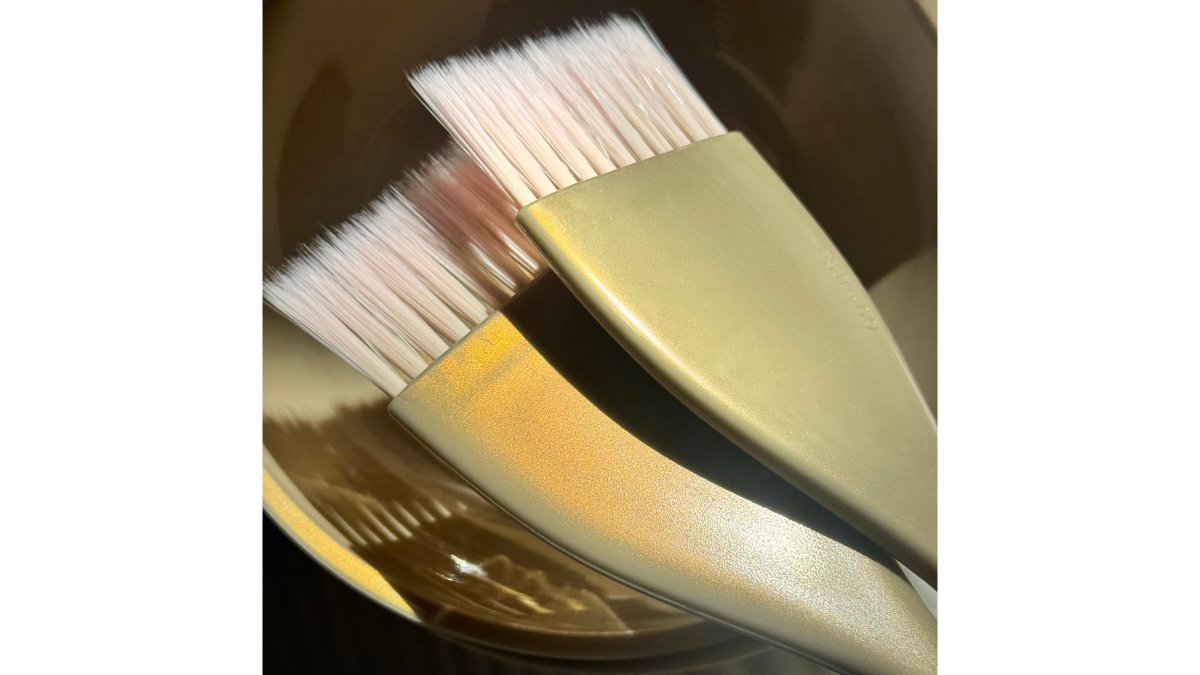
Removing Stubborn Color from Synthetic Bristles
Synthetic bristles trap pigment differently than natural hair. The fibers are non-porous, so color sits on the surface and in the gaps between bristles. That's good news: it means stubborn stains usually lift with the right method.
Try this for dried-on color:
- Soak in warm water with a few drops of dish soap for 10 minutes
- Use a soft-bristle nail brush to work the base of the fibers
- Rinse and repeat until clear
- Skip bleach and harsh solvents, which break down the bristle coating
A common mistake is using hot water on a stained brush and scrubbing hard. That pushes pigment deeper and frays the tips. Warm water and patience win.
Salon Tool Disinfection Protocols That Actually Work
Effective salon tool disinfection follows a clear order: clean, then disinfect, then store. Skipping the clean step makes disinfection useless, because disinfectant can't reach surfaces still coated in color or debris.
A workable protocol for a busy station:
- Clean every tool after each client, no exceptions
- Disinfect with an EPA-registered product at the labeled contact time
- Keep a dedicated jar for disinfectant and change it on schedule
- Log your disinfection routine for state board inspections
The EPA's list of registered disinfectants is the reference point for choosing a product that actually kills pathogens on salon tools.
What OSHA and State Boards Expect from Your Station
Salon sanitation compliance starts with the rules your state board sets. Most boards require that tools contacting skin or hair be cleaned and disinfected between clients. The OSHA bloodborne pathogens standard also applies to salons, because colorists can encounter blood from nicks and abrasions.
What inspectors look for:
- A written cleaning and disinfection routine
- Properly labeled disinfectant containers
- Tools stored in a clean, covered space
- No visibly soiled tools in active use
State requirements vary, so check your own board's rules. The CDC guidance on disinfection and sterilization offers a solid baseline for what counts as proper disinfection.
Hair Color Brush Maintenance for Long-Term Bristle Integrity
Bristle integrity is what makes a brush worth keeping. Once the fibers splay, fray, or harden, the brush stops applying color evenly and starts holding residue you can't reach.
Protect your brushes with a few habits:
- Never leave brushes soaking overnight in water
- Keep them out of direct heat, which warps synthetic fibers
- Store flat or bristle-down so the ferrule doesn't collect water
- Replace any brush with bent, stiff, or shedding bristles
A quick-drying cleanser helps here. Brushes that dry fast spend less time damp, and damp bristles are where bacteria grow. Stain-resistant tools also cut the scrubbing time that wears fibers down.
The real difference between a brush that lasts months and one that lasts weeks comes down to how you treat it between clients. Two minutes of care after each service adds up.
Single-Use vs. Reusable Tools: Weighing Cost and Environmental Impact
Most guides frame this as a simple cost-and-waste trade-off. The real decision hinges on three variables almost nobody discusses: the water and energy cost of cleaning, the chemical compatibility of your disinfectant with the brush material, and how many clients you serve per day.
Start with the material. Hair color brushes fall into three broad categories, and each behaves differently under repeated disinfection:
- Synthetic bristles (nylon, polyester, PBT): Non-porous, so pigment sits on the surface and lifts with warm water and surfactant. They tolerate most EPA-registered quats and phenolics but degrade faster in high-concentration bleach or solvent-based cleaners.
- Natural bristles (boar, badger): Porous and protein-based. They absorb color and moisture, dry slowly, and are more vulnerable to quaternary ammonium compounds that can stiffen the fibers over time.
- Silicone or TPE applicators: Non-porous and highly chemical-resistant, but they hold less product and give less control for balayage and foil work.
That chemistry matters because the wrong disinfectant doesn't just shorten brush life, it can leave a residue that transfers to the next client's scalp. Always check the disinfectant label's material-compatibility statement before soaking a natural-bristle brush.
Now the environmental math. A reusable brush isn't automatically the greener choice if cleaning it consumes more resources than making a disposable one. Consider what a single reusable brush actually costs per use:
- Water: A two-minute rinse under a standard salon faucet uses roughly a gallon or more per brush. Multiply that across every client, every day.
- Energy: Hot water and the drying time that follows both draw energy. Air-drying bristle-down avoids the heat damage a blow-dryer causes, but it takes longer.
- Disinfectant: EPA-registered concentrates are diluted, but the plastic jug, the shipping weight, and the disposal of spent solution all carry a footprint.
- Labor: Two minutes per brush per client is real time. At a busy station, that adds up to hours per week.
A disposable brush skips all of that, but it also skips the durability. Most single-use applicators are thin plastic that snaps under pressure and can't be reshaped for precision work. They also generate landfill waste that doesn't break down.
The honest answer is that the greener choice depends on volume.
Color-Coding and Storage: Building a Hygienic Workstation
Color-coding is only as good as the station layout behind it. A color-coded brush still gets contaminated if it sits in the same jar as a dirty one. The fix is a station setup that physically separates clean from dirty at every step of a multi-color service, and almost no guide walks through that layout.
1. Set up three zones before the first client.
- Clean zone: A covered drawer or lidded tray holding disinfected brushes, bowls, and combs. Nothing enters this zone until it's been cleaned and dried.
- Active zone: The working surface where the current client's tools live. Only tools for the client in the chair belong here.
- Dirty zone: A labeled bin or tray for used brushes, bowls, and foils. Nothing leaves this zone until it's been cleaned.
Conclusion
Cross-contamination with hair color brushes is a quiet problem, and it hides in plain sight on every station. The fix isn't complicated: clean after every client, disinfect at the right contact time, store tools dry and separate, and replace brushes once the bristles give out. Get the routine right and your clients stay safer, your tools last longer, and your station passes any inspection.
Frequently Asked Questions
How often should hair color brushes be replaced?
Replace hair color brushes when bristles splay, stiffen, or shed, typically every three to six months in high-volume salons. Stain-resistant brushes like ESTL+CO's hold their shape longer, but even quality tools degrade with daily chemical exposure. Inspect bristles weekly and retire any brush that no longer delivers precision mixing or smooth application.
Can I use the same brush for different color formulas?
Using one brush across multiple formulas risks formula separation and cross-contamination. If you must switch mid-service, wipe the brush with a disinfecting wipe between formulas. For multi-formula application, dedicate separate brushes or keep a quick-drying cleanser at your station. Color-coded brushes make this easier to manage during back-to-back clients.
What are the OSHA requirements for salon tool disinfection?
OSHA's bloodborne pathogens standard (29 CFR 1910.1030) requires salons to follow universal precautions when tools may contact blood or bodily fluids. That means wearing gloves, disinfecting tools with an EPA-registered hospital-grade disinfectant, and maintaining a written exposure control plan. State cosmetology boards add their own sanitation rules, so check your state's requirements alongside OSHA's.
How do I remove stubborn hair color from synthetic bristles?
Soak synthetic bristles in warm water with a few drops of antibacterial soap for 10 minutes, then work the bristles gently with your fingers. For dried color, apply a small amount of color remover or isopropyl alcohol, let it sit briefly, and rinse thoroughly. Avoid harsh scrubbing, which damages bristle integrity. A stain-resistant brush like ESTL+CO's reduces residue buildup in the first place.