

Product Club vs Colortrak Brushes Review: 2026 Guide
Table of Contents
- Product Club vs Colortrak: Quick Comparison Table
- Bristle Stiffness, Density, and Balayage Brush Bristle Types
- Ergonomic Handles and Grip Control Under Real Salon Load
- Long-Term Wear, Fraying Resistance, and Chemical Reaction Testing
- How to Clean Hair Color Brushes for Maximum Lifespan
- Which Brushes Fit the Best Professional Hair Color Brushes Standard
- Conclusion
- Frequently Asked Questions
Last Updated: September 16, 2026
Product Club vs Colortrak: Quick Comparison Table
Colorists ask us one question more than any other: is there a real difference between the legacy brush brands and a newer tool built specifically for precision work? This product club vs colortrak brushes review answers that by comparing the two legacy options against the standard professional colorists actually need. At ESTL+CO, we build tint tools for working colorists, so we have a stake in this conversation. We also have strong opinions about where the old guard still wins and where it does not.
The honest short version: both legacy lines are workhorses, and both have quirks that show up after months of daily use. Below is the breakdown, followed by what actually matters when you are mid-balayage with a client watching.
| Feature | Product Club | Colortrak | ESTL+CO |
|---|---|---|---|
| Bristle type | Feathered, medium stiffness | Crimped, firm | Feathered, tapered tip |
| Handle grip | Standard straight | Standard straight | Wide base, ergonomic |
| Stain resistance | Varies by model | Varies by model | Stain-resistant, all shades |
| Pack size | Single or multi | Single or multi | 2 brushes per box |
| Price | Varies by retailer | Varies by retailer | $16.00 |
Bristle Stiffness, Density, and Balayage Brush Bristle Types
Balayage brush bristle types fall into three practical categories: soft feathered bristles for blending and color slip, medium crimped bristles for controlled saturation, and firm flat bristles for foil application and root touch-up. The stiffness of the bristle determines how much color the brush holds and how evenly it releases.
Product Club leans toward feathered tips on many of its models, which suits blending work. Colortrak's crimped bristles hold more product and give firmer control during foil application. Neither is wrong. They are built for different moments in the service.
What most guides miss is density. A densely packed brush releases color in a tighter band, which is great for precision detailing but unforgiving if your sectioning is off. A looser bristle pattern spreads wider and hides small inconsistencies. Match density to your sectioning speed, not to a spec sheet.
Ergonomic Handles and Grip Control Under Real Salon Load
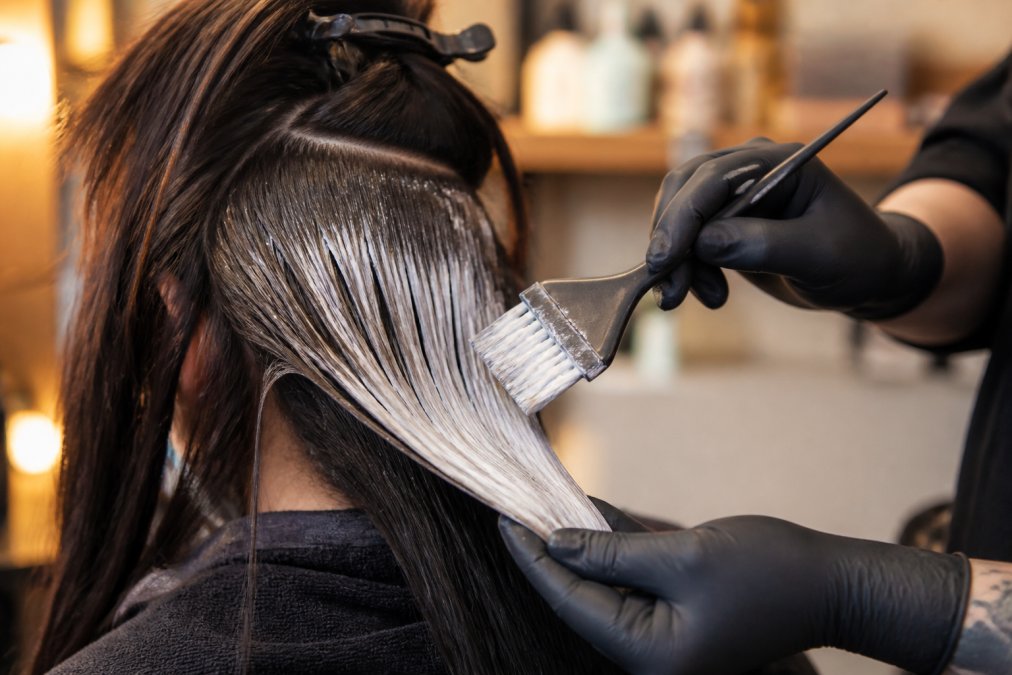
Grip control under load is where budget brushes quietly fail. A full day of back-to-back color services means hours of pinching a thin handle between thumb and forefinger. That repetitive tension shows up as cramping by mid-afternoon, and cramping shows up as shaky sectioning on your last client.
Handle length matters here. A longer handle shifts the balance point back into your palm, so your fingers guide rather than clamp. A wider base does the same thing. ESTL+CO's Elegance Brush uses a wide base specifically to reduce the tension and pinching that thinner handles create.

If you have smaller hands, a wide base is not automatically a problem. The grip sits deeper in the palm, which many colorists with smaller hands actually prefer once they adjust. Give any new handle a full week of services before you decide.
Long-Term Wear, Fraying Resistance, and Chemical Reaction Testing
Fraying resistance separates a brush that lasts a season from one that lasts a year. Bristles splay when the binding loosens, and binding loosens fastest when brushes sit in developer or lightener for extended periods. Synthetic fibers handle this better than natural bristles, but fiber quality still varies.
Chemical resistance is the test nobody runs. Most reviews test brushes fresh out of the package and call it a day. That tells you almost nothing about how a brush behaves on its two-hundredth foil. What actually matters is how the bristle binding and fiber chemistry respond to the two product categories that stress them most: high-lift bleach and semi-permanent dye.
High-lift bleach. Bleach is alkaline and aggressively reactive. It attacks the adhesive that holds bristles into the ferrule and the polymer coating on synthetic fibers. A common pattern among working colorists: a brush used primarily for lightener starts to feel stiff at the tips within a few months, and the stiffness spreads down the bristle as the coating degrades. Once the tips stiffen, the brush stops releasing color smoothly and starts dragging through sections. Feathered brushes show this faster than crimped ones because their tapered tips have more surface area exposed to the chemistry.
Semi-permanent dye. Direct dyes and demi-permanents are far gentler on bristles but notorious for staining. The pigment penetrates the fiber surface and does not rinse clean. A brush that lives in red or black demi-permanent will carry that tint into the next client's bowl no matter how well you wash it. This is where stain-resistant fiber treatments earn their keep. A brush with an untreated fiber will hold color permanently; a treated fiber releases most of it with warm water and mild soap.
What to watch for over six months. Track three things on any brush you use daily. First, tip splay: hold the brush up to light and look for bristles that have separated from the pack. Second, binding integrity: run a fingernail along the ferrule where bristles enter. If you feel give or see gaps, the binding is failing. Third, shedding: a brush that drops bristles into the bowl is done, regardless of how it looks. Shedding bristles in a foil placement ruin the section and cost you time.
How to Clean Hair Color Brushes for Maximum Lifespan
Knowing how to clean hair color brushes properly adds months to their working life. Rinse immediately after each service, before product dries in the bristle base. Warm water, a drop of shampoo, and a comb through the bristles is usually enough.
For stubborn buildup, soak in warm water with a small amount of dish soap for ten minutes, then work the bristles with your fingers. Rinse until the water runs clear. Dry bristle-side down in a cup so water drains away from the binding rather than into it.
The residue problem nobody talks about. Bleach residue is alkaline and continues to degrade bristle fibers even after the visible product is gone.
- Rinse immediately after every service
- Neutralize bleach residue with a mild acidic rinse
- Use dish soap for dye residue, not solvents
- Comb through bristles with a brush comb, not fingers
- Dry bristle-side down on a counter-height rack
- Replace any brush showing splayed or shedding bristles
Which Brushes Fit the Best Professional Hair Color Brushes Standard
The best professional hair color brushes share four traits: feathered bristles that hold and release color evenly, a handle that reduces grip strain, stain-resistant materials, and enough durability to survive daily chemical exposure. Brand matters less than whether a brush delivers all four.
Conclusion
Choosing between legacy brushes and a purpose-built tool comes down to your technique and your volume. If you blend, detail, and section all day, the ergonomic and bristle advantages compound across every client on your book.
Frequently Asked Questions
Do professional colorists prefer Product Club or Colortrak brushes?
Preference usually comes down to technique rather than brand loyalty. Colorists who do a lot of balayage tend to favor softer, feathered bristles that blend color without harsh lines, while those working mostly with foil application and root touch-ups often reach for firmer, crimped bristles that hold more product. The practical move is to test both on your most common service and judge how the bristle flexibility affects saturation and color slip on real client hair.
How do you choose the right bristle stiffness for hair painting?
Match stiffness to the technique, not the brand. Soft, feathered bristles suit balayage and freehand painting because they release color gradually for a blended finish. Firmer, crimped bristles work better for foil application and root touch-ups where you need color placement to stay exactly where you put it. If you do a mix of both, keep at least one soft brush and one firm brush in your kit so you are not compromising on either service.
How often should you replace your hair tint brushes?
Replace them when bristles splay, fray, or stop holding a clean edge, which for a full-time colorist is often every three to six months. Signs to watch for include color bleeding past the bristle line, uneven saturation on foils, and handles that have loosened. Rotating two or three brushes and cleaning them properly after each use stretches that window considerably. Stain-resistant options like the ESTL+CO Hair Color Brushes ($16.00 for two) are built to hold up to repeated washing.
Are synthetic bristles better than natural bristles for hair color?
Synthetic fibers are generally the safer pick for color work. They resist chemical absorption, so bleach and developer do not break down the bristles over time, and they clean up faster between clients. Natural bristles can feel softer on the first few uses, but they absorb product and degrade sooner when exposed to lighteners. For colorists doing bleach application or high-volume root touch-ups, synthetic bristles offer more consistent color distribution and a longer usable life.