

Silicone vs Plastic Hair Tint Brushes: A Pro Guide
Table of Contents
- Silicone vs Plastic Hair Tint Brushes: Material Differences That Matter
- Silicone Hair Color Brush: Precision and Control
- Plastic Hair Tint Brush: Affordability vs Performance
- How to Clean Hair Tint Brushes for Longevity
- Best Tint Brush for Hair Color: Selection Criteria
- Durability, Cost, and Value Over Time
- Frequently Asked Questions
Last Updated: October 19, 2026
Silicone vs Plastic Hair Tint Brushes: Material Differences That Matter
When you're applying color to hair, your brush choice affects everything, from how evenly the product distributes to how your hands feel by day's end. At ESTL+CO, we've worked with professional colorists long enough to know that silicone vs plastic hair tint brushes isn't a trivial decision. The material you choose shapes precision, durability, cleanup time, and ultimately, your workflow efficiency.
The core difference comes down to how each material interacts with hair color formulas. Silicone bristles resist product absorption, which means the color stays on your brush longer and releases more predictably onto the hair. Plastic bristles absorb some product, which can lead to uneven application and faster bristle degradation over time.

How Silicone and Plastic Bristles Perform Differently
Silicone bristles have a non-porous surface that repels moisture and pigment. When you dip a silicone brush into color, the formula sits on top of the bristles rather than soaking in. This gives you better control over how much product you're depositing and where. Plastic bristles, by contrast, are porous.
The bristle structure also differs. Silicone bristles tend to be tapered or feathered, which helps with sectioning and creating clean lines. Plastic bristles come in various configurations, but many are stiffer and less forgiving, particularly when new. Over time, plastic softens as it absorbs product, which can feel inconsistent from brush to brush or even day to day.
Product Buildup and Absorption
This is where the material choice creates real workflow friction. Silicone brushes shed product more easily during cleaning because the color doesn't penetrate the bristles. You rinse, and most of the stain comes away. Plastic brushes hold onto pigment longer. Even after thorough cleaning, plastic can retain a faint tint, especially from darker shades. Some colorists accept this as normal; others find it frustrating, particularly if they switch between warm and cool tones frequently.
Product absorption also affects application consistency. With plastic brushes, the bristles absorb some of the color's liquid component, which can change the viscosity of what you're applying mid-stroke. Silicone maintains the formula's original consistency throughout the application, which matters when you're trying to achieve even coverage or precise placement on delicate sections.
Silicone Hair Color Brush: Precision and Control
A silicone hair color brush delivers control that matters most when precision is non-negotiable. The non-absorbent bristles mean you're working with a consistent formula throughout each application. You know exactly how much product is on your brush and how it will behave when you sweep it across the hair.
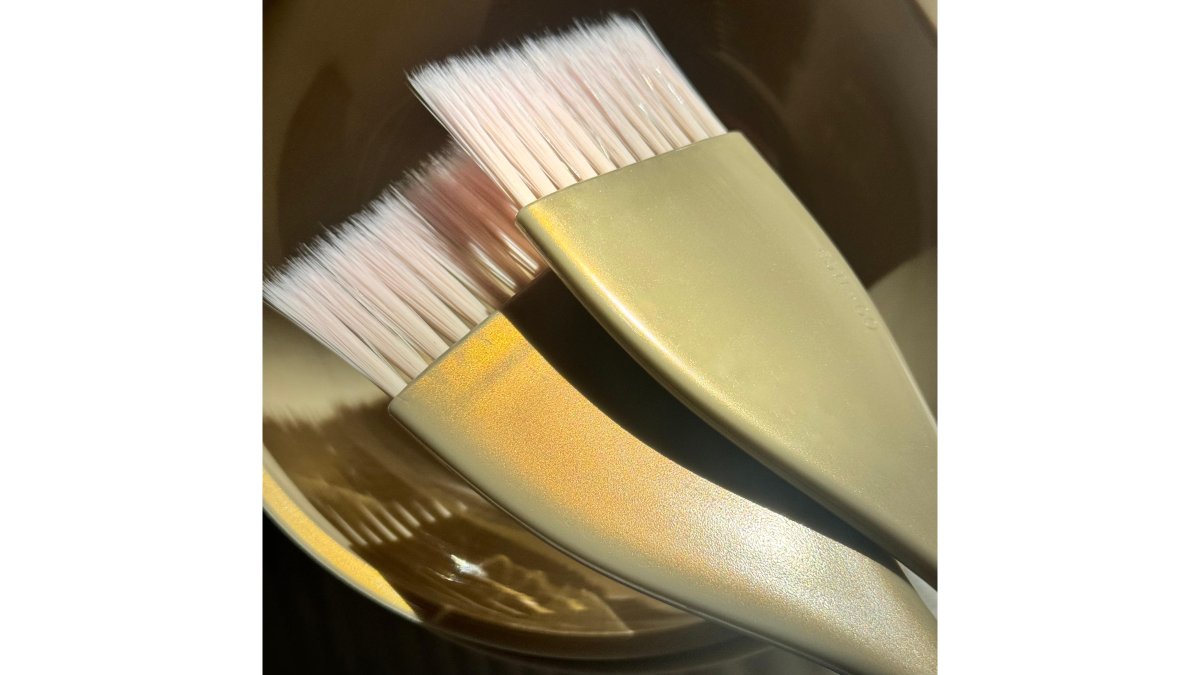
This precision extends to sectioning. Silicone bristles hold their shape better under the moisture and heat of color application. A well-designed silicone brush with tapered or feathered tips lets you create clean, defined sections without the bristles splaying or losing definition mid-application.
Color Application on Different Hair Textures
Silicone brushes perform consistently across hair types because the bristles don't absorb moisture from the hair itself. On fine, delicate hair, the non-absorbent surface means less drag and gentler application. On coarse or textured hair, the bristles maintain their stiffness and shape, allowing you to work the color through dense sections without the bristles becoming limp or matted.
The tapered design of quality silicone brushes helps with sectioning on all textures. You can create precise subsections on curly or coily hair without the bristles catching or pulling. On straight hair, the feathered tip allows for controlled, even application and clean line work. The consistency of silicone's performance across different hair types is one reason many colorists prefer it for complex techniques.
Compatibility with Hair Color Formulas
Silicone bristles work well with most professional color formulas, including permanent color, demi-permanent, and toner. The non-porous surface doesn't interact chemically with the formula, so you're not altering the product's consistency or effectiveness. This compatibility matters when you're using specialty formulas, lifting toners, pastel shades, or color-depositing treatments, where formula integrity affects the final result.
Plastic bristles can sometimes interact with certain color vehicles, particularly those with high ammonia or strong chemical components. While this interaction is usually minor, it can affect application consistency over the course of a long color session. Silicone's inert surface eliminates this variable entirely.
Plastic Hair Tint Brush: Affordability vs Performance
Plastic brushes cost significantly less than silicone alternatives. For a solo colorist or a new studio managing tight supply budgets, the lower price point is genuinely meaningful. A plastic brush might cost a fraction of what you'd pay for a quality silicone option, which makes plastic appealing when you're buying in bulk or replacing worn tools frequently.
When Plastic Works Well
Plastic brushes work adequately for certain applications. If you're doing full-head coverage on a single client where precision sectioning isn't critical, a plastic brush will get the job done. For root touch-ups on clients with straight hair and consistent density, plastic is functional. Some colorists prefer the feel of plastic for mixing color in a bowl, the slightly stiffer bristles can help break up pigment clumps more aggressively than softer silicone.
Plastic also works if you're willing to accept the maintenance trade-offs. Many colorists maintain separate plastic brushes for mixing and application, which reduces the staining issue. If you replace plastic brushes frequently, every few months rather than every year or two, the cost difference becomes less dramatic.
Limitations in High-Volume Salons
In a busy salon, plastic brushes reveal their limitations quickly. The product absorption means inconsistent application as the day progresses. By your third or fourth client, the bristles have absorbed enough color that they feel and behave differently than they did that morning. The absorption also means staining accumulates, which can affect your professional appearance and client perception.
The bristle degradation is faster with plastic. Repeated exposure to color formulas, heat, and water causes plastic to become brittle or overly soft depending on the specific material. A silicone brush might last 12-18 months with proper care; a plastic brush often needs replacement every 3-6 months in a high-volume setting. When you factor in replacement frequency, the cost advantage of plastic diminishes significantly.
How to Clean Hair Tint Brushes for Longevity
Proper cleaning extends the life of any brush, but the material determines how much effort cleanup requires. Silicone brushes clean more easily because the non-porous surface sheds product readily. Plastic brushes demand more thorough cleaning to prevent staining and bristle degradation.
Sanitizing Between Clients
For silicone brushes, rinse immediately after each client with warm water and a small amount of shampoo or brush cleaner. The non-absorbent bristles release color quickly, so you're usually done in 30 seconds. For deeper sanitizing between clients, many colorists use a quick soak in a disinfectant solution approved for salon tools.
Plastic brushes require more aggressive cleaning. You may need to soak them longer in warm water or use a brush cleaner with mild abrasive action to remove embedded pigment. Some colorists use an old toothbrush to gently scrub plastic bristles during cleaning. The extra effort adds up across a full day of clients.
Preventing Staining and Residue Buildup
For silicone, prevention is simple: clean immediately after use. Because the bristles don't absorb product, waiting even a few hours before rinsing can allow color to dry on the surface, making cleanup harder. Immediate rinsing keeps silicone brushes looking new.
Plastic brushes benefit from soaking. If you can't clean immediately, soak the brush in warm water with a small amount of shampoo. This keeps the color from drying fully into the bristles. For stubborn stains on plastic, a paste of baking soda and water applied to the bristles and left for 10-15 minutes can help lift embedded pigment. Some colorists report success using diluted hydrogen peroxide on lighter plastic bristles, though this should be tested on a less-visible brush first.
Best Tint Brush for Hair Color: Selection Criteria
Choosing the right best tint brush for hair color depends on your primary techniques, client volume, and budget. The decision isn't one-size-fits-all because different techniques benefit from different bristle characteristics.
Choosing by Technique: Roots, Balayage, and Full Coverage
For root touch-ups, you need a brush that allows precise application to regrowth without depositing color on previously colored hair. A tapered or feathered silicone brush excels here because the bristles maintain their shape and you can create clean, defined lines.
Balayage and hand-painted techniques demand even more precision. You're creating dimensional placement, often on delicate sections. A silicone brush with a feathered tip gives you the control and consistency these techniques require.
Full-coverage applications are more forgiving, but precision still matters for even distribution. A plastic brush can work here, but a silicone brush will deliver more consistent results across the entire head. If you're doing full coverage regularly, investing in silicone makes sense because you'll use it daily.
Ergonomics and Hand Strain Reduction
Hand strain accumulates across a career. By the end of a full day of color applications, many colorists experience soreness in the wrist, hand, and forearm. The brush weight, grip design, and bristle resistance all contribute to fatigue.
Silicone bristles are typically lighter than plastic and require less pressure to apply color. The feathered design of quality silicone brushes means the bristles do more of the work, reducing the force you need to exert.
Grip matters too. A brush with a wider base and a contoured handle fits your hand better and distributes pressure more evenly. Plastic brushes often have narrower handles that concentrate pressure in your palm. When you're choosing between options, pick up both and apply them to test hair if possible.
Durability, Cost, and Value Over Time
The upfront cost difference between silicone and plastic is real, but it's only part of the financial picture. Durability and replacement frequency change the total cost of ownership significantly.
Reusability and Environmental Impact
A quality silicone brush used properly can last 12-18 months or longer. Plastic brushes typically last 3-6 months in a professional setting.
Beyond cost, durability affects your environmental footprint. Fewer replacements mean less waste. Both materials should ideally be disposed of responsibly. If sustainability matters to your studio's brand or your personal values, the reusability of silicone is an advantage.
The ESTL+CO Hair Color Brushes come in a set of two professional salon brushes at $16.00, featuring stain-resistant bristles designed for durability and repeated use.
Choosing between silicone and plastic hair tint brushes comes down to precision, consistency, and long-term value. Silicone delivers superior control, easier maintenance, and better durability for professional colorists who apply color daily.
Frequently Asked Questions
Are silicone or plastic hair tint brushes better for applying hair color?
Silicone hair tint brushes generally outperform plastic for professional use. Silicone bristles release color more evenly, resist product buildup, and provide superior control during application. Plastic brushes are more affordable but absorb color, stain easily, and wear faster under heavy salon use. For colorists working high-volume clients or complex techniques like balayage, silicone delivers better precision and durability.
How do you clean and maintain a reusable hair tint brush?
Rinse immediately after use with warm water to prevent color from drying on bristles. For deep cleaning, soak in warm water with a small amount of gentle soap for 10-15 minutes, then brush bristles gently with your fingers or a soft cloth. Silicone brushes resist staining and dry quickly; plastic brushes may retain color residue. Store brushes bristle-side up in a clean, dry location. Both types benefit from weekly sanitization with a brush cleaner or diluted disinfectant between clients.
Can silicone tint brushes be used with permanent hair color?
Yes, silicone tint brushes work well with permanent hair color and all other color formulas. Silicone's non-porous surface means it won't absorb or react with color pigments, making it ideal for ammonia-based permanent color, demi-permanent, semi-permanent, and bleach applications. Plastic brushes can also be used with permanent color but absorb more product and stain more easily over time.
Which type of tint brush is best for balayage or root application?
Silicone hair color brushes excel at balayage and root application because their feathered, tapered tips create precise, controlled sections and even color distribution. The bristles don't absorb product, so you maintain consistent color release throughout your technique. For balayage especially, where blending and placement precision matter, silicone's superior control and product release give you the accuracy needed for seamless results.