

Best Brushes for Color Melting: A Seamless Blend Guide
Table of Contents
- What Makes a Brush Effective for Color Melting
- Best Balayage Brushes for Precision Application
- Hair Color Brushes for Blending Different Techniques
- How to Blend Hair Color Seamlessly: Technique Essentials
- Professional Hair Color Brushes: Durability and Ergonomic Design
- Common Mistakes When Selecting Color Melting Brushes
- Conclusion: Investing in the Right Tools for Seamless Results
- Frequently Asked Questions
Last Updated: October 18, 2026
What Makes a Brush Effective for Color Melting
A color melting brush is a precision tool designed to create seamless transitions between hair colors by applying and blending pigment with controlled strokes. The best brushes combine specific bristle characteristics with ergonomic handles to give you absolute control over placement and feathering. When you're working with multiple tones on a single head, the difference between a mediocre brush and a purpose-built one shows immediately in how easily you blend, how long your hands last through a full day, and whether your color transitions look intentional or muddy.
At ESTL+CO, we've engineered brushes specifically for this work. We know that the wrong tool creates tension in your hand, limits your feathering range, and forces you to make multiple passes where one clean stroke would work. The right brush does the opposite: it responds to your technique, holds pigment without dripping, and lets you execute the exact blend you're visualizing.
Bristle Design and Feathering
The bristles are where color melting brushes earn their reputation. Feathered bristles, where the outer edges taper to a softer point, are non-negotiable for seamless blending. This design lets you apply full saturation in the center of your stroke while the tapered edges automatically soften and fade the color into the surrounding hair.
Bristle softness matters more than most colorists realize. Stiff bristles work for precise placement, but they won't give you the smooth color transition that makes a blend look professional. Medium-soft bristles strike the balance: they hold their shape under pressure, deposit pigment evenly, and feather without leaving harsh lines.
Density also affects performance. A densely packed brush holds more product and covers larger sections quickly. A less dense brush gives you finer control for detail work and spot applications. Most professionals need both in their kit.
Brush Shape and Tapered Edges
Shape determines what technique you can execute. Angled brushes excel at root blending and directional strokes along the hair shaft. Flat brushes with tapered edges are your workhorse for full-section color application and feathering. Round brushes are less common for color melting but invaluable for spot work and precise placement on smaller sections.
The tapered edge is what separates a general-purpose tint brush from one built for color melting. When your brush tip comes to a fine point, you can feather with precision. You can place color exactly where you want it without bleeding into adjacent sections. This control compounds across a full head of balayage work, fewer corrections, cleaner transitions, faster execution.
Best Balayage Brushes for Precision Application
Balayage demands a different approach than traditional root touch-ups. You're hand-painting highlights onto specific sections, which means your brush needs to let you place color with millimeter accuracy while still creating a soft, natural-looking blend where the highlight meets the base color.
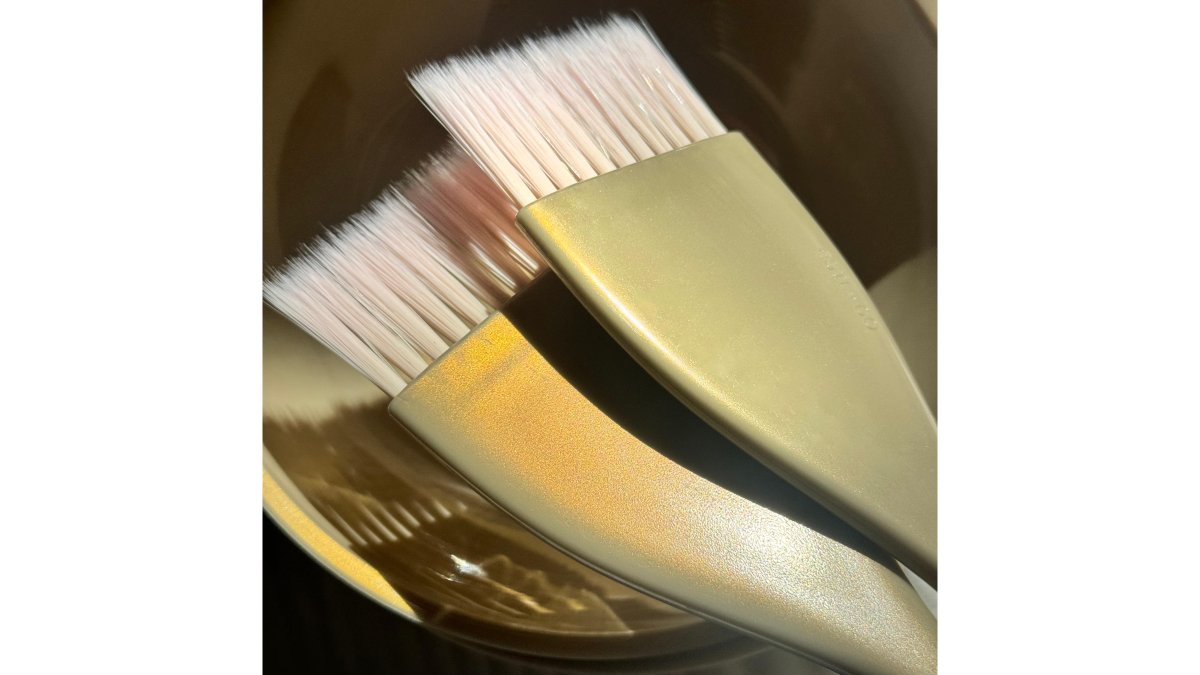
The ESTL+CO Hair Color Brushes are purpose-built for this exact work. The wide feathered tip lets you paint a highlight in one fluid motion, and the tapered edges ensure the color fades naturally into the surrounding hair without a hard line.

For balayage specifically, you want a brush that lets you work fast without sacrificing precision. A brush that's too soft will bend under pressure and lose its shape. A brush that's too stiff will leave visible stroke marks.
Hair Color Brushes for Blending Different Techniques
Not every color application is the same. Balayage, foil highlights, root blending, and color correction each demand slightly different brush characteristics. The best professionals don't rely on one brush, they choose based on the technique.
Spot and Detail Work
Spot applications, correcting a misplaced highlight, deepening a specific section, or adding dimension to a small area, require a brush with a fine tip and precise control. A smaller, more tapered brush excels here. You need to place color exactly where it belongs without affecting the surrounding hair. The bristles should be dense enough to hold their shape and responsive enough to follow your hand movement.
This is where many colorists struggle. They reach for their balayage brush, which is too wide for detail work, and end up with color where it shouldn't be. A dedicated detail brush prevents this. It doesn't need to be expensive, it needs to be precise.
Full-Section Coverage and Root Blending
Root blending is the bread and butter of color work, and it requires a different tool than balayage. You're covering a larger area with consistent saturation, then feathering the color down into the mid-lengths to blend with existing color. A wider brush with medium-density bristles handles this efficiently.
The feathering stroke is everything. You apply pigment to the root area with full saturation, then use a downward feathering motion to blend that color into the hair below. The brush should let you execute this motion smoothly without the bristles separating or losing contact with the hair. A brush with slight stiffness performs better here than a very soft brush, which can bunch up under the pressure of the downward stroke.
How to Blend Hair Color Seamlessly: Technique Essentials
The brush is half the equation. Technique determines whether you create a seamless blend or a visible line between colors. Even the best brush won't compensate for poor application. Conversely, good technique with a mediocre brush produces acceptable results, but great technique with the right brush produces professional work that lasts.
Feathering Strokes and Color Transition
Feathering is the foundational technique for seamless blending. Here's how it works: you apply pigment to one area with full saturation, then use a light, directional stroke to pull that color into the adjacent area, gradually reducing pressure as you move away from the pigmented section.
The brush makes this possible. A feathered bristle design naturally softens the edges of your stroke. A tapered tip lets you control exactly how much color you're depositing at each point along the stroke. Without these features, feathering becomes a guessing game.
Start with a full-saturation application in your target area. Use controlled pressure, you're not scrubbing; you're placing pigment. Then, without reloading the brush, execute a feathering stroke that moves away from the saturated area.
The key mistake most colorists make is trying to feather with a brush that's too soft or too dense. A soft brush won't hold its shape, and you lose control.
Matching Brush Choice to Hair Texture and Density
Hair texture and density change how pigment deposits and blends. Fine, thin hair absorbs color faster and shows blending mistakes more obviously. Coarse, dense hair requires more pigment and more aggressive blending to achieve saturation. Your brush choice should reflect these differences.
For fine hair, use a brush with medium softness and slightly lower density. You need less bristle contact to deposit adequate pigment, and a softer brush won't create visible texture marks in delicate hair.
For coarse, dense hair, a brush with medium-stiff bristles and higher density works better. You need the bristle contact to penetrate the hair and deposit color evenly. The feathering strokes can be more aggressive because the hair can handle it.
For medium-textured hair, which is most common, a standard medium-soft, medium-density brush performs well across most applications. This is why the ESTL+CO Hair Color Brushes work for such many colorists and hair types.
Professional Hair Color Brushes: Durability and Ergonomic Design
Durability matters more than price. A cheap brush that sheds bristles, warps after a few washes, or develops a loose handle wastes your time and frustrates your clients.
Bristle retention is the first test. After washing, bristles should stay put. Shedding bristles during application is unacceptable, your client ends up with a hair in their color, and you lose control of your application.
Stain resistance is the second test. Hair color stains everything. A brush that absorbs pigment becomes discolored and harder to clean, and over time the staining can affect bristle performance.
Ergonomic design prevents hand fatigue.
The base of the brush, where bristles meet handle, should be reinforced. This is where stress concentrates. A weak connection means bristles separate from the handle or the whole brush loosens over time.
Common Mistakes When Selecting Color Melting Brushes
Most colorists make the same mistakes when choosing brushes, and these mistakes compound into frustration and mediocre results.
Choosing by price alone. A $3 brush might seem like a bargain until it sheds bristles mid-application or loses its shape after three washes.
Using the same brush for every technique. This is the most common mistake. A brush that works for root touch-ups doesn't work for balayage.
Ignoring bristle softness. Many colorists assume stiffer bristles equal better control. The opposite is true for color melting. Bristles that are too stiff create harsh lines and make feathering difficult.
Overlooking ergonomics. Hand pain is not normal and not something you should tolerate. If a brush creates tension or fatigue after a couple of hours, it's the wrong brush.
Buying brushes without testing them. When possible, try a brush before committing to a full kit. Hold it, feel the bristles, execute a few practice strokes.
Conclusion: Investing in the Right Tools for Seamless Results
The difference between color work that looks amateur and color work that looks professional comes down to technique and tools. You can learn technique through practice and study. Tools either support that technique or work against it.
The best color melting brushes combine feathered bristle design, tapered edges, medium-soft bristle density, and ergonomic handles. They hold up through hundreds of applications. They stay stain-resistant. They let you execute the precise, controlled strokes that create seamless blends.
The ESTL+CO Hair Color Brushes are engineered for exactly this work. The feathered tip, tapered design, and stain-resistant material give you the precision and durability that color work demands. At $16.00 for a set of two, they're an investment in your daily workflow and your clients' results. When you're working with color all day, the right brush isn't a luxury, it's the foundation of professional work.
Frequently Asked Questions
What features should I look for in a professional hair color brush for seamless blending?
The best brushes for color melting combine feathered bristles, tapered edges, and ergonomic handles. Feathered bristles create softer color transitions and reduce visible demarcation lines. A tapered tip gives you control for precise placement, while a wider base accommodates larger sections. Stain-resistant materials preserve the brush over time, and an ergonomic design reduces hand fatigue during full-day application work. ESTL+CO's Hair Color Brushes feature all these elements, with a wide feathered tip and ergonomic base designed specifically for color application and blending.
How do you use a brush to blend hair color seamlessly?
Seamless blending starts with proper sectioning and the right feathering technique. Apply your color formula with deliberate, directional strokes, then use a clean or lightly loaded brush to feather the edges where two colors meet. Work in small, overlapping motions to soften the transition zone. The key is using a brush with soft, tapered bristles that can pick up and distribute color gradually rather than creating harsh lines. Practice feathering strokes on smaller sections before moving to full-head color melting.
What is the difference between a balayage brush and a tint brush for color melting?
Balayage brushes are typically wider and flatter, designed for painting freehand highlights onto the hair without sectioning. Tint brushes for color melting are often more tapered with feathered edges, built for precise application and blending within defined sections. Balayage brushes work best for painted highlights and looser placement, while color melting brushes excel at creating seamless transitions between existing color and new formula. For color melting specifically, a brush with a tapered, feathered tip gives you the control needed to blend out harsh lines.
Can I use a regular hairbrush or basic applicator for color melting?
Regular hairbrushes and basic applicators will not deliver professional results for color melting. They lack the tapered edges and feathered bristle design needed to create seamless color transitions. Basic applicators also tend to deposit color unevenly and make feathering difficult. Professional brushes are engineered with bristle density, softness, and shape that allow you to control saturation and blend out color formulas. Investing in purpose-built color melting brushes ensures precision, reduces application time, and produces the polished results your clients expect.
Ready to upgrade your color melting technique? Get the ESTL+CO Hair Color Brushes and experience the difference that precision design makes. Available in four colors with stain-resistant bristles and ergonomic handles built for the demands of modern color work.