

How to Choose a Professional Hair Color Apron
Last Updated: October 25, 2026
Quick Summary
Choose a hair color apron by matching fabric to your workload: coated polyester or tightly woven polyester blends with a stain-release finish for high-volume color and bleach, vegan leather for heavy developer drips, and denim for cutting-heavy days. Judge cost per year of use, not sticker price, and check for reinforced seams, adjustable straps, and deep divided pockets.
- No fabric is fully bleach-proof forever; coated fabrics fail by cracking, denim by fading, polyester by pilling.
- Wipe-clean coated aprons can last 2 to 3 years with spot cleaning and infrequent machine washing.
- Cotton drinks color and holds it, so stains become permanent after one hot wash.
- Cross-back straps distribute weight across the shoulders instead of the neck through a full shift.
- Wipe color paste off immediately with a damp cloth and always use cool water before laundering.
Table of Contents
- Start With Protection: What a Hair Color Apron Must Handle
- The Best Material for a Salon Apron: A Side-by-Side Look
- Why a Stain-Resistant Hair Stylist Apron Saves Money Over Time
- Pockets and Storage: Picking a Hair Stylist Apron With Pockets That Works
- Salon Apron Fit and Sizing for Every Body Type
- Comfort and Durability Through a Full Salon Shift
- Cleaning, Care, and Stain Removal for Hair Color Aprons
- Building Your Colorist Apron Checklist Before You Buy
- Frequently Asked Questions
Start With Protection: What a Hair Color Apron Must Handle
A professional hair color apron is a work garment built to block color, bleach, developer, and water from reaching your clothes and skin during salon work.
At ESTL+CO, we design tint tools for colorists who work at speed, so we think about protection the way you do: what actually lands on the fabric.
The OSHA chemical safety guidance is worth reading if you handle bleach and developer daily; it reminds you that protective wear is a control measure, not just a convenience.
Here is the uncomfortable truth most apron listings skip: no fabric is fully bleach-proof forever.
The Best Material for a Salon Apron: A Side-by-Side Look
The best material for a salon apron depends on your color volume and how you clean it. Most buying guides stop at "polyester resists stains, denim is tough, vegan leather wipes clean." That is not enough to choose.
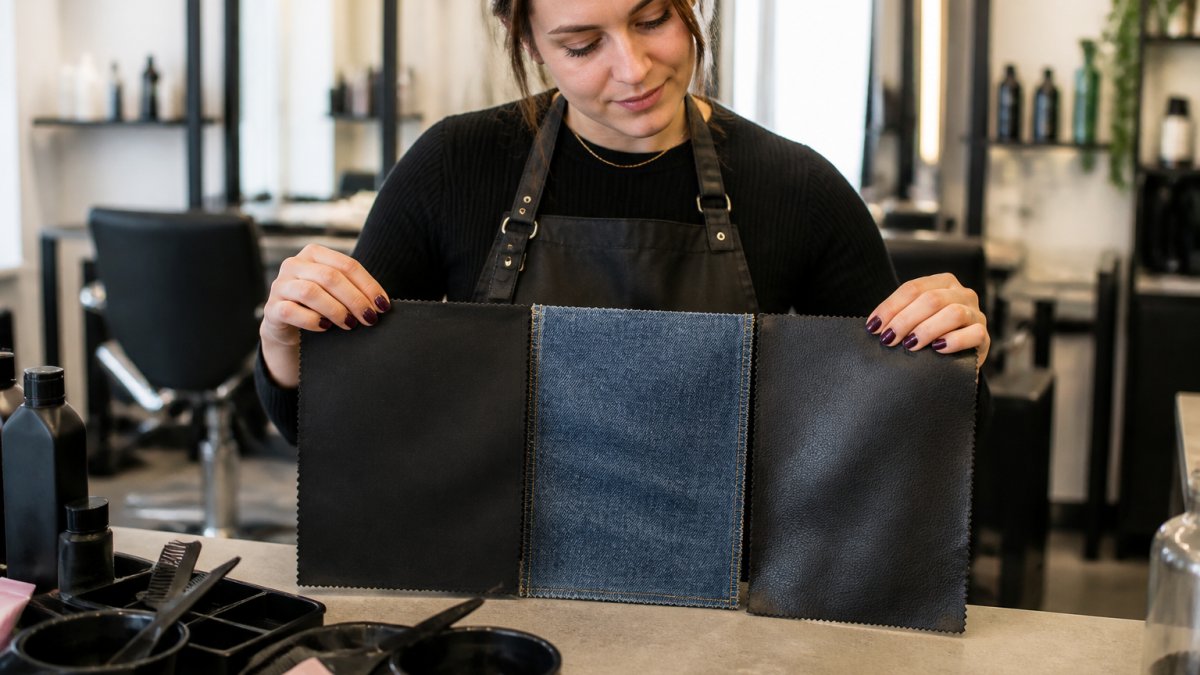
Polyester, Denim, and Vegan Leather Compared
| Material | Color/Bleach Protection | Breathability | Cleaning Method | Durability | Relative Cost |
|---|---|---|---|---|---|
| Polyester blend (tight weave) | Good, paste sits on the surface and wipes off before it wicks in; bleach can still dull dye over time | Moderate | Machine wash cool, air dry | High, survives frequent laundering | Low to moderate |
| Coated polyester / polyurethane-backed | Very good, the coating is the barrier; bleach and developer bead up | Low to moderate | Wipe clean; machine wash sparingly | Moderate, coating can crack at folds | Moderate |
| Denim (cotton) | Moderate, absorbs drips, then holds them; bleach leaves permanent light spots | Low | Machine wash; slow to dry | High abrasion resistance, but heavy when wet | Low |
| Vegan leather / leatherette | Very high, non-porous surface wipes clean | Low | Wipe clean only; avoid heat | Moderate, surface can peel at stress points | Moderate to high |
| 100% cotton (canvas) | Poor, drinks color and holds it | High | Machine wash; stains often permanent | Moderate | Low |
What the Table Does Not Tell You
Bleach resistance is relative, not absolute. No fabric in this table is bleach-proof forever.
Breathability and protection trade off directly. The fabrics that wipe clean fastest (coated polyester, vegan leather) are the least breathable.
Cleaning method drives lifespan more than purchase price. A wipe-clean coated apron that you never machine wash can last years.
A common mistake is buying 100% cotton because it feels soft against the skin.
Matching Material to Your Workload
- High-volume color and bleach, multiple clients a day: coated polyester or a tightly woven polyester blend with a stain-release finish. Prioritize wipe-clean speed and laundering durability.
- Foiling and balayage with lots of developer drips: vegan leather or coated polyester, because liquids bead rather than soak.
- Cutting-heavy days with occasional color: denim or a polyester-cotton blend gives abrasion resistance and comfort, accepting that bleach spots will show.
Use this table as a starting filter, then apply the fit and pocket guidance below to narrow to a specific apron.
Why a Stain-Resistant Hair Stylist Apron Saves Money Over Time
A stain-resistant hair stylist apron saves money by cutting replacement frequency and protecting the clothes underneath. The sticker price is the least useful number on the tag. What matters is cost per year of use, and that number is driven by four variables you can estimate before you buy.
The Four Cost Variables
- Purchase price. The amount you pay at checkout.
- Expected lifespan under your workload. How many months the apron stays presentable and functional before stains, tears, or coating failure retire it.
- Laundering cost and frequency. Every machine wash costs water, detergent, energy, and your time. Wipe-clean fabrics reduce wash frequency; absorbent fabrics increase it.
- Protected clothing. The work shirts, pants, and shoes the apron keeps clean. A ruined shirt usually costs more than the apron that failed to protect it.
A Simple Cost-Per-Year Model
You do not need exact numbers to compare two aprons. Use this formula with your own estimates:
Annual cost = (purchase price ÷ expected years of use) + (washes per month × 12 × cost per wash) + (replacement clothing cost × replacements per year)
A common pattern among full-time colorists:
- A low-cost absorbent apron may need replacing every 6 to 12 months once stains set in, and it may let color through to clothing.
- A mid-priced wipe-clean coated apron may last 2 to 3 years with spot cleaning and infrequent machine washing, and it blocks most drips from reaching clothing.
- A premium apron with reinforced seams and a quality coating may last longer still, but only if you follow the care instructions and avoid high heat that cracks the coating.
Run the formula with your own numbers. The apron that looks expensive at checkout often wins on annual cost once you count replacements and protected clothing.
A low-cost apron that stains through in month one is the most expensive option on the shelf. The real price difference shows up in your laundry pile and your wardrobe, not at checkout.
Where Colorists Lose Money Without Noticing
- Washing too often and too hot. High heat sets color stains and wears out coatings and ties faster. Cool water and air drying extend lifespan more than any fabric upgrade.
- Buying for looks, not workload. A fashion-forward apron in a delicate fabric will not survive bleach-heavy work, and replacing it twice a year erases any savings.
- Ignoring the ties and seams. A failed tie or split seam retires an otherwise good apron. Reinforced construction at stress points is a durability purchase, not a cosmetic one.
- Not protecting the clothes underneath. If your apron lets color through, you are replacing work shirts, not just aprons. That is the largest hidden cost in the equation.
How to Use This Before You Buy
Score each candidate apron on the four variables above using your own estimates. If two aprons are close on purchase price, the one with the longer expected lifespan and lower wash frequency wins on annual cost. If you are unsure of lifespan, ask the seller for the recommended care routine and assume the shorter end of any range they give you.
For the tools that ride in your pockets, see our tips on cleaning hair color application brushes.
Pockets and Storage: Picking a Hair Stylist Apron With Pockets That Works
The right hair stylist apron with pockets keeps tools on your body and off the station.
Placement matters more than count. Chest-level pockets keep small items reachable without bending. Lower pockets handle bulkier tools.
For a deeper system, our guide to organizing professional hair color tools covers how to lay out pockets so your workflow stays smooth.
Anti-static fabric helps here too. It stops loose hair from clinging to the apron and your tools.
Salon Apron Fit and Sizing for Every Body Type
Salon apron fit and sizing should start with adjustability, not a single size chart. Look for adjustable neck straps, waist ties, or cross-back straps that let you set the apron to your torso. A plus-size fit needs enough wrap length to close comfortably without pulling.
Three fit checks before you commit:
- Raise both arms overhead. The apron should not ride up or choke.
- Twist side to side. The waist should stay put without gaping.
- Sit and stand. The hem should clear your knees and not catch on a stool.
Cross-back straps distribute weight across the shoulders instead of the neck, which matters through a full shift of cutting, coloring, and styling.
Comfort and Durability Through a Full Salon Shift
All-day comfort comes down to weight, breathability, and strap design.
What most guides miss is the neck. A thin tie digs in by midday.
If hand and wrist strain is your bigger problem, our breakdown of ergonomic hair coloring accessories covers the tools that reduce load during long coloring sessions.
Hair-resistant, anti-static fabric is a small comfort win that adds up: less shedding on the apron, fewer stray hairs in foils.
Cleaning, Care, and Stain Removal for Hair Color Aprons
Wipe color paste off immediately with a damp cloth before it sets. For deeper cleaning, rinse in cool water, pretreat stains with a mild detergent, and launder according to the fabric label.
A practical routine:
- Wipe-clean spot treatment after every shift
- Full laundering weekly, or more if you run high volume
- Air dry polyester and vegan leather to protect the coating
- Check seams and ties monthly for wear
Watch out: tossing a color-stained apron straight into a hot dryer bakes the stain in permanently. Cool water first, always.
For the tools that ride in your pockets, see our tips on cleaning hair color application brushes.
Building Your Colorist Apron Checklist Before You Buy
Use this checklist to score any apron before you spend:
- Fabric resists color and bleach drips and wipes clean
- Reinforced seams at stress points
- Adjustable straps for a custom fit
- Deep, divided front pockets for tool storage
Pair the apron with a full set of essentials from our professional hair colorist tool kit guide, and browse salon service essentials to round out your station.
The FDA guidance on cosmetic product safety is a useful reference on how coloring products are regulated, which helps you understand what you are protecting your clothes from.
Choosing the right apron is one decision in a bigger system, and the tools you pair with it matter just as much.
Frequently Asked Questions
What material is best for a hair color apron?
Polyester blends win for most colorists because they resist bleach and dye absorption while staying lightweight and quick to dry. Denim offers durability and a professional look but absorbs moisture and takes longer to dry. Vegan leather wipes clean fastest but can feel warm during long shifts. The right hair color apron material depends on how much bleach work you do and whether you prioritize wipe-clean convenience or breathability.
Are salon aprons stain-resistant to hair color?
Many are, but the level varies by fabric and finish. Tightly woven polyester and treated vegan leather resist color and bleach penetration best, while untreated cotton and canvas soak up dye quickly. Look for a stain-resistant hair stylist apron with a water-repellent finish, and rinse any color spill promptly rather than letting it set. A quick wipe after each client keeps the fabric working as intended.
How should a salon apron fit?
A salon apron should cover from chest to mid-thigh without pulling across the shoulders or restricting arm movement. Adjustable straps and cross-back designs distribute weight evenly and reduce neck strain. For salon apron fit and sizing, check the size chart against your measurements rather than assuming a one-size-fits-all option works, especially if you need a plus-size fit or have a shorter torso.
How do you clean hair color stains from a salon apron?
Rinse fresh color or bleach stains with cool water before they dry, then apply a small amount of mild detergent and work it in gently. Avoid hot water on dye stains because heat sets pigment into the fibers. For tougher marks on wipe-clean fabrics, use a damp cloth with a drop of dish soap. Check the care label before machine washing, and air dry polyester aprons to preserve the water-repellent finish.
