

Maintaining Synthetic Bristles on Hair Tint Brushes
Last Updated: October 23, 2026
Quick Summary
Maintaining synthetic bristles on hair tint brushes means rinsing loose color immediately under warm water, washing with mild soap, and air-drying bristles-down so water drains away from the ferrule. Never use hot water, harsh solvents, or a hair dryer, and replace the brush once the tips stop holding a clean edge.
- Rinse color off the bristles as soon as the service ends, before pigment dries and bonds to the fibers.
- Keep the handle and ferrule out of standing water so the glue inside does not loosen over time.
- Skip mineral spirits, acetone, and strong solvents, which degrade synthetic fibers and ferrule adhesive.
- Reshape the tips with your fingers and air-dry bristles-down, away from sunlight and heat vents.
- Add a short warm soak with mild soap once a week to lift pigment settled deeper in the fibers.
Table of Contents
- Why Maintaining Synthetic Bristles on Hair Tint Brushes Matters
- How to Clean Professional Hair Tint Brushes Step by Step
- Cleaning Hair Color Brushes Between Clients: Hygiene and Infection Control
- How to Dry and Store Hair Color Brushes Without Warping Bristles
- Hair Tint Brush Cleaning Tools: What Works and What Damages Synthetic Fibers
- Troubleshooting Stiff, Stained, or Splayed Bristles
- When to Replace Your Hair Tint Brush
- Conclusion
- Frequently Asked Questions
Why Maintaining Synthetic Bristles on Hair Tint Brushes Matters
Maintaining synthetic bristles on hair tint brushes is the practice of cleaning, drying, and storing tint brushes so their fibers stay soft, straight, and free of color residue.
A stiff or splayed brush drags color instead of laying it down. That means uneven saturation and more time fixing sections.
Synthetic fibers are durable, but they are not indestructible. Hot water, harsh solvents, and rough handling all shorten brush life. Gentle cleaning keeps bristle shape intact.
Here is what matters most:
- Clean after every client, not once a day
- Use warm water, never hot
- Dry bristles-down so water drains away from the ferrule
How to Clean Professional Hair Tint Brushes Step by Step
Learning how to clean professional hair tint brushes takes about two minutes per brush. The method below removes color residue without stressing the fibers. Follow the steps in order and you will protect both bristle shape and brush performance.
Step 1: Rinse Loose Color Residue Immediately
Rinse the bristles under warm running water as soon as the service ends. Work from the ferrule down toward the bristle tips so residue flows away from the handle.

Do not let color dry on the fibers. Dried pigment settles deep into the brush and needs a soak to lift.
Step 2: Wash with Soap and Warm Water
Add a small drop of gentle soap to your palm. Swirl the bristles in the suds using a light circular motion.
Keep the brush handle and ferrule out of standing water. Water trapped inside the ferrule loosens the glue over time.
- Use warm water, never hot
- Skip mineral spirits and harsh solvents on synthetic fibers
- Never scrape bristles against the color bowl edge to clean them
Step 3: Rinse Thoroughly and Remove Excess Water
Rinse until the water runs clear and no suds remain. Soap left in the fibers can affect how color applies next time.
Squeeze excess water gently from the base to the tip. Use a soft towel and press, never twist or pull.
For a fuller walkthrough of the method, see our guide on how to clean professional hair tint brushes.
Cleaning Hair Color Brushes Between Clients: Hygiene and Infection Control
Cleaning hair color brushes between clients is a hygiene step, not just a housekeeping one.
The routine is simple. Rinse, wash, rinse again, and dry fully before the next client. A damp brush stored in a closed case stays moist, and moisture is where microbes thrive.
Separation helps too. Keep clean brushes in one tray and used brushes in another. Never dip a used brush back into a shared color bowl.
For a deeper look at salon hygiene routines, read our article on preventing cross contamination with hair color brushes.
How to Dry and Store Hair Color Brushes Without Warping Bristles
Drying is where most brush damage happens. The right method is simple: lay the brush flat or stand it bristles-down so water drains away from the ferrule.
Water running down into the handle weakens the bond between fiber and ferrule. Over time the bristles loosen and shed.
Follow these rules:
- Gently squeeze excess water out first
- Reshape the bristle tips with your fingers
- Air-dry on a clean towel or in a brush stand, bristles-down
Once dry, store brushes flat in a case or tray. Give them room so the bristle shape is not crushed.
Hair Tint Brush Cleaning Tools: What Works and What Damages Synthetic Fibers
The right cleaning tools protect synthetic fibers. The wrong ones quietly ruin them. Most damage comes from three sources: heat, harsh chemicals, and abrasive surfaces. But for tint brushes specifically, the cleaner you choose matters more than most guides admit, because oxidative color and salon products leave residues that behave differently from shampoo or styling foam.
Match the cleaner to the residue
Synthetic bristles on tint brushes usually carry one of three things: oxidative color (permanent or demi-permanent mixed with developer), semi-permanent or direct dye, or light product film from a color bowl. Each responds to a different cleaning approach.
- Oxidative color residue: Rinse immediately under warm running water, then wash with a mild soap or a salon brush cleanser labeled for color removal. Oxidative color cures as it oxidizes, so the sooner it is lifted, the less it bonds to the fiber. A common pattern is that brushes rinsed within a few minutes need only soap and water, while brushes left overnight often need a short warm soak.
- Semi-permanent and direct dye: These can stain synthetic fibers even after the surface feels clean. A gentle soap wash removes surface pigment, but a faint tint may remain in the fiber. That staining is usually cosmetic and does not affect application, provided the brush is fully rinsed and dry.
- Product film: A mild soap or dedicated brush cleanser handles this easily. Avoid leave-in conditioner or oil-based cleaners, which can leave a film that interferes with color pickup.
What works on synthetic fibers
- Mild soap, dish soap in a small amount, or a salon brush cleanser formulated for color tools
- Warm running water, not hot
- A soft towel for blotting
What damages synthetic fibers and brush construction
- Hot water: Softens and warps synthetic tips and can weaken the adhesive that holds the ferrule.
- Mineral spirits, acetone, and strong solvents: Can degrade synthetic fibers and break down the glue inside the ferrule. These are not appropriate for tint brushes.
- Bleach or harsh disinfectants used incorrectly: Follow the product label. Some disinfectants are intended for surfaces or tools other than brushes, and repeated exposure can dry or etch synthetic fibers.
A common mistake is reaching for whatever cleaner is closest. Synthetic fibers respond best to simple soap and water, with a salon brush cleanser as the step up when color residue is stubborn. If a cleaner's label does not mention brushes or synthetic fibers, test it on one brush before using it on your whole kit.
For practical tips on choosing and using cleaning tools, see our guide on tips for cleaning hair color application brushes.
Troubleshooting Stiff, Stained, or Splayed Bristles
Bristle problems usually point to one cause, and each has a fix. Diagnose before you replace.
| Problem | Likely Cause | Fix | Impact |
|---|---|---|---|
| Stiff bristles | Dried color or soap residue | Soak in warm water with gentle soap, then rinse | Restores softness |
| Stained fibers | Pigment left too long | Clean immediately after each service | Reduces buildup |
| Splayed tips | Hot water or rough drying | Reshape while damp, air-dry bristles-down | Protects shape |
| Loose bristles | Water in the ferrule | Keep ferrule dry during washing | Extends lifespan |
| Frayed edge | Scraping against the bowl | Use a soft bowl edge or palette | Keeps a clean tip |
Stiffness is the most common complaint. It almost always means color dried in the fibers. A warm soak usually fixes it.
Splaying is harder to reverse.
If you are weighing a different material entirely, our comparison of silicone vs plastic hair tint brushes covers how each type handles wear.
When to Replace Your Hair Tint Brush
Replace a hair tint brush when the bristle tips no longer hold a clean edge, when fibers shed during use, or when stiffness and staining will not lift after cleaning. A worn brush costs you precision on every client. But replacement is the last step in a maintenance schedule, not the first. A repeatable routine is what keeps brushes out of the replacement pile longer.
A simple after-each-use routine
This takes about two minutes per brush and fits between clients:
- Rinse loose color from the bristles under warm running water, working from the ferrule toward the tips.
- Wash with a small amount of mild soap or salon brush cleanser, swirling the bristles in your palm.
- Rinse until the water runs clear.
- Squeeze excess water gently from base to tip with a soft towel.
- Reshape the tips with your fingers and lay the brush bristles-down to air-dry.
Periodic deep cleaning
Once a week, or more often for high-volume colorists, add a short warm soak with mild soap before the regular wash. This lifts pigment that has settled deeper into the fibers. Rinse thoroughly and dry bristles-down as usual. Deep cleaning is also the moment to inspect each brush for the signs below.
Signs it is time to replace
- Tips that stay splayed after reshaping
- Bristles that shed onto the hair
- A feathered edge that has flattened or frayed
Most colorists replace tint brushes on a routine schedule rather than waiting for failure. High-volume work wears fibers faster, so check tips weekly and rotate brushes so no single brush takes every service.
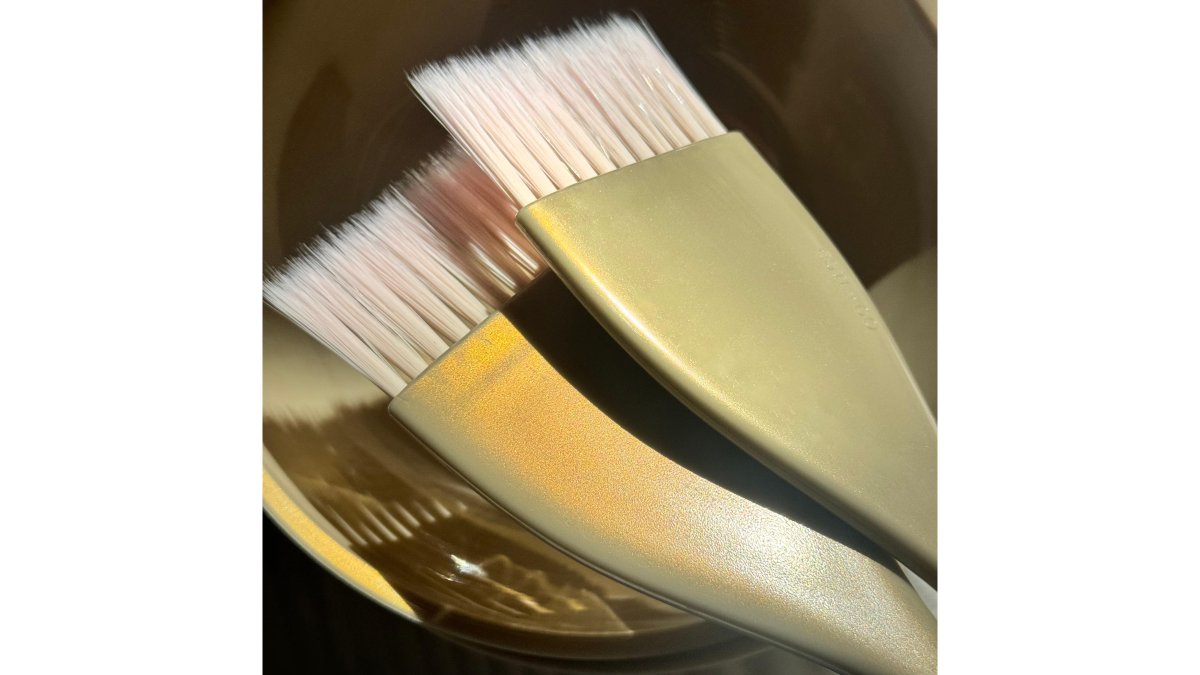
Our hair color brushes are built with a wide feathered tip for clean color spread and a wide base for an easier grip. Each box includes two professional salon brushes in Black, Beige, Mauve, or Violet, and all shades are stain resistant. The ergonomic shape is designed to prevent the tension and pinching that leave fingers cramped.
Conclusion
Brush maintenance is not glamorous, but it decides how your color applies and how long your tools last. Rinse fast, wash gently, dry bristles-down, and replace worn brushes before they cost you precision.
ESTL+CO makes feathered tint brushes with stain-resistant fibers and an ergonomic design built for long salon days. Our brushes are made for the professional stylist to feel in control while sweeping color onto the hair.
Frequently Asked Questions
How often should you deep-clean a hair tint brush?
Deep-clean your hair tint brush after every color service, not just at the end of the day. A quick rinse and wash with soap and warm water takes under a minute and prevents pigment from drying in the bristles. If you use the brush daily, set aside one longer soak per week with a synthetic-fiber-safe cleanser to remove any product buildup that routine washing misses. Brushes used with heavy pigment or lightener need the weekly deep clean without exception.
Can you use conditioner on synthetic hair tint brush bristles?
Avoid it. Leave-in conditioner and hair conditioner are formulated for keratin, not synthetic fibers. They leave a film on the bristles that attracts pigment and makes the brush feel stiff. For synthetic bristles, stick to mild soap and warm water. If a brush feels dry or rough, the cause is usually residue or heat damage, not a lack of conditioning. Replace the brush if the bristle tips have frayed or lost their feathered shape.
How should you dry and store a hair tint brush?
Gently squeeze excess water from the bristles, then lay the brush flat on a clean towel or stand it bristles-down in a holder so water drains away from the ferrule. Never store it bristles-up in a closed container while damp, because trapped moisture weakens the glue and breeds bacteria. Once fully air-dried, store brushes flat or bristles-down in a case. Keep them away from hot tools and direct sunlight to protect the synthetic fibers.
When should you replace a hair tint brush?
Replace a hair tint brush when the bristles splay, the feathered tip loses its shape, or the ferrule loosens. Stiffness that persists after a proper wash and soak is another sign the synthetic fibers have degraded. For daily salon use, expect a quality brush to last several months with correct care. ESTL+CO's Hair Color Brushes come two to a box at $16.00, so keeping a spare on hand is practical for high-volume colorists.
