

Professional Balayage Brushes for Precision Application
Table of Contents
- Why Professional Balayage Brushes Change Your Application
- How to Choose the Right Hair Color Brush
- Best Tools for Balayage and Foil Techniques
- Ergonomic Design: Reducing Hand Strain for Salon Professionals
- Balayage Brush Maintenance and Cleaning
- Lightener vs. Color: Choosing the Right Brush for Each Product
- Frequently Asked Questions
Last Updated: September 12, 2026
Why Professional Balayage Brushes Change Your Application
Professional balayage brushes for precision application are tools built with feathered tips, controlled bristle density, and ergonomic handles that let a colorist place lightener exactly where it belongs. At ESTL+CO, we design tint tools specifically for colorists who paint rather than saturate, and the difference shows up in the first section you take.
The gap between a general-purpose tinting brush and a purpose-built tool comes down to control. A wide feathered tip holds enough lightener for a full panel while the tapered edge lets you soften the transition without reloading. That single pass, load once, paint, feather, is what separates a clean balayage from a visible line of demarcation.
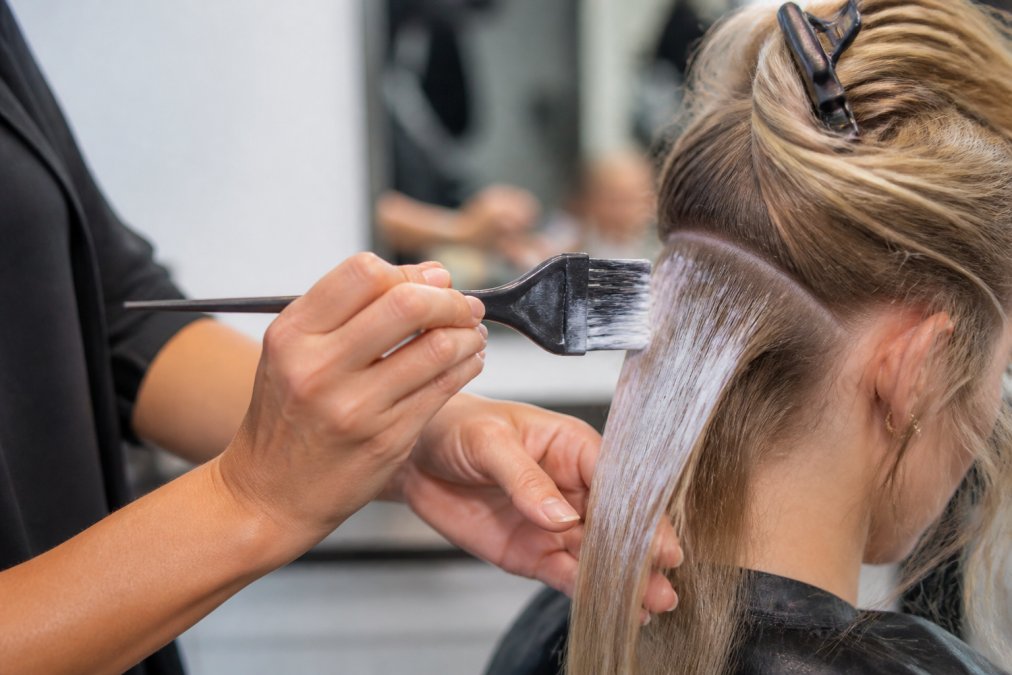
Most colorists notice the difference in two places: how evenly the lightener releases across the strand, and how much wrist work it takes to blend. A brush that fights you costs time on every foil, and across a full day of foilyage or teasy lights, that adds up to real fatigue.
How to Choose the Right Hair Color Brush
Choosing the right hair color brush means matching three things to your technique: bristle material, bristle density, and tip shape. Get those aligned with how you actually paint, and application control stops being something you fight for. The section below goes past the usual "synthetic vs. natural" shorthand and explains the mechanisms that actually drive how a brush behaves in the bowl and on the strand.

Bristle Material Science: Why Fibers Fail Against Lightener
Most guides stop at "synthetic resists chemicals, natural holds product." That's true but incomplete, and the missing piece is the chemistry.
Alkaline lighteners and developers sit in a pH range that attacks protein-based fibers (PubMed). Boar bristle is protein. Over repeated exposure, the alkaline environment swells the fiber, strips its natural oils, and leaves it brittle, which is why a boar brush used daily for bleach work goes stiff and starts shedding within a few months, while the same brush used only for cream color can last years. Synthetic filaments (typically nylon or polyester) are polymer chains that don't have a protein structure to break down, so they hold their flex and their shape through the same exposure.
The trade-off is real, though. Natural bristle has a cuticle-like surface that grabs and holds cream color, releasing it slowly and evenly, which is exactly what you want for root retouch and gray coverage. Synthetic filaments are smoother, so they release product faster and more completely, which is what you want for lightener where you're painting and moving on. That's the actual reason hybrid brushes exist: a synthetic core for chemical resistance with a natural or textured outer layer for product pickup.
A practical rule most working colorists land on: keep natural-bristle brushes for color-only services, and dedicate synthetics or hybrids to anything touching lightener or high-lift developer. Once a natural brush has been through lightener, it never quite comes back.
Bristle Density: The Capacity-to-Control Trade-off
Density is the second variable, and it's the one that determines whether your brush floods a section or starves it.
A densely packed head carries more product per load and covers a wider panel in one stroke, good for full-head saturation and back-of-head panels where speed matters. But dense bristles also hold product tighter at the edge, so the brush releases less cleanly when you try to feather. That's the mechanism behind the hot line: the dense core keeps feeding product while the tip is supposed to be tapering off.
A medium-density head gives you the middle ground most balayage work needs: enough capacity for surface painting, enough release control at the tip to feather in the stroke. Low-density, soft-feather heads carry the least product and release it fastest, ideal for freehand hair painting and gloss where you want a thin, blendable film rather than a saturated panel.
Brush Shape: Wide, Tapered, and Feathered Tips
Shape determines where the brush is useful. A wide brush covers large sections fast, which is why it suits full-head lightener application and back-of-head panels. A tapered brush narrows to a point for color placement near the hairline, part lines, and face-framing pieces where a wide head would bleed past the section.
Feathered tips sit between the two. The bristles thin out toward the end so the product tapers off as you finish a stroke, creating seamless blending without a separate feathering tool. For balayage specifically, that tapered edge is the feature that matters most.
| Brush Type | Bristle Density | Best For | Technique Match |
|---|---|---|---|
| Wide feathered | Medium-high | Full panels, back of head | Surface painting, foilyage |
| Tapered precision | Medium | Hairline, face frame | Teasy lights, root touch-up |
| Dense flat | High | Fast coverage | Full lightener saturation |
| Soft feather | Low-medium | Soft transitions | Hair painting, blending |
Best Tools for Balayage and Foil Techniques
The best tools for balayage and foil techniques are the ones that match brush geometry to the stroke you're making. ESTL+CO's Hair Color Brushes are built around exactly that idea: a wide feathered tip for even spread, a tapered point for neat sections, and a stain-resistant head that holds up to daily lightener work. At $16.00, they're priced for colorists.
Matching Brush Geometry to Painting Techniques
Brush-to-technique mapping is the part most guides skip, and it's where precision is won or lost.
- Surface painting: wide feathered brush, flat angle, long strokes
- Teasy lights: tapered brush, light product load, short back-combed strokes
- Foilyage: wide brush for the panel, tapered edge to feather the foil line
- Root touch-up: dense flat brush, firm pressure, controlled deposit
- Hair painting freehand: soft feather brush, minimal load, blended edges
A common mistake is using one brush for every technique. The colorists who get consistently clean blends usually keep two or three on the trolley and switch by section, not by habit.
Ergonomic Design: Reducing Hand Strain for Salon Professionals
Ergonomic design reduces hand strain by matching the handle to how a colorist actually grips a brush: relaxed fingers, straight wrist, no pinching. A wide base and balanced weight distribution let the hand stay open through a full day of application instead of curling tight around a thin handle.
Most brush guides stop there. The gap they miss is the mechanism: what actually causes the strain, and which design variables move the needle.
What Repetitive Strain Actually Is
Repetitive strain injury in the hand and wrist comes from sustained static grip combined with repeated micro-movements. When you hold a thin handle, the flexor tendons in the forearm have to work harder to maintain the pinch, and the median nerve at the wrist gets compressed by the same posture (osha.gov). Over a full day of foiling, hundreds of load-paint-feather cycles, that compression and tendon load accumulate. The result most colorists recognize is a dull ache at the base of the thumb, stiffness in the morning, or tingling in the first two fingers.
The brush contributes to this in three measurable ways: handle diameter, handle length, and balance point.
Handle Diameter: Why Wider Beats Padded
A handle that's too narrow forces the fingers to pinch, and that pinch is what leaves you with cramped fingers by the afternoon. A wider base spreads the pressure across the palm and lets the fingers stay in a relaxed curl rather than a tight pinch. The general ergonomic principle, well established in tool design outside the salon, is that a grip diameter that lets the fingers curl without touching the palm reduces tendon load significantly compared to a thin, pen-like grip (osha.gov).
Colorists with smaller hands often assume an ergonomic brush won't fit. The key is the taper, not the overall size. A handle that narrows toward the ferrule gives smaller hands a natural resting point while still offering the wide base larger hands need for use.
Balance Point and Ferrule Weight
The balance point is where the brush pivots in the hand, and it matters more than most colorists realize. A brush that's front-heavy, thick ferrule, heavy bristle load, forces the wrist to fight gravity on every stroke, which is the same motion that aggravates wrist extensors. A brush balanced at or slightly behind the midpoint of the handle lets the hand guide the stroke instead of lifting it.
Ferrule weight is the hidden variable. A lightweight ferrule (thin metal or reinforced polymer) keeps the front of the brush from pulling the wrist down. This is one reason salon-grade brushes often feel lighter than they look, the weight is in the handle, not the head.
Practical Adjustments Beyond the Brush
A better brush helps, but it doesn't replace technique. A few adjustments most colorists find useful:
- Vary grip between sections. Alternating between a full-hand grip and a lighter pencil grip changes which tendons are loaded.
- Keep the wrist neutral. A straight wrist through the stroke reduces nerve compression compared to a flexed or extended wrist.
- Take micro-breaks between clients. Thirty seconds of open-hand stretching between services adds up over a week.
- Match brush length to reach. A longer handle reduces the need to over-extend the wrist on back-of-head panels.
Balayage Brush Maintenance and Cleaning
Balayage brush maintenance and cleaning come down to one rule: rinse immediately after every service. Lightener and color set inside the bristles, and once they harden, the feathered tip loses the flexibility that makes it useful.
- Rinse bristles under warm water until the water runs clear
- Work a drop of mild soap through the fibers with your fingers, not a comb
- Rinse again and press the bristles flat against a towel to reshape
- Dry bristle-down or flat, never bristle-up, so water doesn't pool in the ferrule
- Deep clean weekly with a lightener-specific remover if you see buildup
Stain-resistant heads and bowls cut down on the staining that shortens a brush's working life, which is one reason salon-grade tools hold their shape longer than drugstore alternatives. For colorists who pack up between rental studios, that durability matters as much as the clean release.
Lightener vs. Color: Choosing the Right Brush for Each Product
Lightener and color behave differently in the brush, so they call for different tools. Lightener is thicker and holds its shape, which suits a densely packed head that can carry a heavy load without dripping. Cream color is thinner and moves faster, so a medium-density brush with a tapered tip gives you the application control to place it without over-saturating.
The practical split looks like this:
- Lightener and bleach application: wide feathered or dense flat brush, heavier load
- Permanent color: medium-density tapered brush, moderate load
- Demi and gloss: soft feather brush, light load for even distribution
- Root touch-up: dense flat brush for firm, controlled deposit
If you're coming from a general-purpose brush, expect the first switch to feel different. A feathered tip releases product faster at the start of the stroke, so you'll want to load lighter until you adjust.
Choosing the right brush for every technique, and replacing the ones that no longer hold their shape, is the difference between fighting your tools and letting them work. ESTL+CO builds salon-grade tint tools with stain-resistant bowls and ergonomic feathered brushes designed by colorists for colorists, so precision application stops being a compromise. Explore the Hair Color Brushes collection and give your studio the tools that match the work you actually do.
Frequently Asked Questions
What features define a professional-grade balayage brush?
A professional balayage brush typically has tapered or feathered bristles for precision application, a wide base for comfortable grip, and synthetic fibers that resist chemical breakdown from lighteners. The bristle density matters too: denser bristles hold more product for even distribution, while sparser bristles give you finer control for surface painting and seamless blending. Ergonomic handles reduce hand fatigue during long appointments, and stain-resistant materials keep the brush looking professional after repeated use with bleach and dye.
How do feathered bristles improve balayage application?
Feathered bristles taper to a fine edge, which lets you control exactly where lightener or color lands on the hair. That precision matters for techniques like hair painting, where a soft transition between saturated and diffused areas creates the seamless blending balayage is known for. A feathered tip also helps you avoid harsh lines at the root and reduces product waste because you are placing color only where it needs to go, not spreading it across a wider section than intended.
Are synthetic or natural bristles better for hair lightener?
Synthetic bristles are the better choice for lightener and bleach application. Natural bristles can degrade when exposed to the alkaline chemistry of lighteners, which shortens the brush's lifespan and can affect application consistency. Synthetic fibers resist chemical breakdown, hold their shape through repeated washing, and maintain consistent bristle density over time. For color application, synthetic bristles also work well because they do not absorb dye the way natural hair does, making cleanup faster and reducing cross-contamination between clients.
How often should professional colorists replace their tint brushes?
Replace tint brushes when bristles splay, stiffen, or lose their feathered edge, which typically happens after several months of daily salon use. Signs it is time include difficulty achieving clean sectioning, bristles that no longer hold product evenly, or a handle that has become loose. Proper cleaning after every use extends brush life significantly: rinse immediately after application, wash with mild soap, reshape the bristles, and dry them bristle-side down. Keeping two or three brushes in rotation also reduces wear on any single tool.